



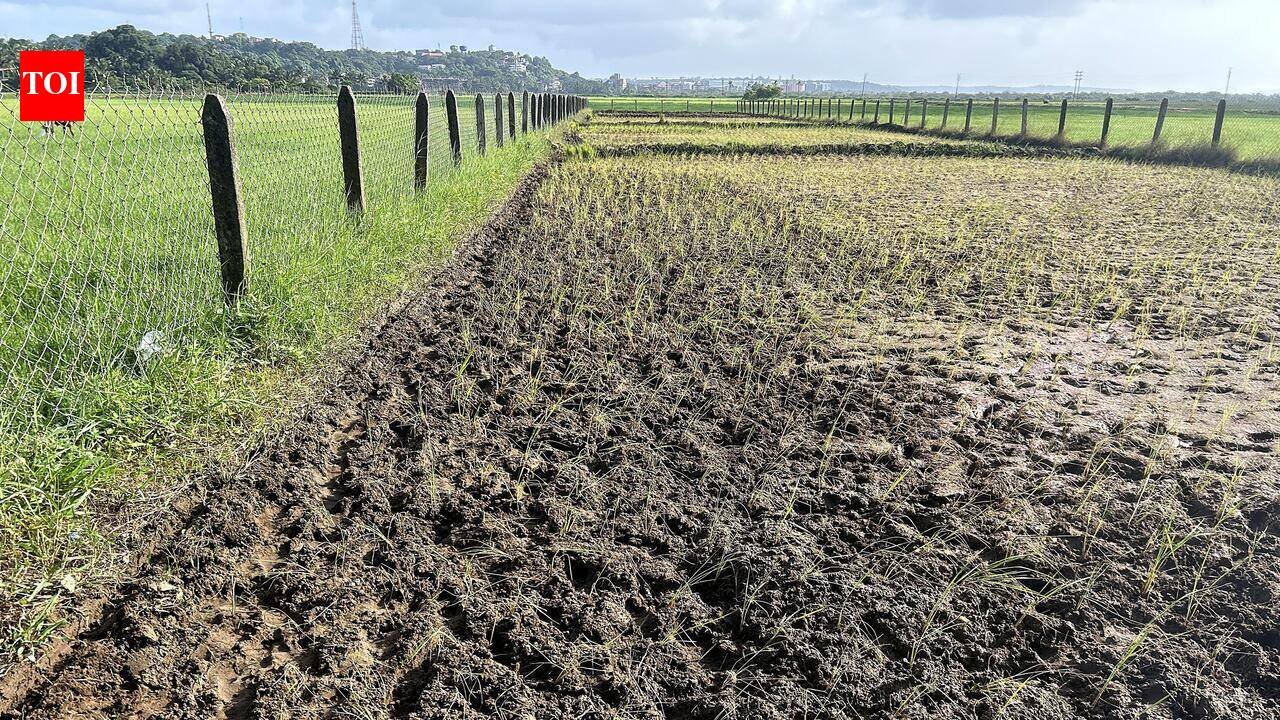
Margao: A prolonged dry spell during the monsoon could reduce paddy yields in South Goa by at least 30%, with rain-fed fields in Salcete among the worst affected, agriculture officials said.Shariff Furtado, zonal agriculture officer (ZAO), Salcete, said the lack of timely rainfall had affected the tillering stage of paddy, when plants produce side shoots that later bear grain-carrying panicles.“The long dry spells have impacted the tillering stage of paddy. Adequate rainfall didn’t occur at the right stages,” Furtado said.He said sufficient rainfall was crucial for tillering, and the prolonged dry spell had resulted in fewer tillers, potentially reducing the final yield.Farmers with irrigation facilities were able to cope better, while those dependent on rain-fed fields were affected. “In Salcete, the majority of the paddy fields are rain-fed,” Furtado said.He added that some farmers had also opted not to cultivate paddy this season because there was little or no rain until the beginning of July, further contributing to the expected decline in production.The situation is relatively better in other talukas. Mahendra Pagi, ZAO, Canacona, said intermittent rainfall had helped retain soil moisture despite the prolonged dry spell.“Recent heavy rains for two days made up for the dry days,” Pagi said.He said paddy in Canacona was currently at the grain-formation stage, which requires adequate soil moisture. “Therefore, if the dry spell persists for a longer period, it could affect grain formation,” he said.In Sanguem, the impact has so far been limited. Agresh Shirodkar, ZAO, Sanguem, said the department’s assessment indicated little damage to the crop, which is also at the grain-formation stage.“If it rains heavily at this stage, the grains may fall flat. So the current rainfall situation is just right,” Shirodkar said.
