



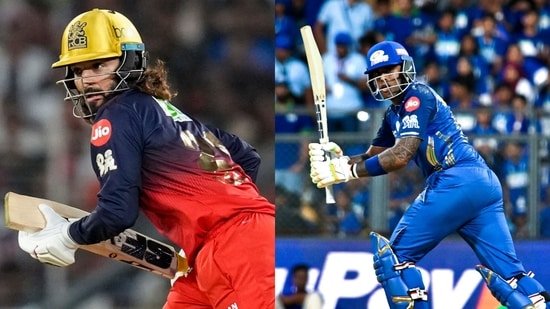
India’s next T20 squad, if built solely on IPL 2026, would not be a continuation. It would be a repudiation of memory.


Names would carry no weight. Captaincy would follow no hierarchy. Familiar roles would earn no protection. Treat IPL 2026 as the only evidence, and the squad that emerges feels almost confrontational at first glance.
That confrontation is the point.
This is not a prediction of what selectors will do. It is a performance-only exercise – strip away international reputation, erase past credit, ignore seniority, and ask one blunt question.
Who actually earned an India T20 place through IPL 2026?
India’s previous major T20I squad had Suryakumar Yadav as captain and Axar Patel as vice-captain, with Abhishek Sharma, Sanju Samson, Ishan Kishan, Tilak Varma, Hardik Pandya, Shivam Dube, Rinku Singh, Jasprit Bumrah, Arshdeep Singh, Kuldeep Yadav, Varun Chakaravarthy, Washington Sundar, and Mohammed Siraj – who replaced the injured Harshit Rana ahead of the T20 World Cup.
Measured against IPL 2026 alone, only six survive: Abhishek, Ishan, Axar, Rinku, Siraj and Varun.
The rest are not being judged on career value. They are being judged on one season. And one season is brutal enough.
The 15-man India T20 squad based only on IPL 2026
Rajat Patidar (captain), Vaibhav Sooryavanshi, Abhishek Sharma, Ishan Kishan, Shreyas Iyer, Shubman Gill, Dhruv Jurel, Rinku Singh, Nitish Kumar Reddy, Krunal Pandya, Axar Patel, Bhuvneshwar Kumar, Mohammed Siraj, Anshul Kamboj, Varun Chakaravarthy.
First-choice XI
Vaibhav Sooryavanshi, Abhishek Sharma, Ishan Kishan (wicketkeeper), Rajat Patidar (captain), Shreyas Iyer, Rinku Singh, Nitish Kumar Reddy, Krunal Pandya, Bhuvneshwar Kumar, Mohammed Siraj, Varun Chakaravarthy.
Bench: Shubman Gill, Dhruv Jurel, Axar Patel, Anshul Kamboj.
The boldest selection is Vaibhav Sooryavanshi. But the real statement is not that he makes the squad – it is that he walks straight into the XI.
His IPL 2026 was not the kind of breakthrough that asks for patience. It was the kind that kicks the selection-room door off its hinges. He finished with 776 runs, 72 sixes, and a strike rate nearly 238. That is not a development case. That is a direct T20 case.
His presence also rewrites the opening conversation entirely. India do not need one aggressor and one insurance policy at the top. On IPL 2026 evidence, they can send two left-hand destroyers out together and let the innings begin at full voltage.
That brings in Abhishek Sharma. His 563 runs arrived at a strike rate above 204, with 43 sixes along the way. He also gives India a bowling option – which matters in international cricket, where there is no Impact Player cushion and every spot must carry its own weight. Abhishek’s value is not simply that he starts fast. It is that he lets the XI stay aggressive without surrendering flexibility.
Ishan Kishan slots in at No. 3. His 602 runs at a strike rate above 182 sustain the left-hand pressure after the openers, and he also acts as the wicketkeeper. Dhruv Jurel who had a great seaso for Rajasthan Royals is the second wicketkeeper of this squad.
The captaincy goes to Rajat Patidar. This is where the squad diverges most sharply from conventional hierarchy.
Shubman Gill had a massive season and finished among the tournament’s biggest overall impact players. But this team is not assembled around the most recognisable names in isolation. It is built around role balance. Patidar made 501 runs at a strike rate above 193, hit 42 sixes, and led Royal Challengers Bengaluru to the IPL title. He delivered batting violence and leadership consequence within the same season. In a performance-only exercise, that combination is too powerful to look past.
Shreyas Iyer then enters the XI ahead of Gill, not because Gill underperformed, but because India’s top three is already locked by Vaibhav, Abhishek and Ishan. Gill’s best cricket happens at the top of the order. Pushing him into the middle would be a structural compromise. Shreyas gives the XI a cleaner shape at No. 5: 498 runs at a strike rate close to 170, with the kind of composed, pressure-resistant middle-order season this team’s balance actually demands.
Rinku Singh acts as the finisher for the team. For KKR, Rinky played a brilliant hand and had a major contribution in the turn around that the Franchise had in the season.
Nitish replaces Hardik Pandya. That is the most symbolic shift in this entire exercise.
Hardik’s reputation still commands real weight in selection conversations. But IPL 2026 does not extend him the same credit. He made 206 runs at a strike rate around 138 and took four wickets at more than 11 an over. Nitish produced 302 runs at a strike rate above 171 and took eight wickets. On the season’s evidence alone, the younger all-rounder wins – and it is not particularly close.
Krunal Pandya takes the spin all-rounder slot ahead of Washington Sundar. Washington contributed with the bat, but his bowling role was too thin to justify a place when the options are sharper elsewhere. Krunal gave the season 226 runs, 14 wickets and an economy around 8.4. In international T20 cricket, the second spinner cannot be decorative. Krunal’s two-way output makes him the stronger pick from this IPL.
Axar Patel remains in the squad as cover – still offering leadership, left-arm spin and batting depth. But in the first XI, Krunal gets the nod because his IPL 2026 contribution was fuller and more defined.
Bhuvneshwar Kumar becomes the bowling spine. His 28 wickets at an economy below eight made him the standout Indian seamer of the tournament, and by some distance. This is not nostalgia. This is form. If the squad is being picked from IPL 2026 alone, he is not a sentimental inclusion – he is an automatic one.
Siraj keeps his place on the strength of his new-ball value: 19 wickets and consistent Powerplay bite. Varun Chakaravarthy holds the mystery-spin slot for the middle-over control and the different angle he offers alongside the finger-spinning all-rounders.
Anshul Kamboj completes the 15. His economy is a legitimate concern, but 21 wickets and death-over strike value are difficult to set aside in a selection exercise built entirely on what players actually did.
Who gets dropped from India’s last squad?
Suryakumar Yadav is the headline omission – not a career judgement, but a one-season verdict. His IPL 2026 numbers do not beat Patidar, Shreyas, Ishan or the younger top-order options making their cases this year.
Sanju Samson misses because India already carry Ishan and Jurel. Three wicketkeepers is one too many, and Jurel’s lower-order utility gives him the edge in a tight call.
Tilak Varma misses because the middle order is already crowded with stronger IPL 2026 cases. Patidar and Shreyas outscored him; Jurel adds finishing and keeping value that Tilak cannot match.
Hardik Pandya misses because Nitish had the better all-round season – on both sides of the ball.
Shivam Dube misses because his batting did not separate him from the competition, and his bowling did not add enough balance to compensate.
Jasprit Bumrah misses only because of the harsh logic of this exercise. Four wickets across 13 matches cannot carry even the best fast bowler in the world into an IPL-performance-only squad.
Arshdeep Singh misses because his wickets came with an economy problem serious enough that Siraj, Bhuvneshwar and Kamboj each present stronger IPL 2026 cases.
Kuldeep Yadav misses because Varun offers a more convincing mystery-spin fit on this season’s evidence.
Washington Sundr misses because Krunal and Axar together provide more complete spin all-round cover than Washington managed across the tournament.
Who gets selected and why?
Vaibhav Sooryavanshi — because he produced the most destructive batting season by any Indian in the tournament.
Rajat Patidar — because he combined title-winning leadership with elite middle-order hitting, and no one else offered both.
Shreyas Iyer — because the XI needed a natural middle order batter, and he filled it cleanly.
Shubman Gill — because 732 runs cannot be ignored, even when role balance keeps him on the bench.
Dhruv Jurel — because he solves the keeper-finisher problem better than any alternative.
Nitish Kumar Reddy — because India desperately need a seam-bowling all-rounder, and his IPL 2026 was sharper than Hardik’s on every measure.
Krunal Pandya — because his season delivered actual batting and actual bowling, not one and a gesture toward the other.
Bhuvneshwar Kumar — because he was the best Indian bowler of IPL 2026. Full stop.
Anshul Kamboj — because wickets still count, even when economy invites scrutiny.
This squad is not safe. It is not sentimental. It does not protect old certainties or reward names that stopped performing.
It rewards the players who bent IPL 2026 hardest. And if that one season were the only selection logic, India’s T20 reset would begin with Patidar leading, Vaibhav opening, Gill waiting patiently on the bench, and reputation finally losing – narrowly, but cleanly.


