



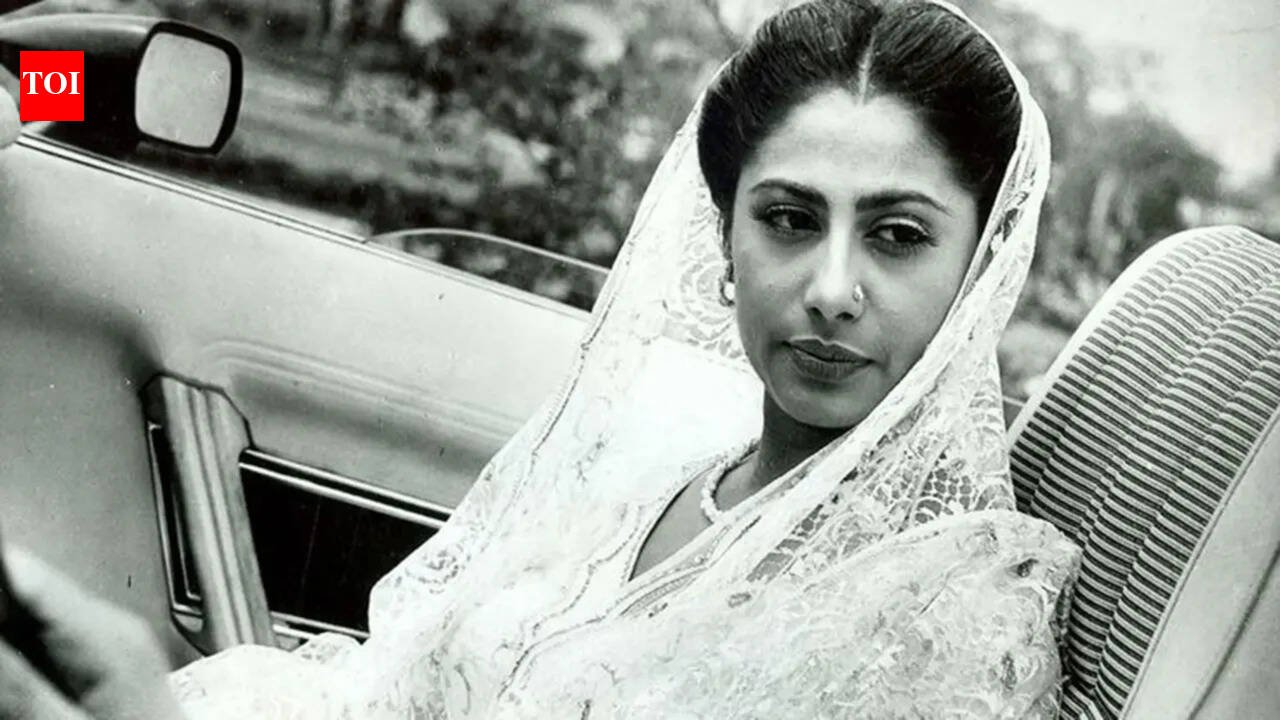
Decades before discussions about the male gaze, objectification, and gender representation became mainstream, Smita Patil was already asking uncomfortable questions. The acclaimed actress, remembered for her powerful performances in ‘Bhumika’, ‘Manthan’, ‘Aakrosh’, ‘Ardh Satya’, and ‘Mirch Masala’, never hesitated to speak her mind, whether through her choice of roles or her public statements.At a time when glamour was increasingly being used as a commercial tool, Smita openly criticised the film industry’s tendency to rely on women’s bodies to attract audiences.
Smita Patil was more than just a performer
Unlike many of her contemporaries, Smita built a career around stories rooted in realism. Her characters were often layered, flawed, resilient, and deeply human. Through parallel cinema, she helped redefine how women could be portrayed on screen. The actress consistently gravitated towards films that explored social realities rather than superficial narratives. This commitment to meaningful storytelling also shaped her views on the industry’s marketing practices.
Smita Patil calling out a deep-rooted mindset
According to News18, in an old interview that continues to circulate online, Smita questioned why female actors were frequently sexualised to sell films while similar expectations were rarely placed on male stars.“Hero ko toh nanga dikha nahi sakte; usse kuch hone bhi wala nahi hai. Lekin aurat ko nanga dikhaye to unko lagta hai sau log aur aa jayenge. Hindustan ki audience par ye baat force ki gayi hai ki dekhiye ji, ismein sex hai; aadhe nange shareer hai to aap film dekhne ke liye aaiye. Yeh ek aisi attitude ban gayi hai jo bahut galat hai. Film agar chalni hai, to film jo hai, agar sachche dil se ek baat keh rahi hai, to woh film chalegi. Sirf aise poster se film chalti nahi hai.”(You can’t really show the hero naked; they think it won’t make any difference. But if a woman is shown naked, they believe a hundred more people will come to watch the film. Indian audiences have been conditioned to think, ‘Look, this film has sex and half-naked bodies, so you should go watch it.’ This is a very wrong attitude that has developed. If a film is meant to succeed, it will succeed because it is honestly trying to say something meaningful. A film does not become successful merely because of such posters)
Smita Patil was way ahead of her time
What made Smita’s criticism particularly significant was that she backed her words with action. Throughout her career, she consciously chose films that focused on substance over spectacle. Whether portraying women battling social oppression or navigating personal conflicts, her performances challenged conventional cinematic stereotypes.Many of the issues she highlighted continue to be debated in the entertainment industry even today, making her observations remarkably relevant decades later.
Smita Patil’s legacy that endures
Smita Patil’s life was tragically cut short when she passed away on December 13, 1986, following childbirth complications. She was only 31 years old. Yet her influence on Indian cinema remains immeasurable.Beyond her celebrated filmography, she left behind a legacy of courage, conviction, and artistic integrity. Her words continue to resonate because they were not merely criticisms of Bollywood’s practices, but a call for cinema to respect its audiences and its women with equal sincerity and dignity.


