



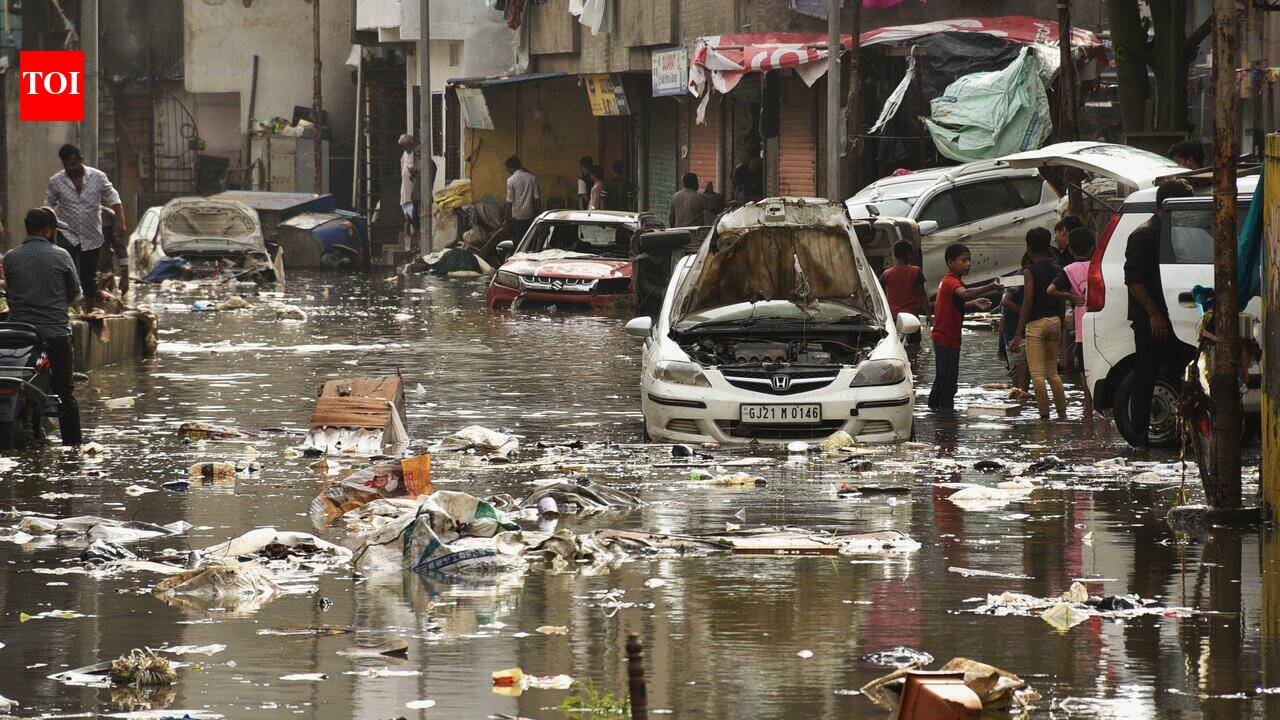
Surat: Recurring floods in Surat cannot be tackled through infrastructure alone, as poor civic behaviour, unchecked waste dumping, illegal industrial discharge and political interference are undermining flood-mitigation efforts, a senior Surat Municipal Corporation (SMC) official said on Wednesday.Rakesh Modi, executive engineer of SMC’s hydraulic department, which is leading the city’s flood-mitigation efforts, raised these concerns while speaking at a symposium, “From Risk to Resilience: Rethinking Flood Management in a Changing Climate,” organised by MITRAJ Sarvajanik Institute of Design, Planning and Technology (MS-IDPT) at Sarvajanik University.Modi said flood management was not simply about creating more infrastructure but also about keeping existing waterways clear and ensuring that rules are enforced consistently. He said a combination of recurring waste dumping and year-round discharge into the drainage network was reducing the capacity of creeks and other waterways to carry stormwater during heavy rain.He said illegal industrial connections are allowing thousands of litres of wastewater to enter drainage networks every day. Water that should ideally be recycled and reused instead continues to flow through the drainage system, meaning stormwater inlets receive water even when there is no rain.“As a result, creeks and rivers carry water throughout the year. Surat effectively faces 12 months of monsoon-like conditions, with as much as 500 MLD flowing through the system even without rainfall,” Modi said.This year-round flow, combined with the dumping of solid and chemical waste, increases the pressure on waterways when heavy rain hits the city, he said.Modi cited the example of SMC’s desilting efforts to underline the problem. Four excavators were deployed to clean and deepen creeks, but around 900 tonnes of solid waste was dumped back into the waterways within just 15 days, he claimed. Such repeated dumping reduces the effectiveness of desilting and can worsen flood vulnerability during intense rainfall.He estimated that flood risk could be reduced by 30% to 40% if illegal construction was halted, industrial activity was regulated and dumping into creeks was stopped. Keeping waterways free of waste would also reduce the need for repeated desilting and dredging, he said.On encroachments along creeks and riverbanks, Modi said the issue was complicated because some constructions had received approvals under town-planning schemes. In some cases, plots were finalised on creek banks during the planning process, making subsequent removal of such structures difficult for the civic body.Modi also flagged the disposal of chemical waste and industrial effluent. He alleged that some tankers illegally discharge chemical effluent into drainage systems or industrial premises, making enforcement difficult. Industries, he said, often benefit commercially while avoiding the cost of compliant waste management.The official also pointed to political interference as a hurdle in enforcement. Referring to provisions of the NDMA Act, he said, “Political intervention often prevents officials from enforcing. That does not allow you to enforce.”Modi cited a proposed Rs 1,000-crore pipeline project to divert a creek, but said authorities were hesitant because even such a large project could not guarantee complete protection from floods.


