


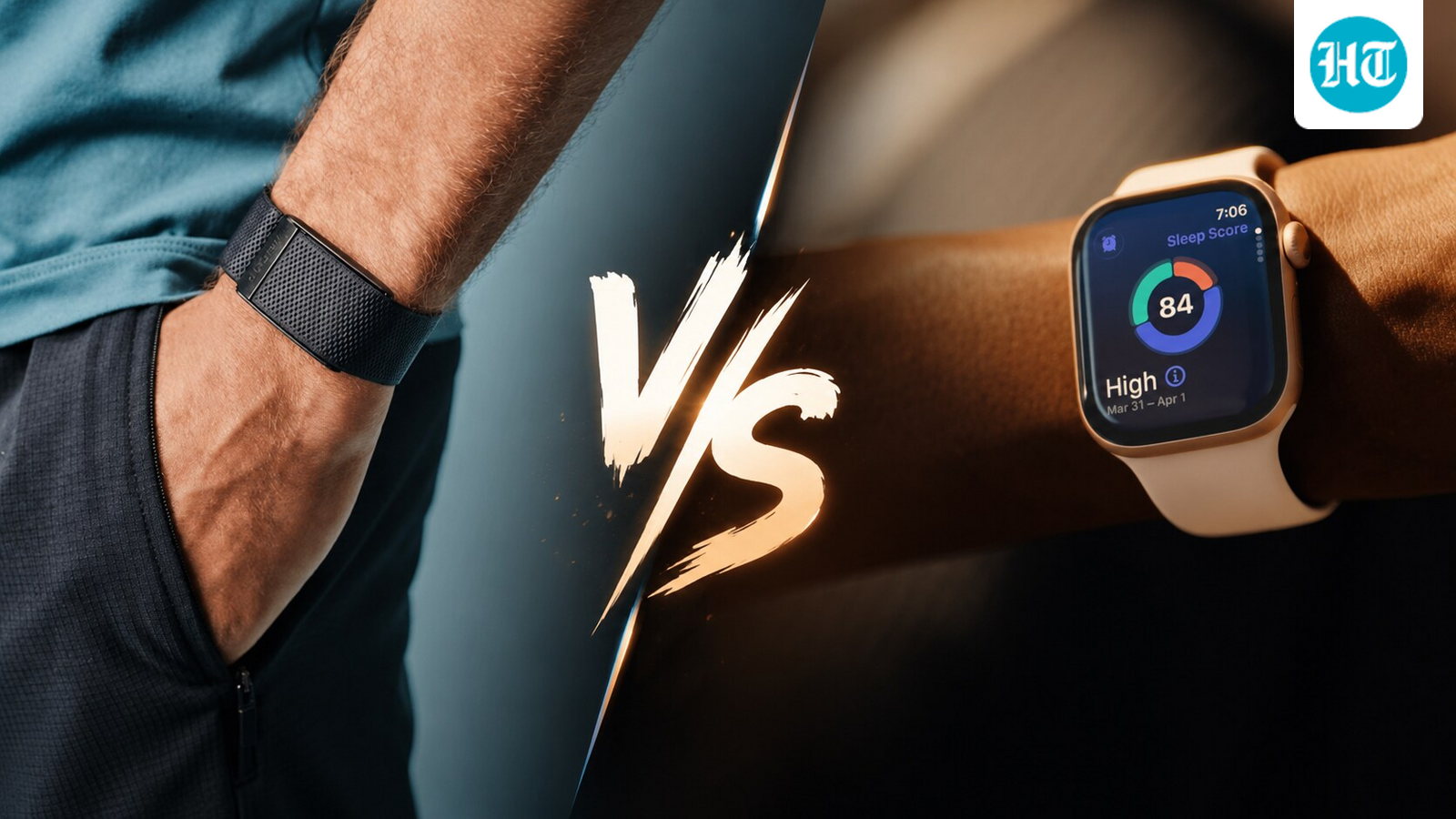
Smartwatches have become all-in-one wearables, combining health tracking, fitness features and smartphone connectivity in a single device. Screenless wristbands take a different approach. Rather than displaying notifications, apps or even the time, they work quietly in the background, collecting health and recovery data around the clock. Devices such as the Whoop band have helped define this category by focusing on continuous monitoring, personalised insights and a distraction-free experience rather than on-screen interactions.
While both wearables can track metrics such as heart rate, sleep and daily activity, they are built around very different philosophies. One aims to be a smartwatch you wear throughout the day, while the other is designed to stay out of your way and let the companion app do most of the work. So, if you are deciding between a smartwatch and a screenless wristband, here is what sets them apart and which type of wearable is likely to suit you better.
Screenless wristbands prioritise recovery over notifications
Screenless wristbands are built for a different purpose. Unlike smartwatches, they lack a display for notifications, apps or calls. Instead, they quietly collect health data throughout the day and night without demanding your attention.
WHOOP helped popularise this category by shifting the focus from step counts to recovery. It tracks metrics such as heart rate, heart rate variability (HRV), sleep, respiratory rate and skin temperature to estimate how prepared your body is for the day. Rather than overwhelming you with raw numbers, the companion app turns that data into personalised insights. It can recommend when to train harder or when your body is better off recovering.
One of the biggest reasons people choose a screenless wristband is because it stays out of the way. It quietly records your health metrics without adding another screen to your life, and it leaves room on your other wrist for a traditional watch if you wear one.
It also offers greater flexibility. Since there is no display or buttons to interact with, devices such as WHOOP can be worn beyond the wrist. A dedicated bicep strap lets you wear it on your upper arm, while compatible apparel can hold the tracker in different parts of the body. That flexibility can make it less intrusive during workouts or everyday activities.
Comfort is one of the reasons these wearables have built a loyal following. Their lightweight design makes them easy to forget you are even wearing them, whether you are at work, exercising or asleep. Battery life is another strength. Most screenless wristbands last anywhere from a week to two weeks, and some can even be recharged while still on your wrist. That means your sleep and recovery data stays largely uninterrupted.
WHOOP may have put screenless wristbands on the map, but it is no longer the only player in this space. Fitbit Air is preparing to enter the category, while brands such as Polar already offer recovery-focused alternatives. Some of these devices even skip the subscription model altogether, giving buyers access to core health insights without an ongoing annual fee.
Smartwatches go beyond health tracking
The biggest strength of a smartwatch is not that it replaces your phone, but that it helps you rely on it less. You can deal with everyday tasks like checking a message, accepting a call or making a payment with a glance at your wrist. That small convenience often saves you from unlocking your phone and getting distracted by everything else on the screen.
Health tracking is another area where premium smartwatches have an edge. Alongside continuous heart rate monitoring, several models include advanced sensors capable of recording an ECG, tracking skin temperature and monitoring blood oxygen levels. Some can even alert you to irregular heart rhythms or other unusual patterns that may warrant medical attention. While these features are not a substitute for a doctor’s diagnosis, they can encourage users to seek medical advice before a condition becomes more serious.
Real-time feedback is another key advantage. Whether you are running, cycling or strength training, your pace, heart rate and other workout metrics are always visible on your wrist. You do not have to wait until you finish exercising to review your performance.
If you enjoy hiking, a smartwatch can be reassuring to have on your wrist. It can guide you along unfamiliar trails, show your location at a glance and help you find your way back if you take a wrong turn. Several premium models continue to work even after you lose mobile signal, making them useful companions once you are away from towns and marked roads.
These capabilities extend beyond recreation. Seafarers and other maritime professionals can benefit from GPS navigation, waypoint marking, weather information and sailing-specific tools available on select smartwatches. Having that information accessible from the wrist can be far more practical than repeatedly reaching for a smartphone while working on deck.
Disclaimer: At Hindustan Times, we help you stay up-to-date with the latest trends and products. Hindustan Times has an affiliate partnership, so we may get a part of the revenue when you make a purchase. We shall not be liable for any claim under applicable laws, including but not limited to the Consumer Protection Act, 2019, with respect to the products. The products listed in this article are in no particular order of priority.
