


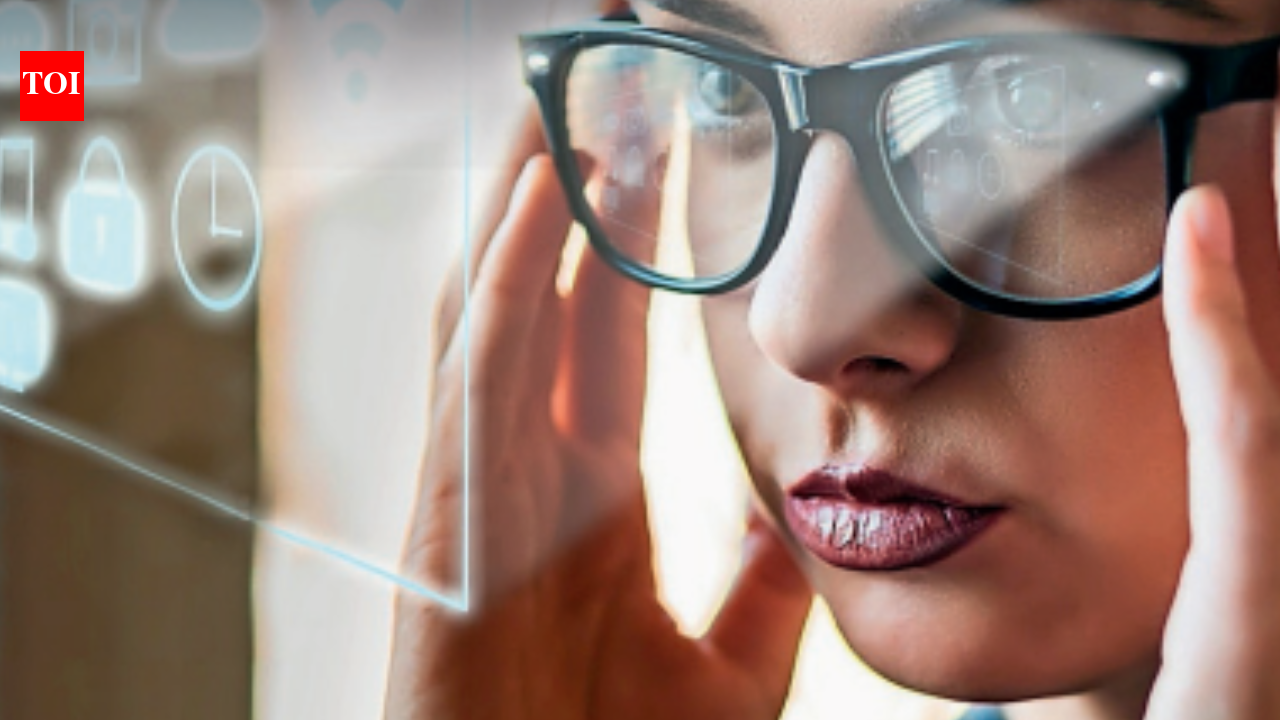
MUMBAI: AI-powered smart glasses may look like an ordinary pair of spectacles, but they can take calls, interpret what the wearer sees, provide information and assistance—and, crucially, record what is happening around them.Their appearance in the market has begun to make some people think twice before speaking freely to someone wearing them — or even about noticing them roaming around private and government premises as they could pose a threat to privacy and national security. For those working in security and cybersecurity, the unease is sharper. A private security expert with cybersecurity expertise said he would be wary of having an informal conversation with someone wearing smart glasses.
Not just an eyewear
“I will suspect the other person’s glasses may be AI-powered and could be recording me, looking for things that can later be leaked or used to create a controversy,” he said.Senior police officers, too, are uncomfortable. “I will be more cautious while speaking to visitors. Conversations will be limited to one-line responses—yes or no—instead of detailed discussions that could be recorded and later used to defame,” said a senior IPS officer.For Ayesha (name changed), a Gen Z professional who travels by metro to her office in central Mumbai every day, the concern is more immediate. “We often see some men ‘secretly’ recording videos of young girls, assuming they won’t be noticed. What will happen when such smart glasses become widely available and are misused by people like them?” she asked.The concern was also apparent during the Cockroach Janta Party (CJP) protests at Jantar Mantar in July 2026, when protesters and police accused each other of using AI-enabled smart glasses and body cameras to record events at the protest site.Gadgets once largely associated with espionage and television sting operations are now steadily entering the public domain, bringing with them a new set of questions about privacy, security and trust. With AI-enabled smart glasses, questions are being raised about who can record, whether people should be informed when they are being recorded, where the data will be stored, who can access it and who will monitor how AI systems process recordings and extract information.To address these concerns, the Maharashtra government has set up a committee to formulate a standard operating procedure (SOP) for the use of AI-enabled smart glasses. It is among the earliest state administrations to formally initiate such a process.Additional chief secretary (home) Manisha Mhaiskar said, “A robust SOP is being developed, taking into account the challenges posed by modern technology and putting in place safeguards to address them.” At present, people tend to believe what they see and take things at face value. “But that basic assumption is being challenged in the era of new AI technologies, raising serious questions about trust and authenticity,” said Mhaiskar.Expressing concern over the growing overlap between the real and virtual worlds, Mhaiskar said people needed to be more careful about what was recorded and shared.“In today’s world, the line between what is real and what is virtual is becoming increasingly blurred. People need to be extremely careful about what is being recorded and what is being shared with them. Even images shared in good faith can potentially be misused as a weapon,” she said.A senior IPS officer, who did not wish to be named, said the technology could deepen an existing trust deficit.“The trust deficit is growing, affecting how people communicate with acquaintances and those around them amid the fear of being recorded by smart glasses worn by others,” he said. The govt is in process of designating sensitive govt premises as no-gadget zones in the interest of security. Also under consideration is the responsibility factor – will it be the user, the device manufacturer or the platform providing service who will be responsible for recordings stored on devices or cloud servers? Some of these points have been covered in the amended Information Technology (IT) Act and soon-to-be-implemented Digital Personal Data Protection Act, but the state wants its SOP to further tighten the rules to prevent any misuse.Apart from privacy and ethical concerns, cybersecurity experts are worried about cheaper devices from lesser-known manufacturers flooding the market soon.“More worryingly, users could unknowingly become conduits for sensitive information that may be accessed or exploited by foreign or hostile actors,” said an analyst with a cybersecurity firm.At the same time, the technology has legitimate uses. Recordings can help expose corruption or misconduct and protect individuals against false allegations.However, private conversations, gestures or behaviour could also be turned into viral memes, jokes or scandalous content, said a cybersecurity expert.Experts and police officers said irrespective of the debate over the use or misuse of AI-enabled devices, a clear policy was needed to regulate them. Such rules, they said, should define where the devices can be used, when recording without a person’s knowledge would be prohibited, how recordings should be stored and deleted, and who can access them.
