



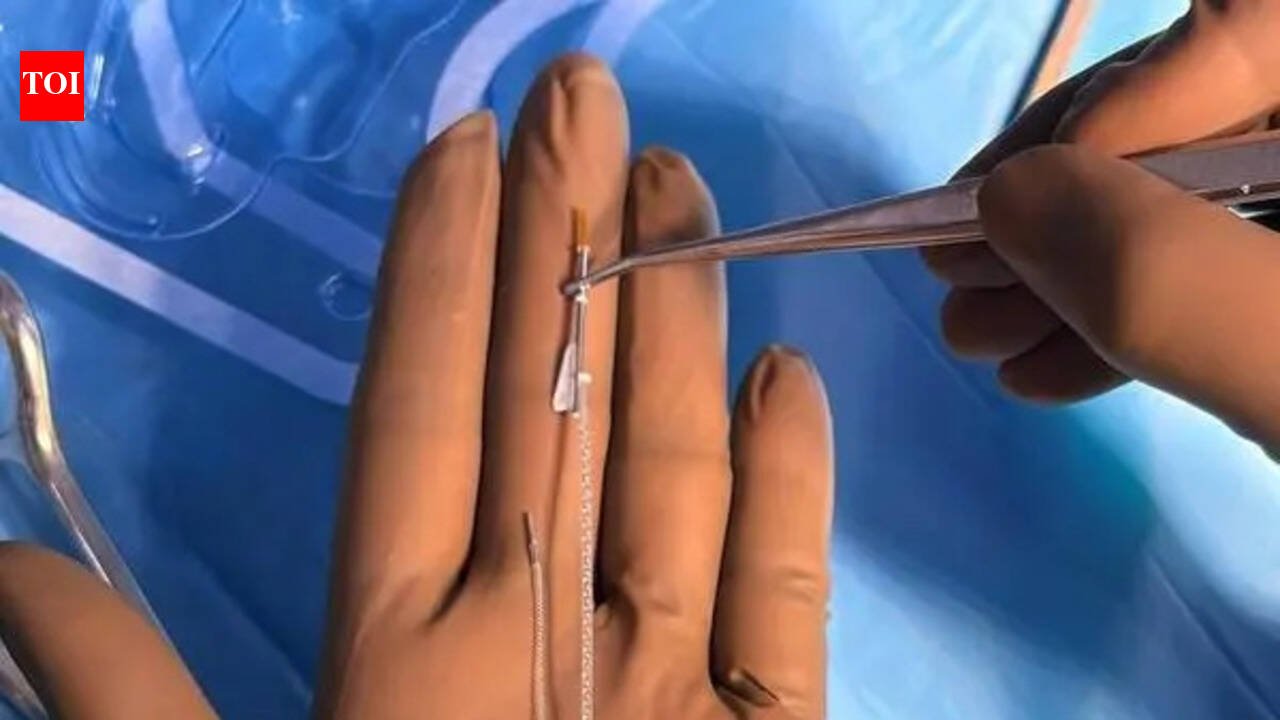
Pune:For the first time in her four years of life, young Nihira (name changed) can finally hear her parents’ voices. Diagnosed at the age of one with severe to profound hearing loss in both ears, Nihira’s journey to sound has been long, involving various non-surgical attempts, including Ayurveda, that ultimately proved unsuccessful.However, a recent breakthrough surgery has not only restored her hearing but equipped her with a “smart” cochlear implant designed to evolve with future technology.While many children with hearing loss begin with hearing aids, Nihira’s family found their benefits were limited, significantly hindering her speech development and social engagement. On March 20, the family decided to proceed with bilateral cochlear implantation at a private hospital in the city.The procedure was led by Dr Sumitpal Bhatti, senior ENT surgeon at the Tiny Bubbles Child Development Centre. “This was a novel approach for us, and gaining the family’s trust was paramount,” Dr Bhatti said. “The Nexa cochlear implant is a next-generation, future-ready smart system. We utilised advanced intraoperative guidance to ensure precise placement, which is critical for the best possible outcome.”What sets this surgery apart is the technology within the implant itself. Unlike traditional models, this “smart” system is designed to last a lifetime and can be upgraded as technology improves without the need for additional surgery.Dr Inderdeep Singh, who assisted in the surgery, explained the significance: “The outcome is phenomenal. This system allows the implant to pair with new external processors instantly, without a clinic visit. The internal chip stores clinical data and continuously monitors its own performance to ensure optimal daily function.”Dr Bhatti further explained that the device works in two parts: an internal component surgically placed under the skin to stimulate the hearing nerve directly, and an external sound processor. By bypassing damaged parts of the ear, the system allows the brain to perceive sound clearly.On April 1, following a two-week recovery period, the doctors activated the external sound processor. The result was an emotional milestone for the family.“This was the first time in her life that Nihira heard her mother’s voice, her father’s laughter, and the sounds of nature,” said Dr Bhatti. “Her expression said it all.”Nihira’s case highlights a broader health challenge in India, where it is estimated that 1 to 6 per 1,000 newborns suffer from congenital hearing disabilities. Medical experts warn that early diagnosis remains a major hurdle; delayed intervention often leads to aggravated speech and language impairment, making early screening and advanced solutions like cochlear implants vital for a child’s development.


