


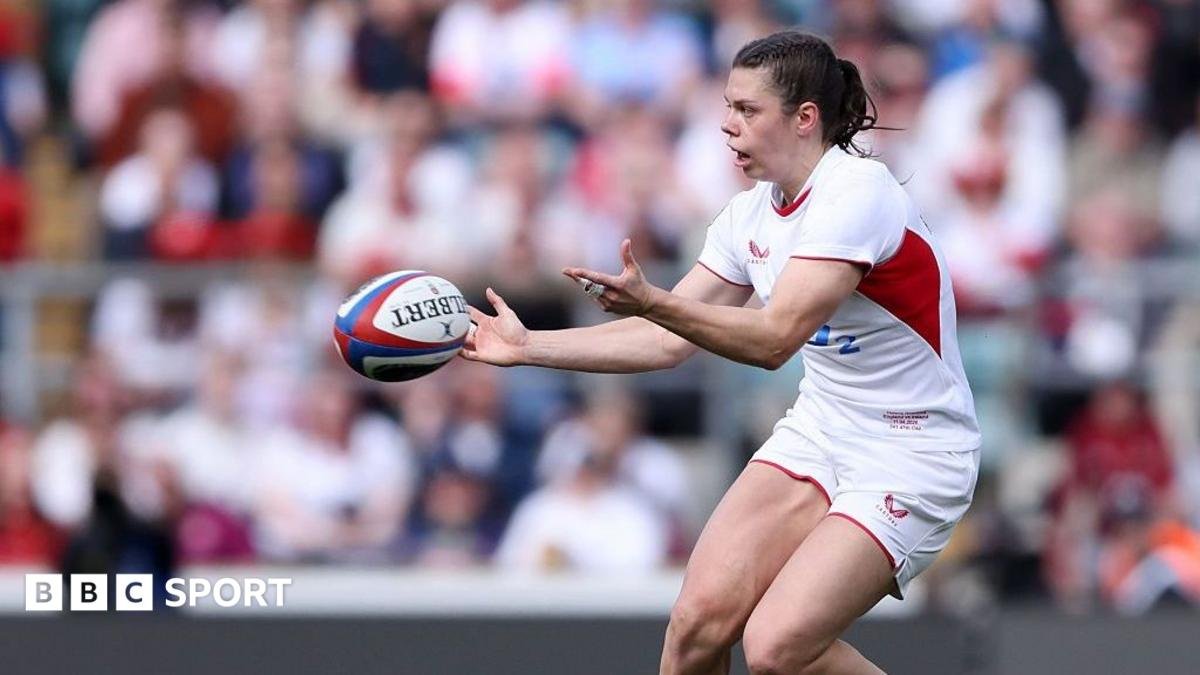
One area of concern for the England players is the ball changing shape.
Campbell says they “played around” with how much the ball was blown up, adding: “In previous weeks it was actually a bit fatter, and then this week it definitely feels smaller.”
Rowland agrees, saying: “There needs to be a bit more done in terms of how the balls are made. We had some new balls today versus the ones we’ve had for the last three weeks [and the difference] is massive.
“If you’ve been training with an old ball that’s fat to then go into a game and it’s a completely different shape, actually that makes a massive difference as well, which I think is something that you don’t necessarily find so much in the size five.”
The ball has already been trialled in the Under-18s and Under-20s Women’s Six Nations as well as the HSBC Sevens Series.
Rowland says she would “love to see the data on if it actually has made a difference”.
It seems a fair request, and is one that BBC Sport put to World Rugby, but we did not receive any data.
A spokesperson said: “The balls haven’t been used in the international XVs environment yet so there isn’t directly comparable data to share with players either directly or via their unions.
“Once we’ve built up a large enough data set of player responses, match official responses and game data, we’ll publish the results, so it’ll be available to players, unions, the International Rugby Players Association, coaches, match officials, the media and everyone else.”
Some players are frustrated as they feel they have become guinea pigs on the global stage. To compound that frustration, they will then return to their clubs where the league season will be played with a size five ball once again.
BBC Sport asked World Rugby when the trial period is likely to conclude, and were told: “We’ll be able to assess our position on women’s 15s once the international window has started.
“This will allow for completion of the WXV tournaments and full analysis in early 2027. The evidence to date suggests that further exposure produces greater results.”
While it looks like players and coaches will get to see the data in early 2027, any wider outcomes or decisions might take longer.
