



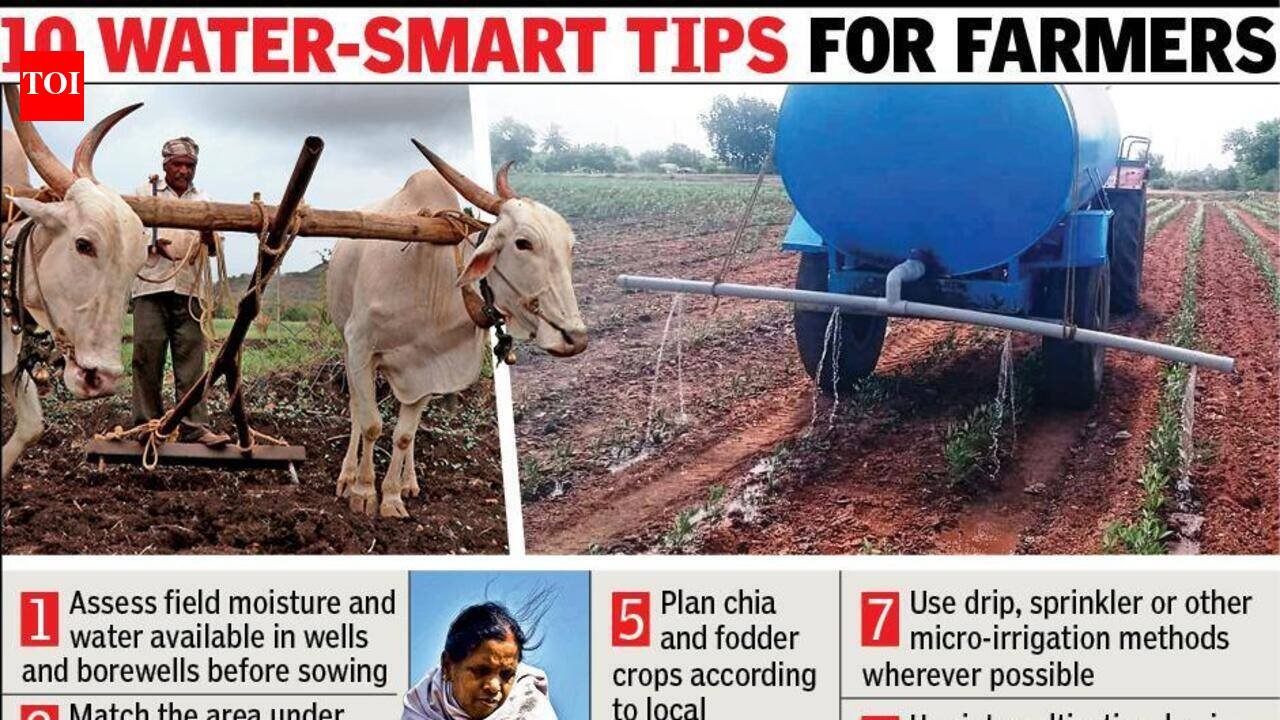
Nagpur: With deficient rainfall leading to drought, the agriculture department has urged farmers to plan their rabi crops after taking into account the available water stock. The department has advised farmers to give preference to crops that need less water or mature in a shorter period.Farmers should assess the moisture in their fields, water levels in wells and borewells, soil type, irrigation facilities and local weather before deciding what and how much to sow, said district superintendent agriculture officer Archana Kadu during a meeting on Friday.“Farmers with limited irrigation should set aside land for water-intensive crops such as wheat only in proportion to their assured water supply. Depending on local conditions, they may consider crops such as gram, safflower, linseed, sesame, jowar, bajra, maize and sunflower,” officials added. The department has also advised planning for chia and fodder crops based on local suitability and requirements.Officials further added that farmers should avoid sowing large areas with crops that need more water in times when uncertainty looms over irrigation stock. They should irrigate only as required and consider drip or sprinkler systems and other micro-irrigation methods where feasible, they added. Inter-cultivation, hoeing and timely weed control can help conserve soil moisture. Farmers growing oranges have also been advised to use mulching.The department has highlighted jowar as an option for double cropping in Vidarbha after paddy harvest. Farmers can use residual moisture in paddy fields to grow the crop for both grain and dry fodder for livestock, officials said, urging them to follow scientific practices.Recommended varieties for the region include PKV Kranti (AKSV-13R), Takpa-5, Trombay Akola Suruchi, Phule Suchitra, Maldandi 35-1 and Parbhani Shakti. Applications for rabi jowar seeds can be submitted through the MahaDBT portal, officials said.Kadu said that careful crop selection and water planning are essential to limit financial risks amid changing weather and water scarcity. Farmers seeking guidance can contact deputy agriculture officers, circle agriculture officers or taluka agriculture officers, the department said.
