


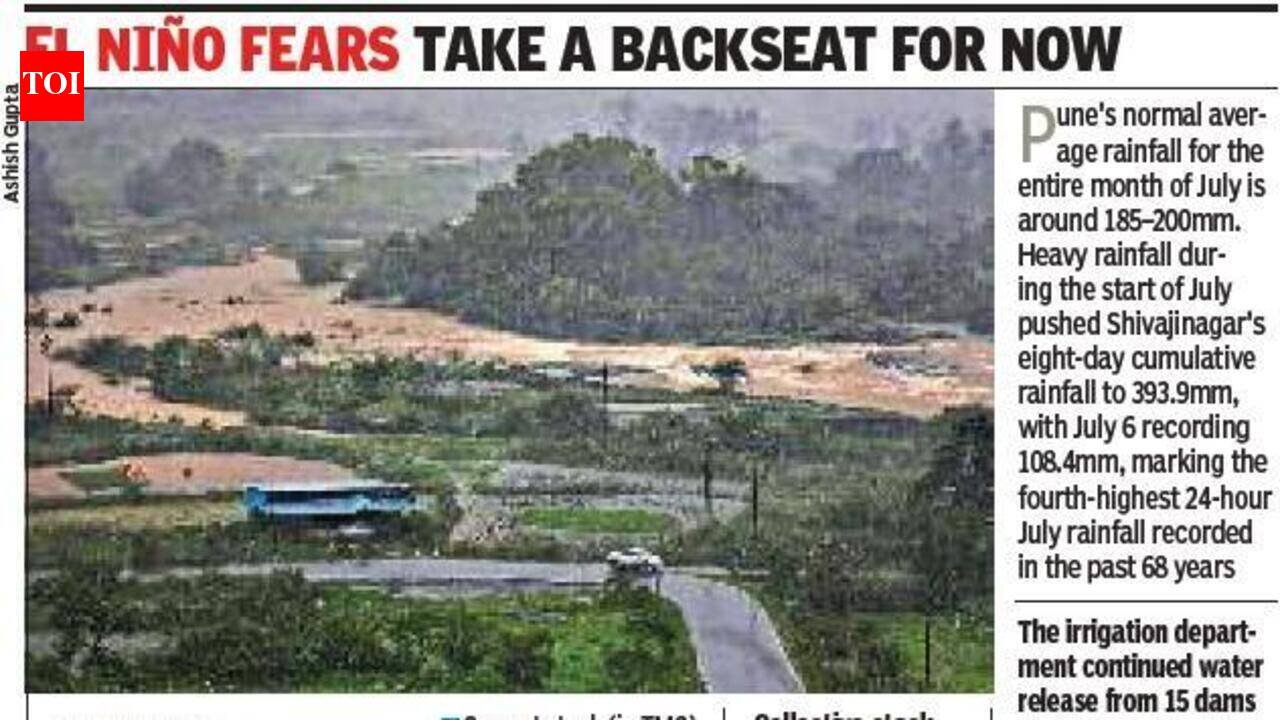
Pune: Shivajinagar observatory has registered its wettest July since records began in 1901, with rainfall reaching 508.9mm between July 1 and 28, surpassing the previous July record of 508.5mm set in 1907, India Meteorological Department (IMD) officials said on Wednesday.IMD scientist SD Sanap said the 2026 rainfall total was now the highest ever recorded for July at the observatory, ending a record that had stood for 119 years.The unprecedented rainfall was triggered by a succession of favourable weather systems through the month. “Most of the rainfall was recorded during July 1-8, when a Bay of Bengal depression, an offshore trough and an east-west shear zone around 21°N together created highly conducive conditions for widespread rainfall across Pune city and district,” Sanap said.Rainfall activity weakened briefly between July 9 and 15, but picked up again as another system over the Bay of Bengal reinvigorated monsoon conditions. “Subsequently, another westward-moving system and a low-pressure area over southwest Rajasthan and adjoining regions strengthened monsoon flow and moisture incursion, resulting in additional rainfall over Pune and the Ghat areas,” Sanap said.According to IMD, four low-pressure systems influenced Maharashtra during July, including two depressions, one well-marked low-pressure area and one low-pressure area over land. “No low-pressure systems formed in June. All four systems occurred during July and collectively contributed to the exceptionally wet month,” Sanap said.Despite the record-breaking rainfall, wet weather is expected to ease in the coming days. IMD has forecast light to moderate rain over Pune city for the next three days, with rainfall likely to decrease from the weekend as the current depression over Odisha and adjoining regions moves westwards.While several recent years recorded above-normal July rainfall, none matched this year’s total. IMD data showed July rainfall of 404.9 mm in 2006, 394mm in 2024, and 386.2mm in 2022. Data compiled by the Vagaries of Weather blog indicated 369.1mm of rainfall in July 2019.
