


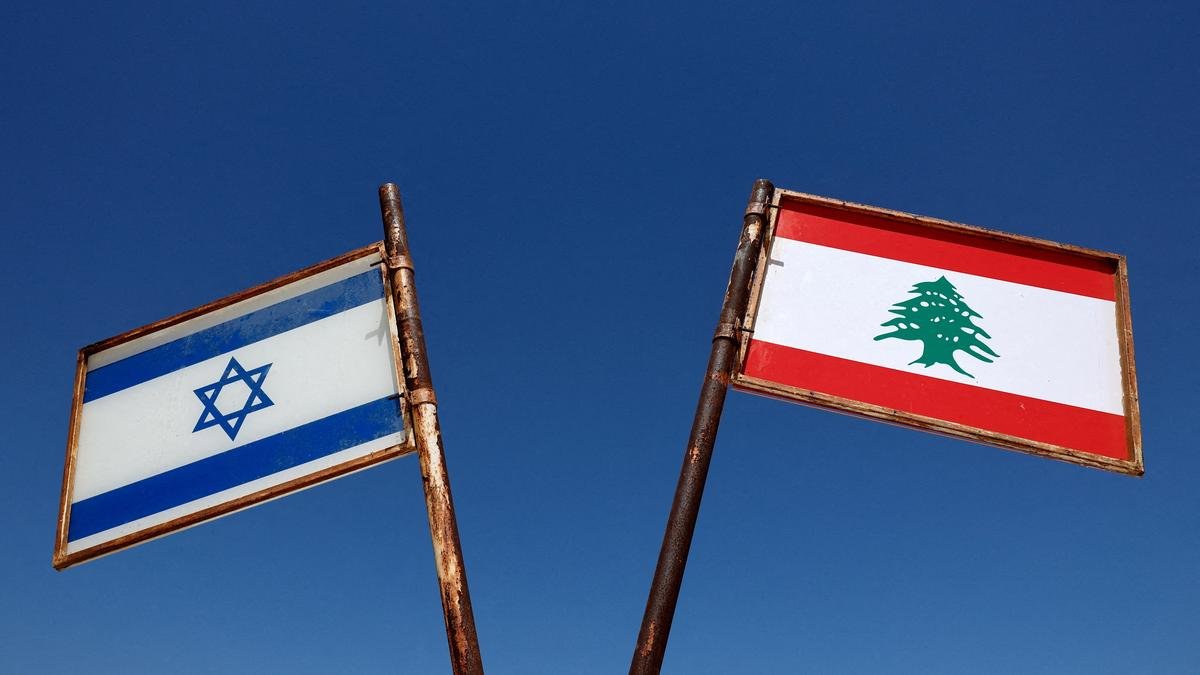
Israel has occupied a swathe of southern Lebanon in a war with Hezbollah that began on March 2, when the group opened fire at Israel after Iran came under U.S.-Israeli attack. File.
| Photo Credit: Reuters
Lebanon’s Parliament Speaker Nabih Berri, a key ally of Hezbollah, on Monday (June 29, 2026) slammed a U.S.-brokered agreement between Lebanon and Israel, warning it could lead to attempts to divide Lebanese and said it would not be implemented.
Israeli officials suggested the agreement would move forward in the coming days, but there were no immediate reports of any aspects of the deal being implemented on the ground.
In comments to Lebanon’s al-Akhbar newspaper, Mr. Berri described Iran-U.S. talks as the only realistic opportunity to secure Israeli withdrawal from Lebanon and that any attempt to separate Lebanon from the U.S.-Iran track would prolong Israeli occupation.
Israel has occupied a swathe of southern Lebanon in a war with Hezbollah that began on March 2, when the group opened fire at Israel after Iran came under U.S.-Israeli attack.
The Lebanon war has been a central part of diplomacy towards ending the wider U.S.-Iran conflict. Tehran has insisted on a Lebanon ceasefire as part of its interim deal with Washington, while the U.S. has sponsored separate talks between the Lebanese and Israeli governments, which Beirut has attended despite Hezbollah’s objections.
Israel has praised the agreement, signed by the Lebanese and Israeli ambassadors to Washington on Friday (June 26, 2026), with Prime Minister Benjamin Netanyahu saying it allows Israeli forces to continue to occupy southern Lebanon if Hezbollah does not disarm.
Hezbollah, which has demanded Beirut quit its face-to-face talks with the Israeli government, has rejected the deal as a surrender to Israel.
Berri dismisses Lebanon-Israel agreement as ‘diktats’
The agreement foresees Lebanon’s Army taking over territory pending verified disarmament of non-state groups — a reference to Hezbollah — saying this would enable Israel’s military “to progressively redeploy out of” Lebanon. Lebanon’s army would gradually assume responsibility in “pilot zones”.
A senior Israeli official said the pilot zone process under which troops would withdraw would begin “immediately”, without elaborating. A second Israeli official said the “redeployment” from the pilot zones might begin in the coming days.
The zones, according to maps published by the Israeli government, include the Lebanese villages of Froun, Zawtar al-Gharbiyeh and Ghandouriyeh.
Two Israeli officials said separately that these areas had been taken by Israeli forces recently, without specifying exactly when, to use as leverage in negotiations.
A satellite image of Froun, taken on June 24 by Airbus, showed destruction to large parts of the village.
Mr. Berri, head of the Shia Muslim Amal Movement, described the agreement as “diktats”. Al-Akhbar quoted Mr. Berri as saying the most dangerous aspect of the agreement was not only its political content, but “the potential for it to incite internal divisions and draw the Lebanese into a confrontation among themselves”.
The agreement “won’t be implemented”, al-Akhbar cited him as saying.
The intensity of hostilities in Lebanon in the south has abated this month, as Iran has insisted on its demand for a Lebanon ceasefire in talks with the U.S., and as Israel has scaled back attacks in Lebanon at Washington’s behest.
The U.S.-Iran interim agreement requires both countries and their allies to end military operations on all fronts including Lebanon. Iran is also seeking Israeli withdrawal from Lebanon.
Iranian Foreign Minister Abbas Araqchi said on June 16 that a full end to the war would not be achieved without Israeli withdrawal. Israel says it will keep its troops in the southern ‘security’ belt it is occupying for as long as is necessary to prevent Hezbollah invading or firing at Israeli border towns.
Published – June 29, 2026 10:53 pm IST
