


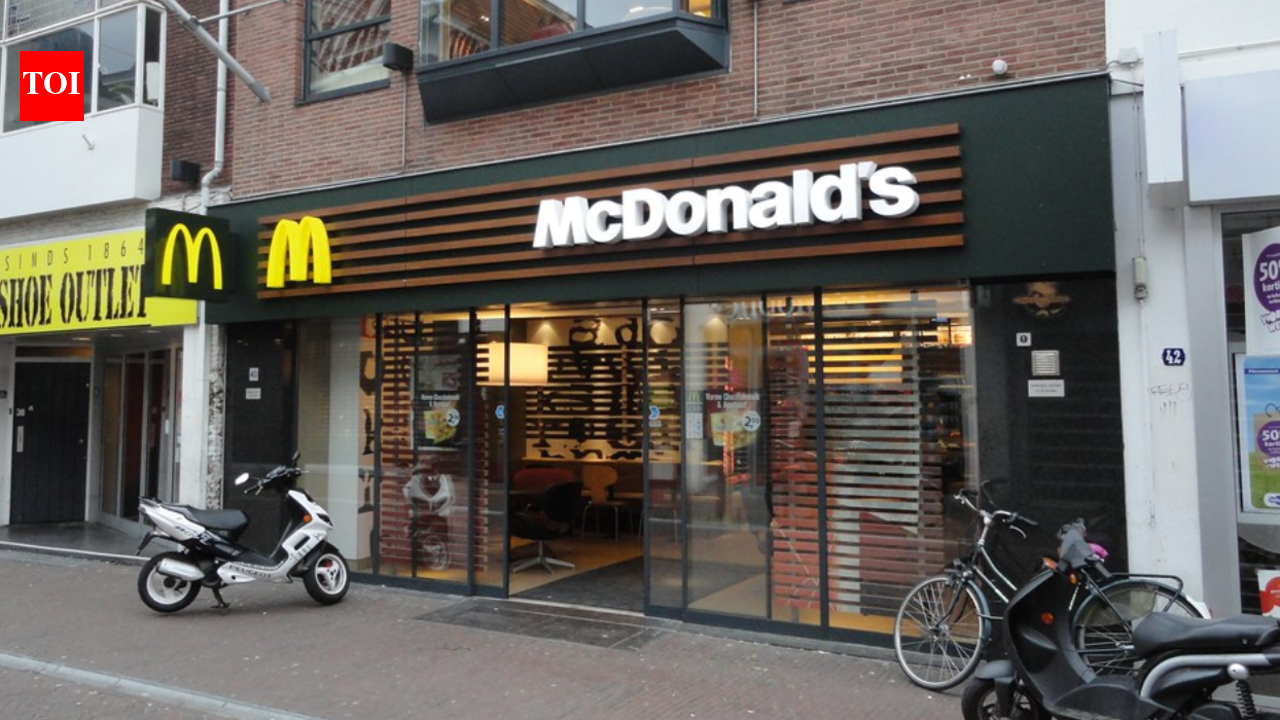
Indians migrate for many reasons, careers, comfort, currency. But somewhere between Schiphol arrivals and European payrolls, a quieter reckoning begins. Back home, a quick bite might mean a McAloo Tikki, a McSpicy Paneer, or a Veg Maharaja Mac. Abroad, it can mean a plain cheese slice between two buns, and, for a moment, a small, unexpected doubt about what the move was really for.That small recalibration played out on X this week, when an Indian vegetarian recounted her experience at a McDonald’s in the Netherlands, drawing sharp reactions about food norms and consumer assumptions.
“Vegetarians Are Treated Like Second-Class Citizens”
Mona Shandilya (@RoseTint4) shared her frustration with vegetarian options abroad, saying the lack of proper vegetarian choices in the Netherlands baffled her:“Outside India, at most places, vegetarians are treated like second-class citizens.They don’t even bother creating proper vegetarian food items. At McDonald’s in India, the veg burgers are good, and the other veg options are great too. In the Netherlands, McDonald’s gives you a cheese slice between two buns in the name of a vegetarian option. They don’t even add vegetables.” Her post tapped into a distinctly Indian experience abroad. India has the world’s largest vegetarian population, somewhere between 20% and 39% of the country identifies as vegetarian, translating to over 500 million people. Though 70–80% of Indians do consume meat, many do so infrequently. In certain communities, Jains, Vaishnavas, Brahmins, vegetarianism is not preference but principle. It is also more common among women, older people and wealthier households, with higher concentrations in states like Rajasthan, Haryana and Gujarat.McDonald’s India built an empire around that reality. Roughly half its menu is vegetarian. The McAloo Tikki, McSpicy Paneer, Veg Maharaja Mac and Pizza McPuff are not side notes; they are core products. Some outlets operate without beef or pork entirely, and the familiar green-and-red dot labelling system clearly distinguishes vegetarian from non-vegetarian items, a practical necessity in a country where dietary practice is shaped as much by religion and custom as by taste, and where demand for meat-free options runs deep enough to sustain it. . Other chains reflect the same landscape: KFC has long offered Veg Zingers, while Domino’s menu in India features an extensive range of vegetarian pizzas tailored to local preferences.
Veg offerings in an Indian Mcdonalds Menu
The Netherlands is a different equation. Only 5% of Dutch people eat no meat at all. Of those, 2% are pescetarian, 2% vegetarian, and 0.5% vegan. Around 22–30% identify as “flexitarian,” consciously reducing meat consumption several days a week, but the core market remains meat-eating. Roughly 95% of the population consumes meat or fish in some form. McDonald’s Netherlands does offer vegetarian options: the Beyond Meat–based McPlant (added permanently to the national menu in 2022 after a test run), Veggie Nuggets, and the Meatless McKroket made with jackfruit. The McPlant has expanded internationally since its 2020 debut, appearing in Sweden, Denmark, Austria, the UK, Ireland, Australia and Portugal.
Meatless Menu at Mcdonalds Netherlands
The issue, as many Indian vegetarians point out, is not absence but mismatch. Many of these items are not fully plant-based by default and may contain dairy or eggs. Cross-contamination risks exist because items are often prepared in shared kitchens and fryers. And labelling standards differ; European “vegetarian” does not always align with Indian expectations of “pure veg”.
“Please read up before you travel”
The replies were swift, and divided. One user wrote, emphasizing personal responsibility, noting vegetarianism is culturally specific and not expected abroad: “Please read up before you travel. Vegetarianism is an Indian construct. In other places, it is either veganism or limited options where Buddhists monks are present. It is not the responsibility of the rest of the world to cater to your diet restrictions. And I am saying that as a vegetarian.”Another compared the expectation to a cultural mismatch, likening it to dietary norms elsewhere: “It is like a Jew coming to a roadside dhaba and asking for kosher food. And then posting a rant on social media about how he wasn’t served one.” Some struck a more pragmatic tone, highlighting the practical and market realities of foreign fast-food markets: “I’m vegetarian too, but we also need to understand their business realities. Outside India, demand for veg options is different, so availability can be limited even at places like McD. We learn to adjust, explore what’s available, and make the best choices with what we have.”Others criticized the poor quality of vegetarian options abroad, sidingsquarely with Shandilya: “ a cheese slice between two buns is not a vegetarian option… it’s a cry for help.”Another noted that vegan alternatives exist and can be satisfying, though different from Indian offerings: “Not true, there are vegan options as well. They don’t come anywhere close to what you get in India, but they’re good and hit the spot. They keep experimenting with different patties like falafel, vegan croquettes, etc., and the sauces are good too.”Some expressed weary resignation, preferring to bring their own food when traveling: “This is why, most often than not ..we try to carry our own food..Feels, it is better to have simple bread- butter- jam (say on road trips ) than eating yucky bland vegetarian food in remote restaurants…but these restaurants also have point.. why you will bother to cater needs of those which might be less than 1% of the total market ?? This is why my craving for good Indian food amplifies once I touch the India back !!” The economics are hard to ignore. In Western markets, meat-based meals drive fast-food sales. Introducing aloo- or paneer-based staples would not align with local demand or brand identity. Western consumers who reduce meat often prefer plant-based substitutes that mimic meat, like the McPlant, rather than potato patties or paneer fillings. For multinational chains built on scale and standardisation, decisions are shaped far more by volume and demand than by sentiment.
The broader friction
The Dutch McDonald’s episode sits within a larger pattern. Indian vegetarians travelling abroad often report limited variety, confusion over ingredients, and anxiety about contamination. In some Western kitchens, “vegetarian” may still include fish sauce or broths unfamiliar to Indian diners. Shared utensils and fryers become a point of discomfort. Outside major cities, the default vegetarian option can be a salad or fries. In November 2025, a video circulated of an Indian tourist in Singapore visibly distressed after being served a non-vegetarian burger. She confronted staff, saying, “I’m from India, how can you do this?”, arguing the packaging lacked clear labelling. Reactions were similarly split, some empathised, others noted that menus vary globally and must be checked. It is less about fast food and more about expectation. In India, vegetarianism shapes infrastructure, separate counters, labelling systems, entire restaurant chains built around purity norms. Abroad, vegetarianism is usually a minority preference within a meat-first culture. The gap between those two worlds can feel jarring when you are hungry and staring at a menu board. The Dutch McDonald’s will likely not introduce a McAloo Tikki anytime soon. And Indian vegetarians will continue to travel, adjust, carry snacks, research menus and sometimes vent online.


