



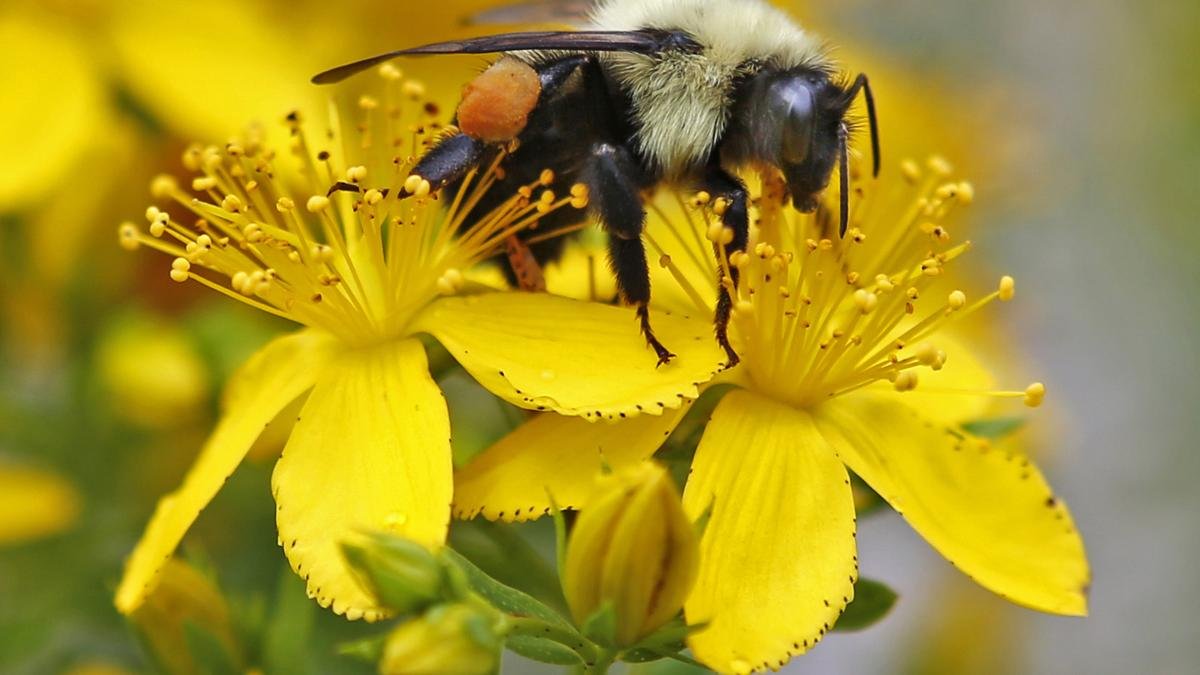
A bumblebee gathers nectar from a wildflower in Appleton, U.S., 2015.
| Photo Credit: AP
Nepal’s vulnerable communities need insect pollinators
A study in Nepal has found that insect pollinators are essential for both human health and financial survival. Researchers tracked the diets and incomes of smallholder farming families and found insects are responsible for 44% of a family’s farming income and over 20% of its intake of vital nutrients, like vitamin A and folate. The native honeybee was the single most critical species. The study also found that actively managing these species could reverse malnourishment trends.
Small camera reveals hidden world on Arctic seafloor
Researchers have caught a glimpse of life on the Arctic seafloor using a portable camera. After they deployed the device 260 m into a Greenlandic fjord, they saw a bustling ecosystem previously hidden from view. There were hundreds of small organisms, including shrimp-like amphipods and tiny jellyfish, and a snailfish swimming backwards and a narwhal. Using red LED lights, which many deep-sea creatures can’t see, the researchers observed these animals without scaring them away.
New AI tool excels at identifying cells, even ‘new’ ones
A powerful AI tool called TranscriptFormer can identify cell types with extreme accuracy, even of species it hasn’t seen before. Scientists trained it on 112 million cells from 12 species, spanning 1.5 billion years of evolution. It could rapidly detect disease states in human cells and naturally uncover complex biological patterns, such as how species are related, without new instructions. The model is a new way for comparing biology across all living beings.
Published – May 10, 2026 08:00 am IST


