



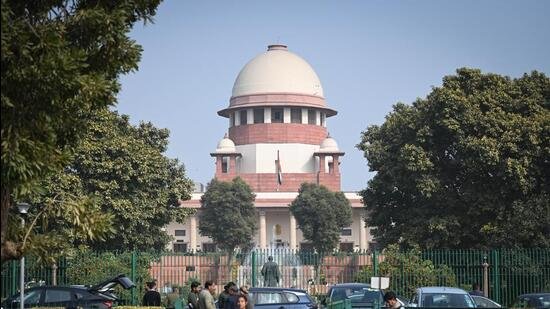
The Supreme Court has sought responses from high courts within 10 days on draft guidelines to ensure the timely pronouncement of high court and trial court judgments, as part of systemic reforms aimed at accountability and transparency in judicial functioning.


“These guidelines are only to enhance accountability in our system and strengthen the judicial institution,” said a bench of Chief Justice of India Surya Kant and Justice Joymalya Bagchi on Monday as it heard a case concerning reserved judgments of appeals from life convicts that have been pending for years in the Jharkhand high court.
The bench decided to lay down guidelines for timely justice after it sought data from all high courts and found the trend was not limited to one court.
Advocate Fauzia Shakil, assisting the court as amicus curiae, prepared draft guidelines and submitted them to the high court on Monday. The bench closed the matter for a judgment while seeking responses on the suggested guidelines.
Shakil told the bench that conditions improved following the court’s request for reports from the high courts on pending cases. The bench said, “Sometimes the delay happens due to the overanxiety of the judge to give the best. We cannot condemn them for working so hard, but we only seek to assist in improving transparency and accountability in the system.”
The bench called Shakil’s proposed framework eloquent and commendable. “The registry of this court shall circulate the guidelines to registrar generals of all high courts, giving them 10 days…to submit their suggestions on the practical difficulties they may face in implementing these guidelines.”
The draft guidelines propose that a judgment be pronounced within a maximum of three months from the date it is reserved, and real-time monitoring of cases on the websites of high courts, etc.
Shakil referred to the 2025 Supreme Court judgment in the Ravindra Pratap Shahi case, which held that the concerned registrar general shall place the matter before the chief justice when an order is not delivered within three months. The chief justice is required to intimate the concerned bench to pronounce the judgment within two weeks.
Shakil suggested that the chief justice should have the choice to assign the case to another bench if the judgment is not delivered within two weeks. She said the litigant also has a right to move an application with a prayer for early judgment on expiry of the three months after a case is reserved as per a 2001 Supreme Court judgment in the Anil Rai case.
The draft guidelines propose that bail orders be pronounced either on the same day or, if reserved, the next day, in cases involving personal liberty. They seek to pronounce the operative part of a judgment with a reasoned order within the next 15 days.
The guidelines say copies of judgments pronounced in open court should be uploaded within 24 hours. They propose that trial courts should pronounce decisions within 30 days in civil cases, and in exceptional cases within 60 days of concluding arguments. For commercial courts, the guidelines propose a 90-day deadline.


