


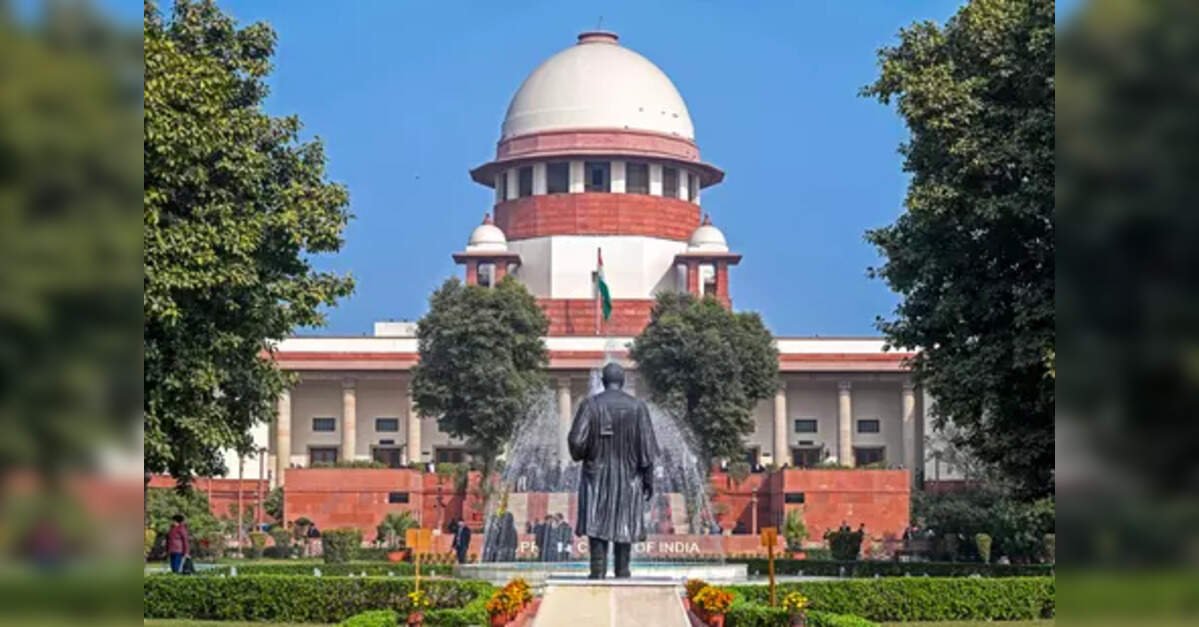
The Supreme Court of India has issued a notice to Meta in relation to a proposed five-year ban on advertisements on WhatsApp, following a recommendation by the Competition Commission of India (CCI).
The SC was hearing appeals filed by WhatsApp and its parent Meta Platforms, challenging the judgment of the National Company Law Appellate Tribunal (NCLAT), which upheld a penalty of Rs 213.14 crore imposed by the CCI in relation to WhatsApp’s 2021 privacy policy.
The National Company Law Appellate Tribunal (NCLAT) had, in November 2025, partly upheld the CCI’s findings that WhatsApp was abusing its dominant position. However, it set aside the decision that prohibited the Meta Platforms-owned social media platform from sharing user data with Meta companies for advertising purposes.
Meanwhile, WhatsApp has filed an affidavit setting out details of its functioning. The matter has been listed for further hearing on April 19.
Earlier this month, the SC, issuing a stern warning to instant messaging platform WhatsApp and Meta against sharing users’ private data for targeted advertising, had said that it will not allow them to play with the right to privacy of millions of their “silent consumers” in India through the sharing and commercial exploitation of personal data.
“We will not allow you to share even a single information, you cannot play with the right of privacy of this country, let a clear message go on your WhatsApp. You are making a mockery of the constitutionalism of this country,” a three-judge Bench led by Chief Justice Surya Kant told global technology company Meta and its messaging service WhatsApp, comparing the data sharing to a “decent way of committing theft of private information of users.”
The top court said “People pay you for this. Consumer has no choice. They are told to either walk out of WhatsApp or share their data… You have complete monopoly in the market. We will not allow you to share a single word of people’s personal data…A street vendor, how will she understand these terms and conditions? Can you imagine the kind of language you use! Every such condition must be examined,” the CJI said, while questioning how a substantial part of the country would understand WhatsApp’s terms and conditions.


