



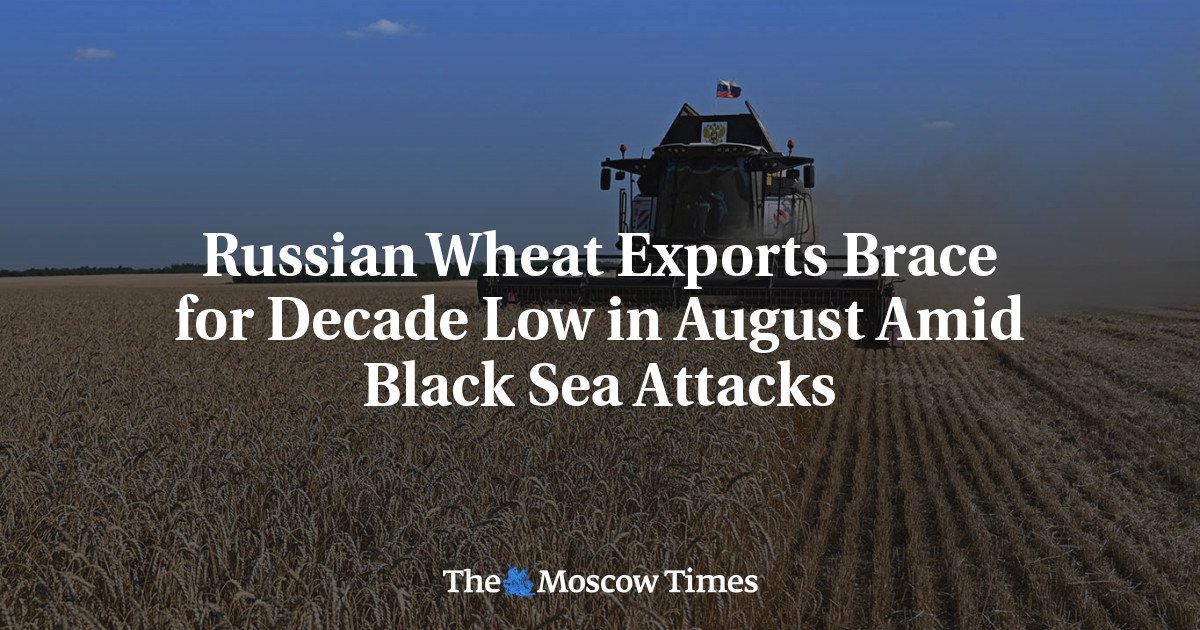
Russian grain exports risk dropping to a decade low in August due to shipping bottlenecks in southern ports caused by escalating attacks on commercial vessels in the Black Sea, industry analysts warned Tuesday.
Agricultural consultancy SovEcon projects Russia will export between 3 million and 3.4 million metric tons of wheat this month — well below the five-year August average of 5 million tons and potentially marking the lowest August total since the 2016–17 agricultural season.
Independent consultancy ProZerno, meanwhile, forecasts that overall grain exports will fall to nearly 2.5 million metric tons amid severe congestion across the Black Sea and the Sea of Azov. The five-year August average for grain exports is 5.7 million tons.
Russia, the world’s largest wheat exporter, and Ukraine, also a major agricultural exporter, have been attacking each other’s agricultural export facilities and commercial vessels in the Black Sea area in recent weeks, driving wheat prices higher on global markets.
The export logjam has left Russia’s domestic market oversupplied, driving local prices down by as much as 450 rubles ($5.46) per ton over the past week as farmers struggle to ship harvests abroad.
Despite foreign buyers backing away due to soaring shipping costs, Russia’s Agriculture Ministry announced it would raise the wheat export tax for the period between Aug. 12 and Aug. 18. The ministry noted that nationwide grain production has surpassed 72 million metric tons so far, including more than 60 million tons of wheat.
Meanwhile, the Institute for Agricultural Market Studies lowered its forecast for Russia’s overall 2026 grain harvest from 140 million to 138.5 million metric tons, while reducing its estimate for total export capacity in the 2026–27 season from 61.5 million to 60 million tons.
Russia’s main grain exporters union warned earlier this month that Ukrainian drone attacks on Russian ships and ports could shut down grain exports via the Black Sea in the near future, pushing up prices and causing hunger in Africa and the Middle East.
Reuters contributed reporting.


