



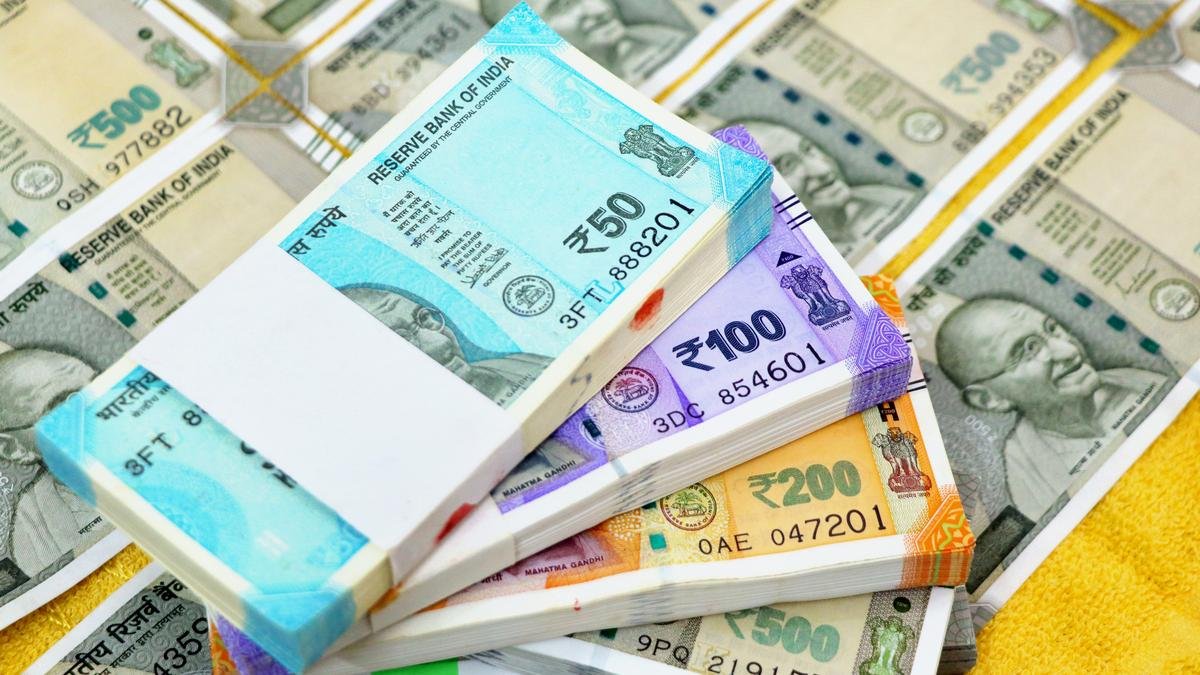
Image used for representation purpose only.
| Photo Credit: Getty Images/iStockphoto
The rupee opened with a negative bias amid a strong dollar and rising U.S. treasury yields and depreciated 18 paise to 96.38 against the U.S. dollar as market sentiments continue to dampen amid simmering tensions between the U.S. and Iran.
Forex traders said rupee remains vulnerable to the rise in crude oil prices as also the closure of the Strait of Hormuz hampering its exports and imports to the Gulf countries.
At the interbank foreign exchange market, the rupee opened at 96.38 against the U.S. dollar, registering a fall of 18 paise from its previous close.
On Monday (May 18, 2026), the Indian rupee weakened further and closed at a record low of 96.20 against the U.S. dollar.
“The market’s biggest challenge right now is not just direction — it’s confidence. Until there is visible cooling in global tensions and stability in foreign flows, the rupee may continue trading under pressure with volatility staying elevated,” CR Forex Advisors MD Amit Pabari said.
Mr. Pabari further added that technically, 94.80–95.10 is expected to act as an important support zone for USD-INR. However, with no meaningful signs of easing in global risk factors, the pair now appears to be gradually shifting its focus toward the 97 mark.
Meanwhile, the dollar index, which gauges the greenback’s strength against a basket of six currencies, was trading at 99.10, lower by 0.09% due to simmering Iran tensions.
Brent crude, the global oil benchmark, was trading down 1.91% at $109.96 per barrel in futures trade.
On the domestic equity market front, Sensex climbed 366.71 points to 75,706.88 in early trade, while the Nifty advanced 107.45 points to 23,760.
Foreign Institutional Investors remained net buyers for the third straight session, purchasing equities worth ₹2,813.69 crore on Monday (May 18, 2026), according to exchange data.
Meanwhile, a senior petroleum ministry official on Monday (May 18, 2026) said India has been purchasing Russian oil irrespective of U.S. sanctions waivers and will continue to do so based on commercial viability and energy security needs.
“Regarding the American waiver on Russia, I would like to emphasise that we have been purchasing from Russia earlier… before waiver also, during waiver also, and now also,” Sujata Sharma, joint secretary in the petroleum ministry, told reporters at a media briefing.
Published – May 19, 2026 10:16 am IST


