


It was the last day of February. Israel and the United States had bombed Iran, plunging the Middle East into a new and largely unnecessary conflict. In Dubai, at the start of that final weekend of the month, everyone looked at the conflict with interest mixed with concern about what it would do to the global economy. But nobody thought that the war would impact their lives with such immediacy.
They were wrong.
That Saturday night, Dubai was getting ready to have as much fun as usual. At Trèsind Studio, one of only two restaurants in the region to receive three stars from the Michelin guide, diners were enjoying the multi-course tasting menu when they heard an explosive sound. The managers rushed out to the restaurant’s open terrace to see what had happened. They discovered, to their horror, that an Iranian drone had come down in front of the Fairmont Hotel a few buildings away in the Palm Jumeirah area. As far as they could tell, the drone had not actually hit the hotel building, and it was possible that it had been brought down by Dubai’s armed forces (part of the defence establishment in the United Arab Emirates of which Dubai is a constituent).
But they decided to suspend service anyway. They apologised to guests and sent them home as a measure of extra caution. Trèsind Studio’s owner, Bhupender Nath, and its much-lauded chef, Himanshu Saini, were both in Mumbai, launching the Chef’s Table at the Mumbai outpost of Trèsind. They switched on their TVs and were horrified by what they saw. News channels were reporting on a full-blown attack on Dubai. Some of this was rubbish, as they knew from conversations with their families back in Dubai. According to the channels, the drone had hit the Fairmont, which was now on fire. The BBC was especially irresponsible, reporting that the attack was on ‘the famous Palm Hotel’. There is no such famous hotel, but presumably someone in the newsroom had heard that a hotel in the Palm area had been attacked. Other news outlets reported that the Burj al Arab was on fire. Missiles had hit several targets in Dubai. Even though Nath and Saini knew that channels were magnifying the extent of the attacks and were even inventing attacks that had never happened, they rushed back to Dubai.
They landed in Dubai on Sunday, a day when Trèsind Studio was shut anyway. Nath took stock of the situation and decided that the restaurant would open on Monday as planned. Trèsind Studio remained open in the months to follow. Its owners had no desire to risk the lives of the restaurant’s staff or its guests. But they genuinely believed that there was no danger.
They were right.
Last week, three months after that night when the media went crazy with Dubai Burning stories, I went to dine at Trèsind Studio. Vipin Panwar, who runs front-of-the-house, recalled that night, but said that in the minds of his staff there had never been any doubt: The show would go on. There were other drone strikes in Dubai in the weeks to follow, but they were isolated instances and there was no panic among residents. They just got on with their jobs.
But there were global consequences that did affect Dubai. After some attacks in the airport area, flights were disrupted and many people who intended to visit Dubai (Westerners mostly) cancelled their trips. Tourism is an important source of revenue for Dubai’s vast hospitality sector and revenues fell. Western chefs who ran restaurants in Dubai either shut their establishments temporarily or closed them down entirely. A few hotels announced that they would suspend operations because of ‘renovations’ but the great majority remained open.
By the time I got there, the flights were getting back to normal (Emirates was operating over 90% of services) and the airport seemed as full as ever. I spent a night in Dubai in transit to Nice and stayed at the Taj in the downtown area, which was running at nearly 100% occupancy.
I was in Dubai for longer on my way back from France and stayed at the relatively new One&Only One Za’abeel which I thought may have been hit harder because its location is not quite so central and because it has not yet had time to develop a loyal clientele. But no, that was doing well too. The difference was that Dubai’s hotels and restaurants had more patrons from around the Middle East and there were fewer White faces.
The Westerners will be back once the summer is over, but I have to say that I liked this version of Dubai more than the global version that has become famous recently. It seemed more like a real city with a sense of community than it has at any time in the last decade.
Locals spoke with admiration of the role of the emirate’s ruler Sheikh Mohammed, who had made it a point to become more visible during this period to provide a sense of we-are-all-in-this-together, and they were also impressed by the government’s efforts to unite and encourage residents.
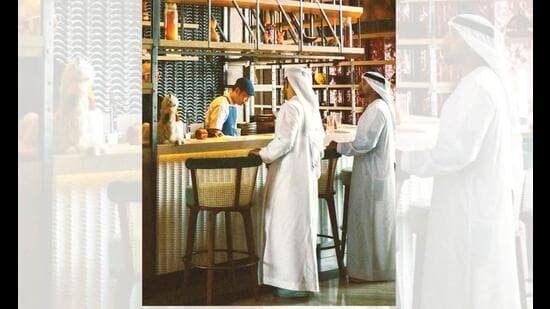
The hospitality sector received governmental support and locals were incentivised to use the hotels for staycations at reduced rates, while a restaurant festival drew more guests to local places. At the One Za’abeel hotel, the restaurants were full of locals having fun. One instance was the hotel’s branch of Nobu. There have been Nobus in Dubai before – I once had dinner with Nobu himself at the Nobu in the Palm in 2008 – but they have been tourist favourites. The One Za’abeel version, on the other hand, was jampacked with local residents (many of them Emiratis) who were there to celebrate.
The food was up to the usual Nobu standards, but it did not seem to be the point. The guests were there to enjoy the experience: Romantic couples, families out on the town and birthday celebrants. At no other Dubai Nobu (there are three now) do you ever feel such a sense of place. There were very few White people in the room and most of them were part of the service staff.
It was very hard to believe, once you saw the partying at Nobu, that anyone in Dubai had ever felt that the city was ever under threat. At Maison Devoille, the hotel’s French pastry shop, nearly all of the guests were from the Middle East and hardly any tables were unoccupied.
One&Only, which runs One Za’abeel, is Dubai’s leading hotel company (Atlantis is run by a sister company with the same ownership) and has 14 properties as far apart as the Maldives (where Reethi Rah was a pioneer in the luxury segment) and Montana in the US. It has other deluxe hotels in Dubai, so I imagine it built this spectacular property with a cantilevered area called The Link (where Nobu is) and interiors by Jean-Michel Gathy, (famous for designing Cheval Blanc and Aman hotels) in the hope of accommodating big-spending Western visitors.
It does well even now because of travellers from the region but I imagine the big bucks will only start rolling in this autumn when the season begins and tourists from the West arrive.
It is probably the moment that everyone in the hospitality sector in Dubai is waiting for, including the team at Trèsind Studio where, in normal circumstances, it is hard to score a table because Western tourists go berserk when offered a chance to eat at a three-Michelin-star restaurant.
But speaking for myself, I will miss this version of Dubai, because it seems like a real city with spirit and resilience in a way that it doesn’t when it becomes the playground of the global rich. For Indians, dependent on our battered rupee, this is the time to go and take advantage of the good value that Dubai represents.
The views expressed by the columnist are personal
From HT Brunch, June 13, 2026
Follow us on www.instagram.com/HTBrunch
