



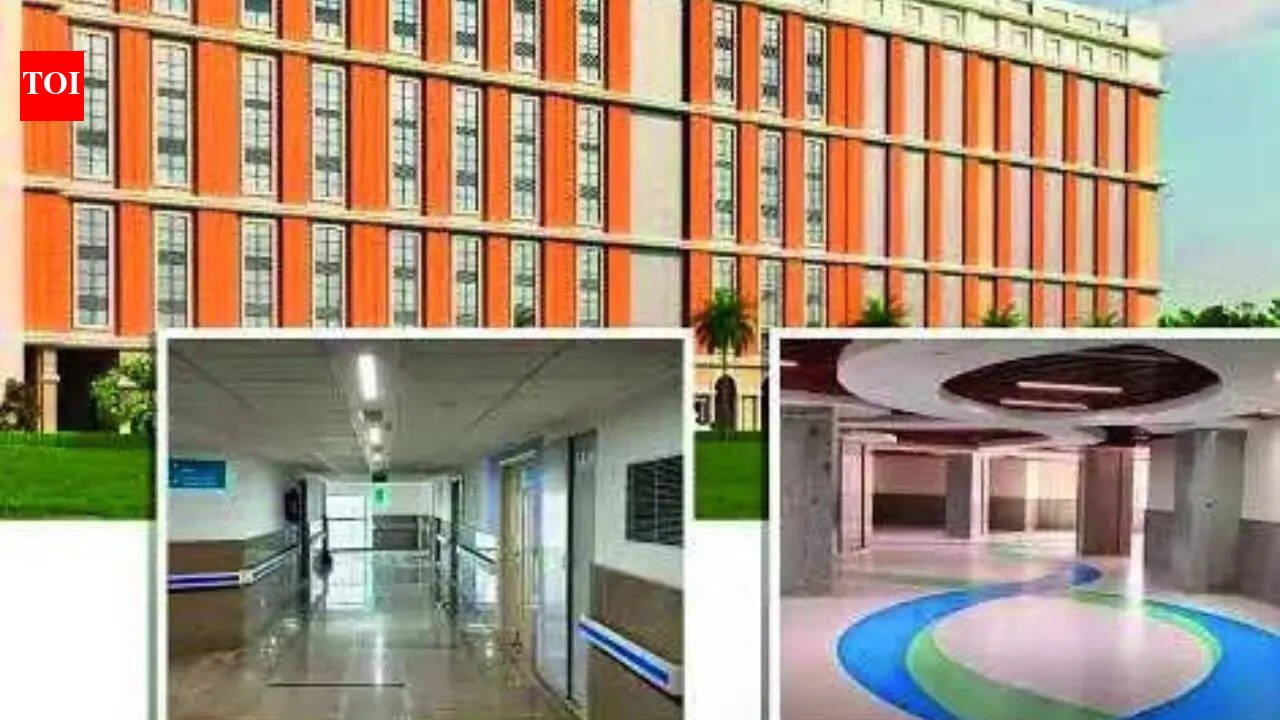
NEW DELHI: A superspecialty block at Ram Manohar Lohia Hospital, built at a cost of about Rs 400 crore, has remained non-operational for over a year – not due to lack of infrastructure, staff or equipment, but due to delay in electricity connection.The facility meant for cancer and other patients requiring advanced treatment has been ready since early 2025 and could have started OPD services much earlier. However, the absence of functional power supply has kept it from operating. Officials said that payments for the power connection were made, tenders issued, and work awarded, but the final step – installation of an electricity meter – remained pending for months, holding back supply of power.
RML’s Rs 400cr block shut a year over power delay
“This is not a major task, yet it has not been done,” a senior official said, pointing to poor administrative follow-through. An NDMC official said 33KV power supply to the hospital was released on April 1, 2026. Dr Vaishali Bhardwaj of RML’s media cell said the connection has now been received.However, it will take six to eight weeks for testing before operations begin.The foundation stone for the project was laid in Aug 2019, and it received formal approval in 2020. Initially expected to be completed within two to three years, the structure was ready by March 2024. By early 2025, nearly all finishing work had been completed, making it fit for at least partial use.The ground-plus-11-storey building, with three basements and a helipad, has around 600 to 660 beds, multiple ICUsand 17 operation theatres. It also includes advanced systems comparable to private hospitals, including anautomated lab and waste management facilities. Most medical equipment have been procured but remain unused as the facility is yet to open.The block was planned to house 96 super speciality OPDs, including cardiology, gastroenterology, neurology, oncology and plastic surgery, which could have eased the patient load in the main hospital. Officials said that services could have started in phases, even with the existing staff.Despite approvals for additional manpower and infrastructure being largely in place, the facility remains idle. The delay has wider implications. With limited public facilities for cancer and advanced care in the city, patients continue to struggle for access even as a fully built hospital remains unused.


