





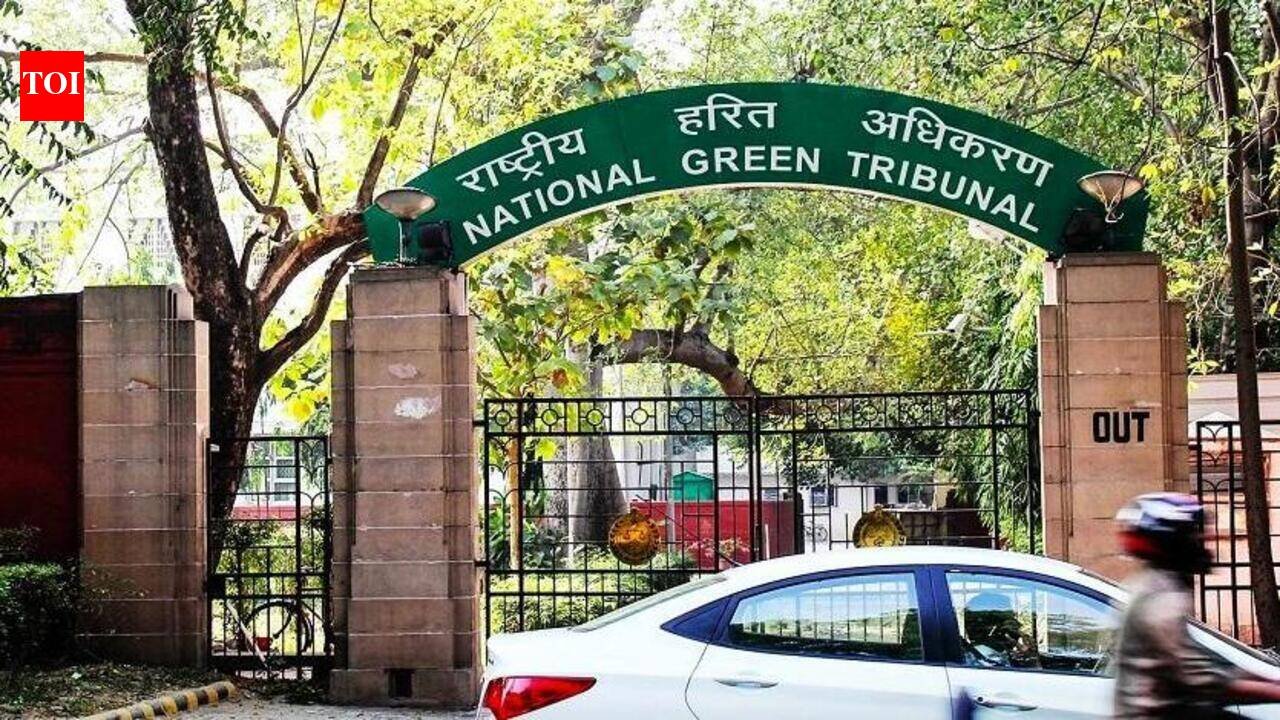
Hyderabad: The proposed northern section of the Hyderabad Regional Ring Road (RRR) could impact more than 81,000 trees and poles across reserve forests and agricultural lands, according to a document filed before the National Green Tribunal (NGT).The enumeration records 81,007 affected trees and poles along the project corridor passing through Sangareddy, Medak, Siddipet and Yadadri Bhuvanagiri districts. Of these, 57,632 have been classified as trees and 23,375 as poles (immature vegetation).The petition was filed before the NGT by one of the farmers, Gouraram Sri Ram Reddy, whose land is likely to be acquired for the RRR project.The proposed greenfield expressway’s northern section will run for about 158 km from Girmapur in Sangareddy district to Choutuppal in Yadadri Bhuvanagiri district, passing through Medak and Siddipet.Reserve forests account for bulk of affected vegetationAccording to documents filed before the NGT, 54,467 trees and poles are located in reserve forest areas, while another 26,540 are on agricultural land. The reserve forest count includes 13,872 poles, while agricultural lands account for 9,503 poles.The tree inventory lists rosewood, red sanders, neem, teak and peepal among the species found in forest areas. Mango, coconut and custard apple are among the species recorded on agricultural lands.The enumeration tables treat ‘poles’ as a category distinct from trees.The tree enumeration was carried out by consultants appointed by the project agency as part of the development of the greenfield regional expressway project. The enumeration lists for the Siddipet stretch were certified by the district forest officer.Study projects traffic for 30-year horizonA traffic study conducted by consultants examined the feasibility of the northern section of the RRR. It sought to estimate traffic diversion, lane requirements and tollable traffic over a 30-year horizon.The study used classified traffic-volume counts, origin-destination surveys and axle-load surveys at several locations, including toll plazas on the Hyderabad Outer Ring Road (ORR).It estimated the traffic for 20 years at 170 million standard axles. The study also compared the RRR with alternative routes, including State Highway 17.While the proposed expressway was found to offer faster travel, the study indicated that travel costs for cars could be lower on existing roads. Commercial vehicles, however, are likely to be diverted to the access-controlled expressway.Activist seeks halt, questions impact assessmentIn a separate letter to the Ministry of Environment, Forest and Climate Change, environmental activist Dr Narasimha Reddy Donthi sought a complete halt to the project, questioning its environmental impact assessment and public consultation process.Donthi said that holding hearings at only two locations was inadequate for a project that would affect 84 villages and towns with a combined population of about 30 lakh.He also disputed the project’s land requirement. While the environmental impact assessment mentions 4,608 acres, Donthi estimated that between 8,250 and 8,500 acres could be required after accounting for interchanges and junctions.The letter argued that the barricaded, access-controlled expressway would not be available to local farmers using tractors or moving animals and, therefore, would not provide the local economic benefits claimed for the project.Citing the experience of the Hyderabad ORR, Donthi raised concerns over accidents caused by speeding and additional vehicular emissions. He also alleged that the assessment had underestimated tree loss and had not accounted for the possible impact on trees planted under the Haritha Haram programme.The letter said the project would require about 85 lakh tonnes of soil, necessitating excavation and blasting that could affect hillocks and the local ecology.


