


Jaisalmer/Jaipur: Inside a specially created patch of the Thar Desert, three tiny Great Indian Bustard (GIB) chicks are beginning a journey that could decide the future of one of India’s most threatened birds.
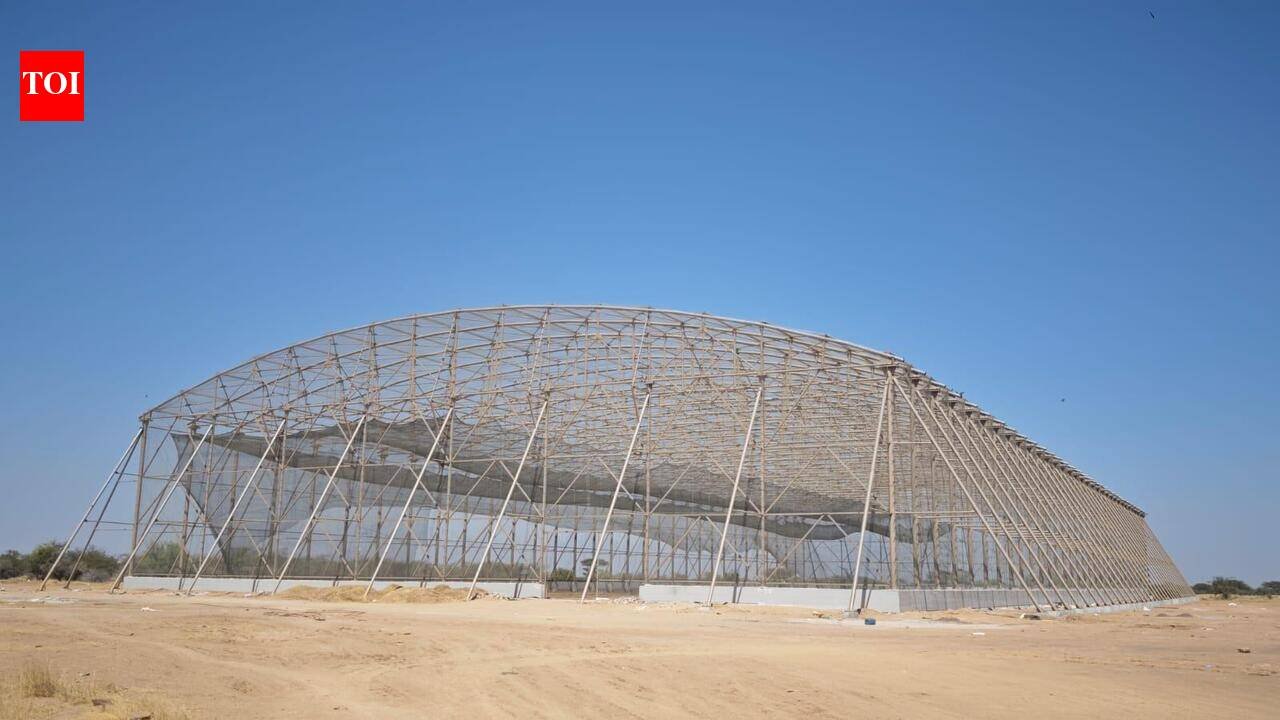
GIB rewilding facility at Ramdevra in Jaisalmer district
Known only by their identification numbers — R9, R10 and R11 — the three chicks have become the first occupants of a unique rewilding facility at Ramdevra in Jaisalmer district. Barely a month old, the two male and one female chicks have moved out of the protected environment of the conservation breeding centre and into a specially designed enclosure where they will gradually adapt to the desert landscape they are expected to return to.
The Great Indian Bustard
The move marks a new chapter in Great Indian Bustard conservation. After years of efforts focused on protecting wild nests, hatching eggs and raising chicks through captive breeding, conservationists have now entered the next phase — preparing these birds to live independently in their natural habitat.
A Great Indian Bustard Chick
“This rewilding structure has been created to prepare GIB chicks born at the conservation breeding centres for survival in their natural desert habitat before they are released into the wild,” said Chief Wildlife Warden Arun Prasad.The newly developed rewilding facility at Ramdevra has been designed to closely resemble the conditions of the Thar landscape. Spread across around 160 metres in length, 64 metres in width and 14 metres in height, the enclosure has native desert vegetation, shrubs and open spaces to provide the chicks with an environment closer to the grasslands where the species survives.For the next four months, R9, R10 and R11 will undergo a gradual acclimatisation process. They will experience desert temperatures, changing weather conditions and natural surroundings while developing the behaviours needed to adapt to life outside human care.“The facility has been designed to reduce human interaction. Unlike conventional breeding centres, where chicks are frequently exposed to caretakers, food for the three young bustards will be supplied through a feeding window from the Ramdevra breeding centre. The arrangement is aimed at ensuring that the birds do not associate their survival with the direct presence of humans,” said a WII team member.Experts will continue monitoring the chicks through CCTV cameras, recording their health, feeding patterns, movements and responses to the changing desert environment.“The chicks are being gradually exposed to native vegetation, desert weather, insects and other natural elements so they can develop the behaviour and survival skills required in the wild,” said Acting Deputy Conservator of Forests, Desert National Park, Ashok Singh.“Once the birds complete their acclimatisation period and demonstrate that they can survive and adapt independently, they will be released in phases into the Desert National Park landscape. We expect the observation period to last at least four months before any decision on their release is taken. Although a Great Indian Bustard becomes independent within about four weeks of hatching, it has a lifespan of 18–20 years. We are therefore taking a cautious approach and will keep the birds under extended observation to ensure they are fully prepared for life in the wild before release,” added Singh.As Rajasthan prepares for the pilot release of captive-bred Great Indian Bustard (GIB) chicks into the wild, the latest Thar GIB Survey has raised a critical question: where will the birds be released safely?The long-term monitoring exercise, which assesses the population, habitat and threats facing the critically endangered bird across the Jaisalmer landscape, found that although the GIB population has remained stable over the last decade, the species occupies only 16% of the landscape at any given time despite a much larger area having suitable vegetation.According to the survey, the occupied sites are largely confined to flat grasslands in and around Desert National Park and Pokhran Range that are free from human settlements and renewable energy infrastructure. This suggests that while suitable vegetation exists elsewhere, only limited areas currently provide the conditions preferred by the species.The report notes that the conservation breeding programme has collected 44 wild-laid eggs from Desert National Park and Pokhran Range, resulting in 33 surviving wild founders and 35 captive-bred birds, which will be used for the pilot release of captive-bred chicks.However, the survey also highlights emerging habitat challenges. Populations of non-native species such as nilgai, pigs and dogs have expanded across the landscape, while higher encounters with invasive pigs in GIB-occupied areas necessitate greater protection of eggs and chicks. Researchers also recorded changes in vegetation, including a decline in preferred native fodder grasses and an increase in weedy and woody species. The report says increasing rainfall and greater surface water availability may be facilitating the spread of non-native species, posing fresh competition and predation pressures for conservation-dependent wildlife such as Great Indian Bustard and chinkara.Thar GIB Survey, conducted periodically since 2014 using a standardised methodology, covered most of Rajasthan’s revised GIB Priority Area. It excluded around 2,000 sq km in the southern end of Desert National Park, about 1,000 sq km in restricted parts of Pokhran Firing Range and another 1,440 sq km around Rasla. Researchers compared common sampling grids between 2017 and 2025 to assess long-term trends.Wildlife biologist Sumit Dookia, who has worked on Great Indian Bustard conservation for years, said the success of the rewilding programme would ultimately depend on the availability of secure habitat.“The rewilding initiative is a welcome and much-needed step. However, the Supreme Court had directed agencies to restore the bird’s habitat and eliminate key threats, including high-tension power lines. Unfortunately, little concrete progress has been made. The real challenge now is ensuring there is sufficient safe and suitable habitat for these birds once they are released into the wild.”
