



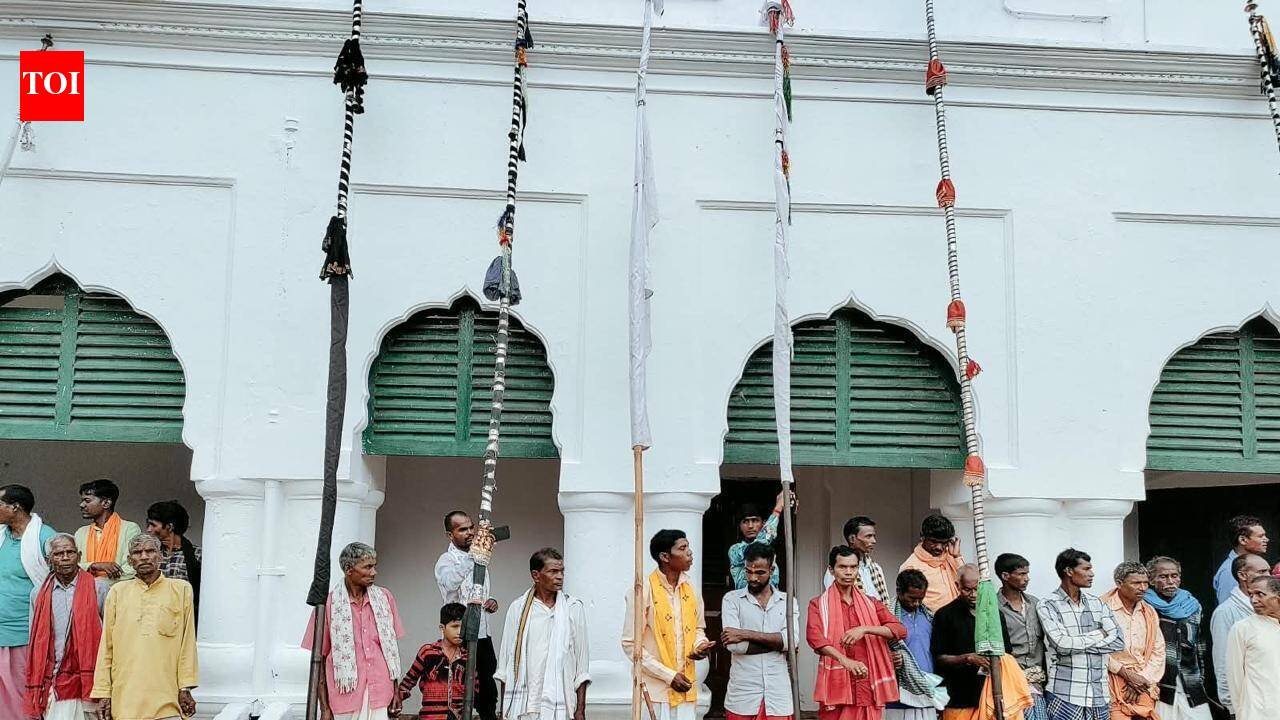
Koraput: Every Dussehra, Jeypore town briefly rediscovers its past when royalty, tribal faith and traditions come together with the arrival of the sacred lathis.The Jeypore kingdom may no longer exist, and royal processions may be gone, but the centuries-old Dussehra tradition of worshipping the sacred bamboo lathis survives, preserving a living connection to the town’s royal past and its deep tribal roots.Jeypore MLA and Dussehra committee chairman Tara Prasad Bahinipati said more than 60 tribal groups are expected to participate this year.Kept at village altars throughout the year, the sacred bamboos are revered as symbols of the village deity and prosperity. Their annual journey to Jeypore is therefore more than a ritual; it is a reminder of a cultural tradition that survived the disappearance of the royal order.The tradition finds an important mention in the Odisha District Gazetteer, describing the ‘lathi’ as a long wooden mace symbolising the village mother deity. It recorded that the Dussehra of the Jeypore zamindars was very famous and considered only next to Mysore’s. The festival was held in honour of Maa Kanka Durga, the family deity of the Jeypore king, with lathis from different mutts arriving with their mutt heads and staying at Bankamatha.Historical accounts recall how the king would lead the festivities after performing rituals at the Kanka Durga temple. He would ride a decorated elephant through the town, followed by village headmen carrying their sacred lathis. The procession culminated on the Dussehra field, where a yagna was performed as part of the Aparajita Puja rituals. The occasion also provided villagers an opportunity to place their grievances before the ruler.The festival drew tribal communities from across the region. Members of the Bhumiya, Gadva, Parja, Soura, Bhatra, Gond, Didai, Durua, Kondh, Bonda and Koya communities would undertake arduous journeys to Jeypore, walking barefoot for weeks through the hilly terrain, carrying idols of Goddess Durga in palanquins and playing traditional musical instruments.But the royal spectacle of a 16-day extravaganza began to fade after the abolition of the zamindari system in 1951, and tribal participation gradually declined.The tradition of bringing sacred lathis, however, was revived in 2006. Since then, different villages have been bringing their sacred bamboos to the town.
