






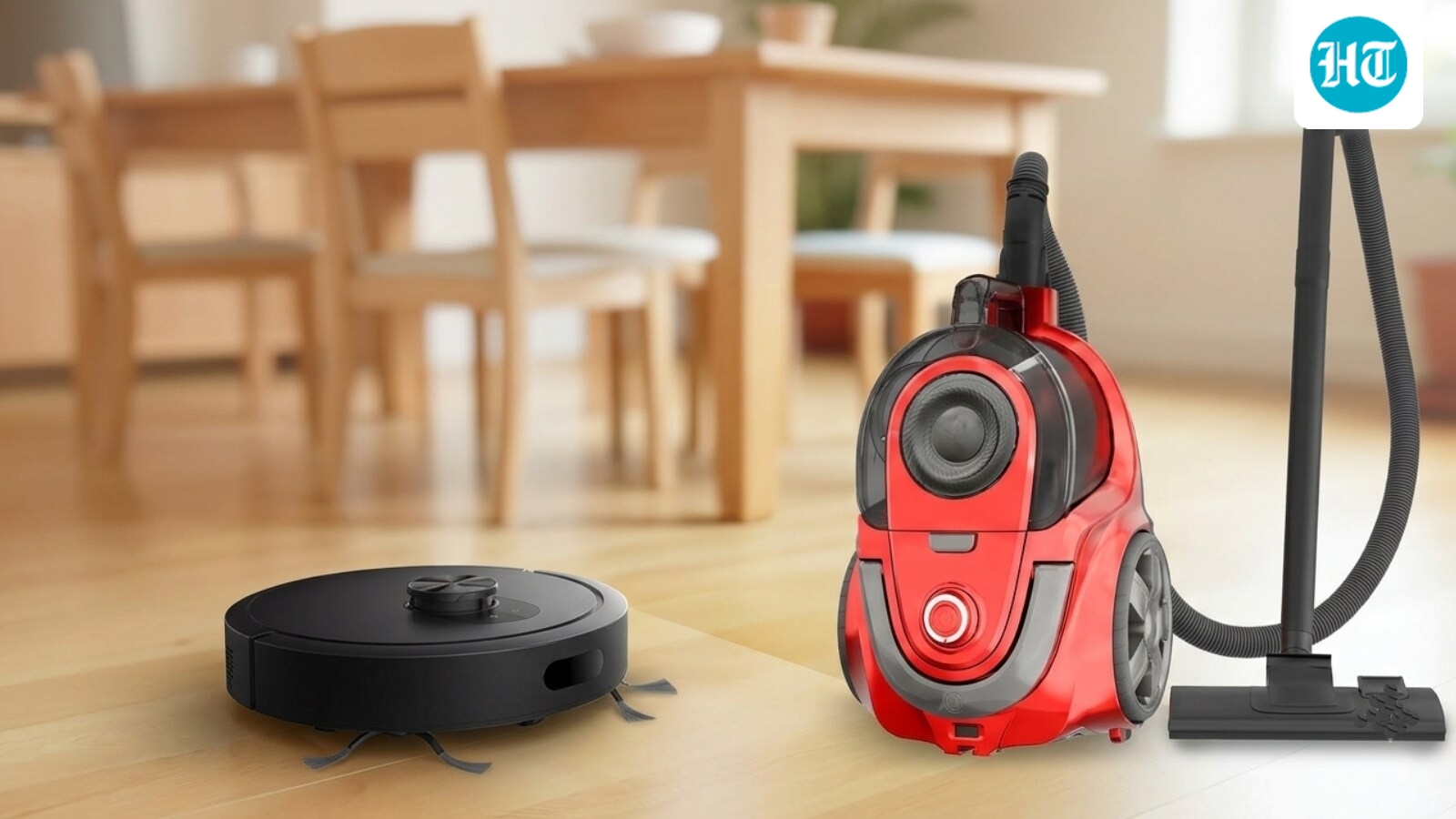
Vacuum cleaner are no longer an elusive home appliance that they once were. Over the years, they have become an essential appliance that almost every household deploys to clean out the hard-to-reach or difficult-to-clean areas time to time. That said, choosing a vacuum cleaner is no longer as simple as picking the model with the highest suction power. The vacuum cleaner market now offers different types of models that are aimed at solving different use cases. Case and point: robotic vacuum cleaners. Unlike traditional vacuum cleaners, these models are capable of handling everyday dust and dirt on their own.
Sure, traditional vacuum cleaners are still a better choice when it comes to cleaning carpets, sofas, corners and stubborn messes. However, robotic vacuum cleaners are capable of handling most everyday messes or cleaning requirements without any intervention from the users. So, the question still stands: which one actually makes more sense for your home, a robotic or a traditional vacuum cleaner?
Well, the answer to that depends on what you want to achieve: deep cleaning or daily convenience. A traditional vacuum cleaner gives you greater control over where and how you clean, but it requires your time and effort every time. A robotic vacuum cleaner, on the other hand, can clean floors on a schedule while you work, cook or relax. Some premium models also add mopping, automatic dirt disposal and smart navigation, but these features can significantly increase the purchase price.
Here’s a more simplified comparison between a robotic vacuum cleaner and a traditional vacuum cleaner.
Robotic vs traditional vacuum cleaner: What’s the difference?
Feature |
Robot vacuum cleaner |
Traditional vacuum cleaner |
| Cleaning method | Automatically navigates and cleans floors | User manually directs the vacuum |
| Cleaning performance | Excellent for regular dust, dirt, hair and debris on floors | Generally better for intensive and targeted cleaning |
| Suction power | Usually lower than full-size conventional models, though premium models can be powerful | Typically offers stronger suction and more cleaning control |
| Daily convenience | Excellent — can clean with minimal human involvement | Requires active involvement every time |
| Scheduling | Yes, through the app or onboard controls on most models | No |
| Navigation | Uses sensors, cameras, LiDAR or mapping technology, depending on model | Controlled manually by the user |
| Hard floors | Very good for routine cleaning | Excellent, particularly for deep cleaning |
| Carpets and rugs | Works well on low-pile carpets; performance varies on thicker rugs | Generally better for deep carpet cleaning |
| Corners and tight spaces | Can struggle with some corners and narrow areas | Easier to target specific areas |
| Under furniture | Excellent if the robot has a low-profile design | Depends on the vacuum and attachment |
| Stairs | Not suitable for cleaning stairs | Can clean stairs with the appropriate attachment |
| Sofa/upholstery cleaning | Generally not designed for it | Better suited with dedicated attachments |
| Mopping | Many models combine vacuuming and mopping | Usually requires a separate mop or cleaning tool |
| Self-emptying | Available on some premium models | Dust container/bag usually needs manual emptying |
| Noise | Usually quieter during routine operation, but varies by model | Can be louder, especially at maximum suction |
| Time required from user | Low — mostly setup and occasional maintenance | High — cleaning requires active participation |
| Maintenance | Brushes, filters, sensors and mop components need regular cleaning | Filters, brush rolls, hose and dust container/bag require maintenance |
| Upfront cost | Generally higher, especially for feature-rich models | Wide range, including many affordable options |
| Running cost | Electricity plus replacement filters, brushes, bags and other parts | Electricity plus replacement filters, bags and accessories |
| Smart features | App control, maps, virtual boundaries, schedules and automation on many models | Usually limited or no smart-home features |
| Best for | Daily floor cleaning and busy households | Deep, targeted and whole-home cleaning |
| Biggest advantage | Saves time by automating routine cleaning | Offers greater cleaning control and versatility |
| Biggest limitation | Cannot replace every type of manual cleaning | Requires your time and effort |
In this guide, we will help you understand who needs to buy a robotic vacuum cleaner and who should buy a traditional vacuum cleaner.
Traditional vacuum cleaner: What is it best for and who should buy it?
A traditional vacuum cleaner is an ideal choice for households that want powerful, targeted cleaning rather than automation. Unlike a robot vacuum, it requires you to operate it manually, but that also gives you greater control over where and how thoroughly you clean. Traditional vacuum cleaners are particularly useful for deep cleaning carpets, rugs, sofas, mattresses, curtains, stairs and corners.
A traditional vacuum cleaner is ideal for homes with carpets and rugs, pet owners, homes with stairs, families needing periodic deep cleaning, and budget-conscious buyers.
Since traditional vacuum cleaners need manual intervention, it saves less time than a robotic vacuum cleaner. However, if cleaning power, versatility and control are your priorities, a traditional vacuum cleaner is still difficult to beat.
Robotic vacuum cleaner: What is it best for and who should buy it?
A robotic vacuum cleaner is best suited for automatic everyday floor cleaning. Unlike traditional vacuum cleaners that need to be manually pushed around a vacuum around the house, a robotic vacuum cleaner can clean a space or an entire house at a set time, with many models using sensors, cameras or LiDAR-based mapping to navigate rooms and avoid obstacles. Some advanced models can also mop floors, return to their charging station and automatically empty the collected dust.
The biggest advantage of using a robotic vacuum cleaner is the time that it saves. A robotic vacuum cleaner can handle routine dust, crumbs, hair and everyday debris while users work, cook or relax.
A robotic vacuum cleaner is an ideal choice for busy professionals who want daily cleaning without spending time vacuuming, pet owners, homes with mostly hard floors, people who dislike daily chores, large homes with kids that need designated areas to be cleaned frequently, and smart-home enthusiasts.
It is worth mentioning that a robotic vacuum cleaner costs more upfront and may struggle with stairs, tight corners, thick carpets and some upholstery. For deep or specialised cleaning, you may still need a traditional vacuum. But for automated, everyday floor maintenance, a robotic vacuum can save significant time and effort.
Disclaimer: At Hindustan Times, we help you stay up-to-date with the latest trends and products. Hindustan Times has an affiliate partnership, so we may get a part of the revenue when you make a purchase. We shall not be liable for any claim under applicable laws, including but not limited to the Consumer Protection Act, 2019, with respect to the products. The products listed in this article are in no particular order of priority.


