



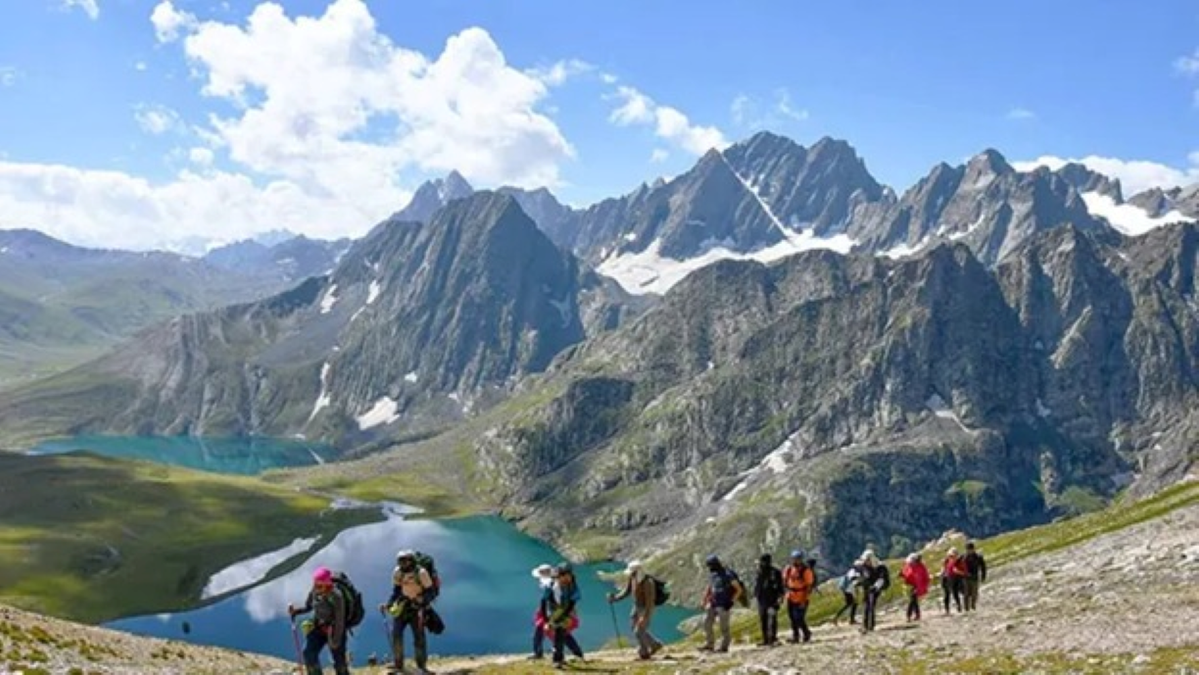
Srinagar, Jul 29: As Kashmir’s traditional tourist hotspots such as Gulmarg, Pahalgam, Sonamarg and Dal Lake continue to witness unprecedented tourist inflow, an increasing number of tourists and local travellers are venturing into lesser-known destinations across the valley. While the trend is helping distribute tourism benefits to remote villages and scenic landscapes, it is also exposing fragile ecosystems to mounting environmental pressure.
Hidden meadows, alpine lakes, waterfalls, mountain streams and forest trails in areas such as Doodhpathri’s interior stretches, Gurez, Keran, Tangdar, Lolab, Uri, Aharbal’s upper reaches, Yusmarg’s unexplored meadows, Naranag, trekking route and several offbeat locations are witnessing a sharp rise in visitors, particularly during weekends and the summer season.
Locals said that these visits are increasing littering, plastic pollution, traffic congestion, illegal camping and damage to fragile alpine vegetation.
“Our village has started receiving hundreds of visitors every weekend. Tourism has increased our earnings, but many people leave behind plastic bottles, food wrappers and disposable plates. There is no system to collect garbage, and locals end up cleaning the area themselves,” said Bashir Bhat, a local of Garkote village of Uri.
“Many visitors light campfires or drive vehicles close to streams and grasslands. These places were never designed to handle such crowds. We fear that if this continues, the natural beauty that attracts tourists will disappear,” said a local of Gurez valley.
Environmental experts warned that Kashmir’s lesser-known destinations are ecologically sensitive and cannot sustain unregulated tourism.
Dr Sami Ullah Bhat, Associate Professor in the Department of Environmental Science at the University of Kashmir, told Rising Kashmir that the growing popularity of unexplored destinations is a positive development only if it is backed by scientific planning.
“First of all, we need to understand the carrying capacity of these locations, which is extremely important. An unregulated flow of travellers can lead to several environmental issues,” he said.
Bhat stressed that authorities should conduct carrying-capacity studies and regulate vehicle movement at such spots to save the pristine beauty and nature.
Another environmental expert wishing not to be named said the government must take proactive measures to minimise ecological damage at these emerging tourist spots.
“If the huge influx of visitors continues without proper regulation, it could prove disastrous for these places in the long run,” he said.
Wildlife experts said many of these destinations fall close to forests and wildlife habitats.
“Human intrusion into sensitive ecosystems increases disturbance to wildlife. Noise, plastic waste and unrestricted movement affect animal behaviour and degrade biodiversity. Sustainable tourism should become an essential part of tourism planning rather than an afterthought,” he said.
As Kashmir continues to diversify its tourism map, experts say the challenge is no longer attracting visitors but ensuring that the valley’s untouched landscapes remain protected for future generations. Without timely planning and regulation, today’s hidden gems could soon face the same environmental stress that has long troubled the region’s iconic tourist destinations.


