






On March 31, 2026, a month after India paused its rice fortification programme, Cambodia, Japan, and the United Nations World Food Programme (WFP) jointly launched a fortified rice initiative to tackle malnutrition among garment factory workers. Cambodia has committed to integrating fortified rice into workplace meal programme systems, drawing on a model developed in India.


The contrast is noteworthy. A nation learning from India’s fortification journey is moving forward, while India steps back. This is not a criticism of the government’s decision; the IIT Kharagpur findings on nutrient degradation during prolonged storage are real and must be taken seriously. But a pause must not become a retreat. The objective remains unchanged; the delivery mechanism requires refinement.
India’s malnutrition challenge is, in large measure, linked to staple-dependent diets that are calorie-sufficient but micronutrient-deficient. While the NFHS-6 (2023-24) shows improvement, 30% of children are still stunted, and as per HCES 2023-24, household iron intake remains far below ICMR RDA guidelines. The deficiencies driving these outcomes, including iron, Vitamin B12, and folic acid, are among the most prevalent in the country and, crucially, among the most amenable to fortification. Since rice is the primary dietary staple for 65% of India’s population, the most direct path to addressing hidden hunger lies not in creating new delivery systems, but in strengthening the one that already reaches people’s plates.
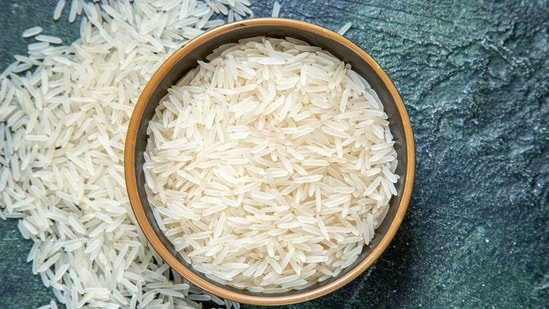
Rice fortification is operationally simple. Fortified rice kernels (FRK), enriched with iron, folic acid, and Vitamin B12, are blended with regular rice at a 1:100 ratio, with no discernible difference in taste or appearance. It is invisible to the consumer and frictionless for the distribution system—key to its effectiveness as a public health instrument.
India’s policy ambition in this space has been substantial. Following the Prime Minister’s announcement in August 2021, the Cabinet approved a phased rollout across the TPDS, ICDS, and PM POSHAN in April 2022. By March 2024, 100% of rice distributed under central schemes — PMGKAY, ICDS, PM POSHAN — was fully fortified. The Cabinet subsequently approved programme continuation through December 2028 at a total central outlay of ₹17,082 crore. Between 2019–20 and March 2024, 406 lakh metric tonnes of fortified rice were distributed through the PDS. At approximately ₹2,700 crore annually, less than 2% of India’s food subsidy bill, the fiscal commitment is modest relative to the scale of impact. A WFP-supported pilot in a district of Odisha recorded a 20% reduction in anaemia rates among school children receiving fortified rice through the mid-day meal scheme within a year.
The government’s suspension notice clarified that food grain entitlements under the PDS, ICDS, and the Mid-Day Meal Scheme remain unchanged including the provision of fortified rice currently in stock; only the procurement of additional fortified rice is paused. This distinction matters and warrants particular attention for one programme in particular: PM POSHAN. As the world’s largest school feeding programme, it serves a hot cooked meal daily to over 11 crore students across more than 10 lakh schools. For many children, this meal is the most nutritionally complete food of the day. When that rice is fortified, the benefits extend beyond calories to cognitive and developmental outcomes. Rice fortification in schools is not merely a welfare measure; it is an investment in human capital.
India’s food fortification journey, from iodised salt in the 1960s to the world’s largest rice fortification programme today, reflects sustained institutional effort. A Lancet Global Health study published in March 2026 estimated that food fortification programmes prevent nearly 7 billion nutrient gaps annually worldwide, at an average cost of just $0.18 per person, and India has been central to this progress. The August 2025 Letter of Intent between India and the WFP, committing India to supply fortified rice to vulnerable populations globally, now hangs in an uncertain state. India’s model must be strengthened, not set aside.
There is a parallel conversation in India’s cities about protein intake, supplementation, and optimised diets. It is not a misplaced conversation, but it is a different one. In many parts of rural India, the concern is more fundamental: Whether a child receives enough iron to remain in school, or whether a pregnant woman has sufficient folic acid to prevent birth defects. Fortified rice was designed to address this gap.
It is also a question of delivery, not just design. India has long recognised the importance of iron and folic acid supplementation, particularly for women and adolescents. Yet programmes that depend on individual compliance have often faced challenges of uneven adherence and last-mile delivery. Food fortification offers a different logic—one that does not rely on behaviour change, but on strengthening what people already consume. In the present context, food fortification remains one of the most dependable pathways to delivering micronutrients at scale, until more reliable and universally accessible alternatives are in place.
We also live in an age of compounding uncertainty. The Covid-19 pandemic exposed the fragility of food and nutrition systems globally, and ongoing geopolitical tensions continue to disrupt supply chains for essential commodities. A programme that delivers nutrition through an existing staple, without requiring behavioural change or dependence on external supply chains, serves as a form of systemic insurance. While the State cannot control global disruptions, it can ensure the nutritional quality of what it distributes.
The IIT Kharagpur study is not a verdict against fortification. It is a specification for what improved fortification must entail—more resilient kernels, stronger storage protocols, and tighter quality assurance across the supply chain. India has the institutional capacity, supply chain infrastructure, and regulatory framework to implement these improvements. The government has indicated that the pause will remain in place only until a more effective delivery mechanism is identified. That timeline should be short and clearly defined. The nutritional needs of millions do not pause while systems are recalibrated. India must not lose the lead it has spent a decade building.
(The views expressed are personal)
This article is authored by CK Mishra, former secretary, ministry of health and family welfare, Government of India.


