


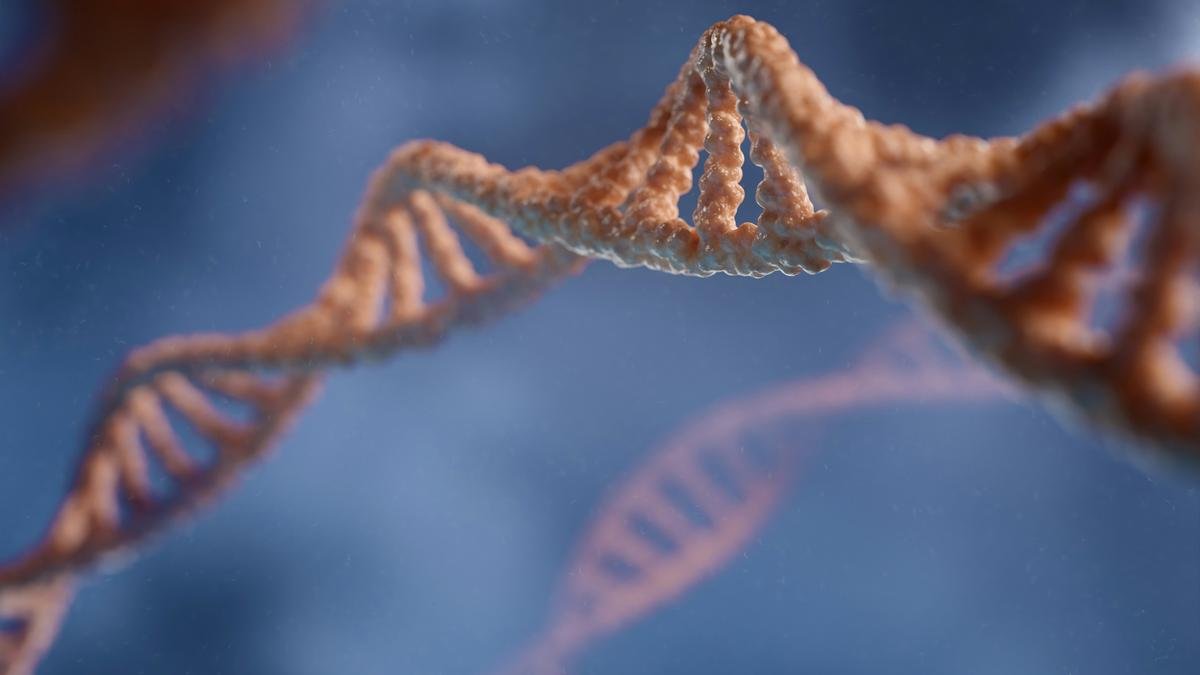
People who lived and died thousands of years ago have left behind their skeletal remains as a legacy. In recent years, scientists have isolated and sequenced the DNA from more and more of these remains.
A team of researchers led by scientists at the Harvard Medical School in the U.S. has compared 15,836 ancient DNA sequences from across Western Eurasia with the sequences of 6,438 modern people from the same countries. (Western Eurasia includes Europe, Russia, Central Asia, the Middle East and Iran.)
The comparison revealed evidence that for many genes for which two sequence variants have been known, one variant had undergone a sustained increase or decrease in frequency relative to the other over the past eight to 10 millennia.
Using new statistical methods coupled with computer simulations, the team found that these changes in frequency can be attributed in many cases to natural selection rather than to processes like genetic drift and population migration. The findings were reported on April 15 in Nature.
The oldest remains examined were dated to 18,000 years ago — yet the scientists were able to obtain enough genetic material to meaningfully calculate gene frequencies for the last 10 millennia alone. The study is in fact the largest survey of ancient human genomes to date.
Carbon dating
Scientists figure out how ancient a skeleton is by measuring the relative amount of carbon-14, a.k.a. radioactive carbon, in its bones and teeth. Carbon-14 is a carbon isotope generated when cosmic rays collide with nitrogen atoms in the earth’s upper atmosphere. Its chemical properties are identical to that of the non-radioactive isotopes carbon-12 and carbon-13.
When an individual is alive, the fraction of carbon-14 in the body is the same as that in the carbon dioxide in the atmosphere, and in the plants and animals consumed as food. This level begins to drop after death. Radioactive decay turns carbon-14 back into nitrogen and there is no way to replenish its level.
Carbon-14 decays with a half-life of 5,730 years. That is, the fraction of radioactive carbon relative to non-radioactive carbon halves every 5,730 years. So after 50,000 years, the fraction of radioactive carbon 14 remaining in the bones and teeth is only two-thousandth that at the time of death.
An instrument called a mass spectrometer is used to measure the relative amounts of each carbon isotope, then estimate the age of its source in this way.
Blood types, gluten, colours
The human body has two copies of a gene called ABO. Each copy comes in three variants, called A, B, and O. Which combination of variants we have determines our blood type. These blood types appeared very early in evolution and we share them with other great apes.
The researchers found that over the last 6,000 years, the B variant has been occurring more commonly among the West Eurasians, with a concomitant decrease in the A variant. The A and B variants are associated with opposite effects with respect to many traits. Therefore, it may be that a population benefits by maintaining an optimal balance to respond to changing pathogenic exposures.
Similarly, a variant of the HLA-DQB1 gene makes people susceptible to coeliac disease. In individuals with two copies of this variant, the gluten in wheat, barley, and rye triggers the immune system to attack the small intestine, leading to diarrhoea, vomiting, and abdominal pain.
In the last 4,000 years, the frequency of occurrence of the disease-causing variant has increased from 0% to 20%. Since agriculture also began 10,000 years ago, the researchers have clarified that the increase was “not a phenomenon only or largely of the rise of agriculture” even as they admit what could have driven the increase remains unknown.
Also around 8,000 years ago, humans began to select for gene variants in several genes that produce lighter skin tones and pigmented hair. The researchers have suggested this was an adaptation in response to having to synthesise more vitamin D in regions with low sunlight, especially among farmers whose diets supplied little of it.
Ancient genes, modern traits
Possessing two copies of the ∆32 variant of the CCR5 gene makes an individual completely resistant to HIV-1 infection. The frequency of this variant among Western Eurasians increased from 2% to about 8% between 6,000 and 2,000 years ago. This predated the origin of HIV, however, which happened only in the early 20th century. Put another way, other unknown ancient pathogens must have driven this increase, as scientists have previously hypothesised.
But perhaps the most interesting signals of ancient selection were found in the gene combinations today associated with ‘modern’ traits such as performance on intelligence tests, household income, years of schooling, and healthy lifestyle (e.g. faster walking pace).
Smoking was unknown to Eurasia until Christopher Columbus introduced tobacco from the Americas less than 600 years ago. The study found that the gene variants associated today with smoking were selected against even in those ancient times. However, it is not clear what traits governed the selection in that time.
As the researchers wrote: “it will be of interest to apply similar approaches to ancient DNA time series over longer times and to other world regions. This would allow more generalizable insights by identifying which patterns of selection are shared and which are distinctive to Holocene West Eurasia.”
South Asians have genetic contributions from ancestors from Iranian Neolithic Farmers and western steppe herders; from indigenous Eastern Eurasian ancestors, including ancient ancestral South Indians; and East and Southeast Asian and Australasian ancestors. A comparable ancient DNA study of our ancestors is likely to be just as fascinating. But we need to first start assembling our own legacy: the remains of our ancestors from thousands of years ago.
D.P. Kasbekar is a retired scientist.
Published – May 20, 2026 07:30 am IST
