






The modern Foreign Office is an institution designed for a world that no longer exists. When permanent diplomatic establishments evolved in the 19th and 20th centuries, information was scarce and communication was slow. A government needed an official permanently stationed in another capital to tell it what was happening, cultivate political contacts and negotiate on its behalf. The ambassador was, quite literally, the government’s eyes, ears and voice abroad.

A prime minister can now speak directly to a foreign leader. Satellites provide continuous observation. Financial markets reveal economic stress almost instantly. This raises a fundamental question: Should the permanent generalist diplomat remain the principal instrument through which a government understands the outside world? The historical record is not reassuring.
Before World War II, American diplomats reported extensively on Hitler’s intentions. In August 1939, the US embassy in Paris was reporting that evidence indicated Hitler had decided to attack Poland. Washington, therefore, knew that a German attack was imminent. What it could not confidently establish was whether that attack would trigger a world war. The distinction is crucial. The information was available. The strategic synthesis was inadequate.
The same problem appeared before Pearl Harbour. The Roosevelt administration understood that cutting Japan’s access to oil could provoke military action. But Washington did not sufficiently connect Japan’s dependence on imported oil, its war in China, the freezing of Japanese assets and its naval capability into the specific possibility that Japan might conclude that it had to cripple the US Pacific Fleet. Pearl Harbour was, therefore, a failure of cross-domain strategic interpretation.
India’s own experience raises similar questions.
The most consequential example is the 1962 war with China. India had an embassy in Beijing and a professional diplomatic service reporting on developments in China. Yet, the government was not prepared for the scale and character of China’s military offensive. The episode illustrates a larger point: Physical diplomatic presence in an adversary’s capital does not necessarily produce strategic warning.
Indeed, India’s official account of its foreign-policy history itself lists 1962, the 1965 war, 1971, the collapse of the Soviet Union in 1991, the 1998 nuclear tests, Kargil in 1999, 9/11 and the 2008 Mumbai attacks among the events that fundamentally altered India’s external environment. The question is not whether the Indian government knew something about these developments. It usually did. The more important question is whether the foreign-policy establishment had a systematic mechanism for identifying their wider consequences early enough for other ministries to prepare.
Consider 1991.
The collapse of the Soviet Union was known in Washington in 1985 Yet the Soviet Union’s disappearance nevertheless produced an enormous strategic shock for India. The consequences went far beyond diplomacy. The ministry of external affairs (MEA) itself records 1991 as the year of the Soviet collapse and severe depletion of India’s foreign-currency reserves. Admittedly the MEA has changed over the years to include other domains, but a universal appreciation is still lacking.
The Gulf War provides another example of the limitations of a purely diplomatic conception of foreign affairs. India’s dependence on Gulf oil, the presence of millions of Indians in the region and the vulnerability of energy supplies meant that developments in the Gulf were simultaneously foreign-policy, energy, financial, maritime and diaspora issues. The appropriate response could not come from the MEA alone. It required the petroleum, finance, defence, shipping and civil aviation ministries, the intelligence agencies and the private sector to work together, which was eventually done by the Prime Minister summoning all ministers.
The same lesson emerged with the rise of China after the arrival of Xi Jinping and the evolution of a Grand Strategy. China was not merely becoming a larger diplomatic power. It was becoming simultaneously an industrial competitor, technological power, trading giant, military power, infrastructure financier and increasingly important maritime actor meaning that China is dealing with us across several domains.
The same problem applies to Pakistan’s nuclear programme. The emergence of Pakistan as a nuclear-weapons State was not a sudden development. The AQ Khan network, Pakistan’s acquisition of enrichment technology and its growing nuclear capability unfolded over 12 years. Yet the policy consequences of what that would forever mean with the China relationship seems inadequate.
Today the principal drivers of national power have become increasingly specialised. A semiconductor crisis is simultaneously a technology, trade, industrial, financial and national-security problem. An oil crisis involves energy, shipping, finance, diplomacy and military security. Artificial Intelligence (AI) involves computing power, chips, electricity, data, intellectual property, defence and employment. Critical minerals involve geology, mining, trade, industrial policy and geopolitics.
Who should analyse such developments?
An ambassador may understand the politics of a country superbly. But it is unreasonable to expect him simultaneously to be an expert in semiconductor fabrication, LNG markets, cyberwarfare, AI, shipping and financial sanctions. The answer is not to make diplomats experts in everything.
It is to change what a foreign ministry is designed to do.
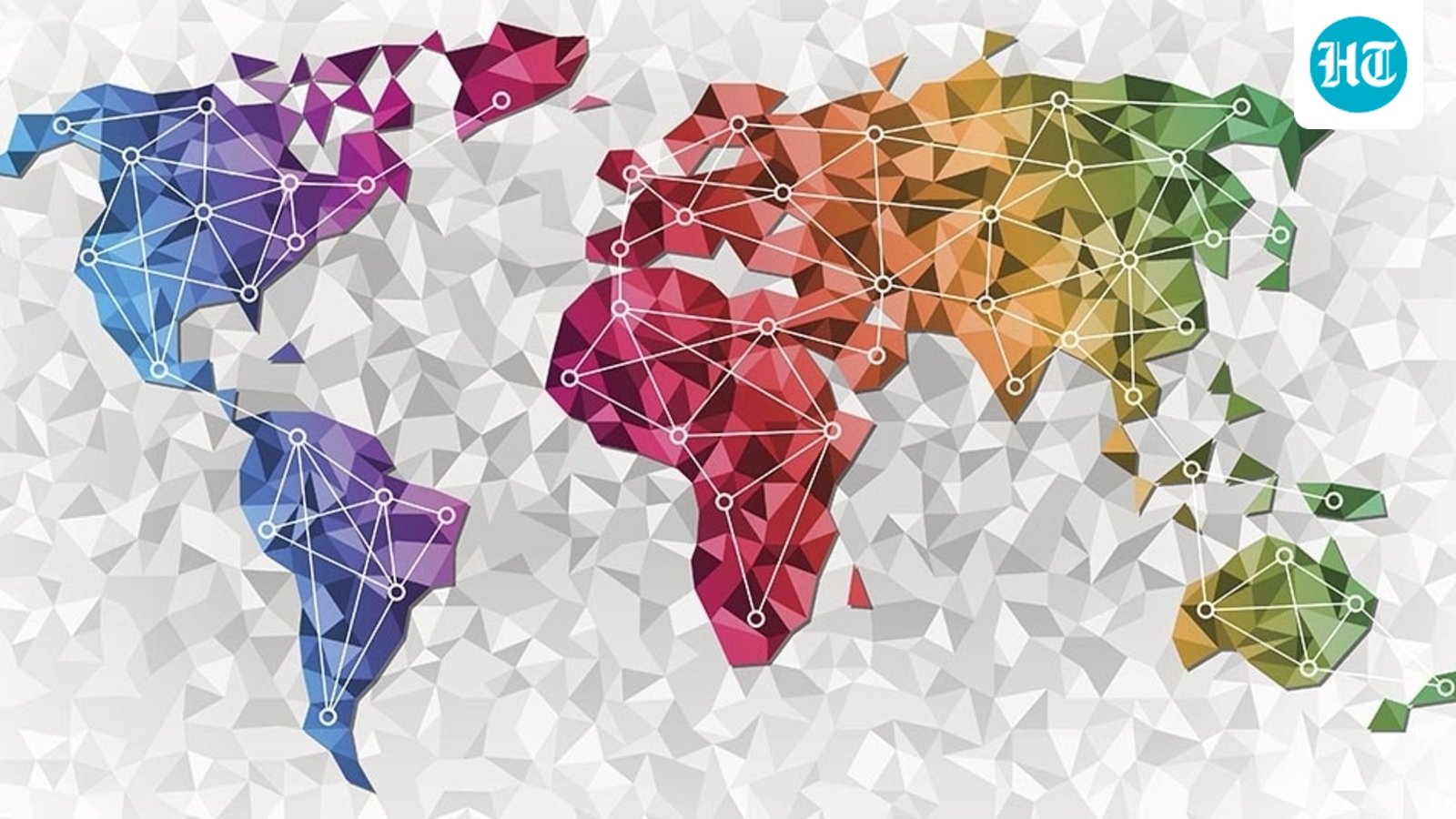
The foreign ministry of the 21st century should become a global strategic sensing and coordination network. The ambassador should remain important—but increasingly as the coordinator of specialised expertise rather than as the principal source of knowledge. Most importantly, governments need a formal strategic early-warning mechanism. Every major foreign-policy establishment should periodically be required to answer a simple question: What developments occurring anywhere in the world today could materially alter our national security, economy, energy security, technology or political position over the next five to 15 years and what the probabilities are.
Diplomacy still performs indispensable functions. Personal relationships matter. Negotiation matters. Political access matters. During crises, a trusted ambassador may be invaluable. But representation and prediction are different functions. The 19th-century diplomat was valuable because he could see what his government could not see .Today the greater challenge is to build an institution capable of identifying the discontinuity before it becomes a crisis.
The ambassador should not disappear. He should become a node in the network—not the network itself.
(The views expressed are personal)
This article is authored by Raja Menon, rear admiral (retd), New Delhi.


