


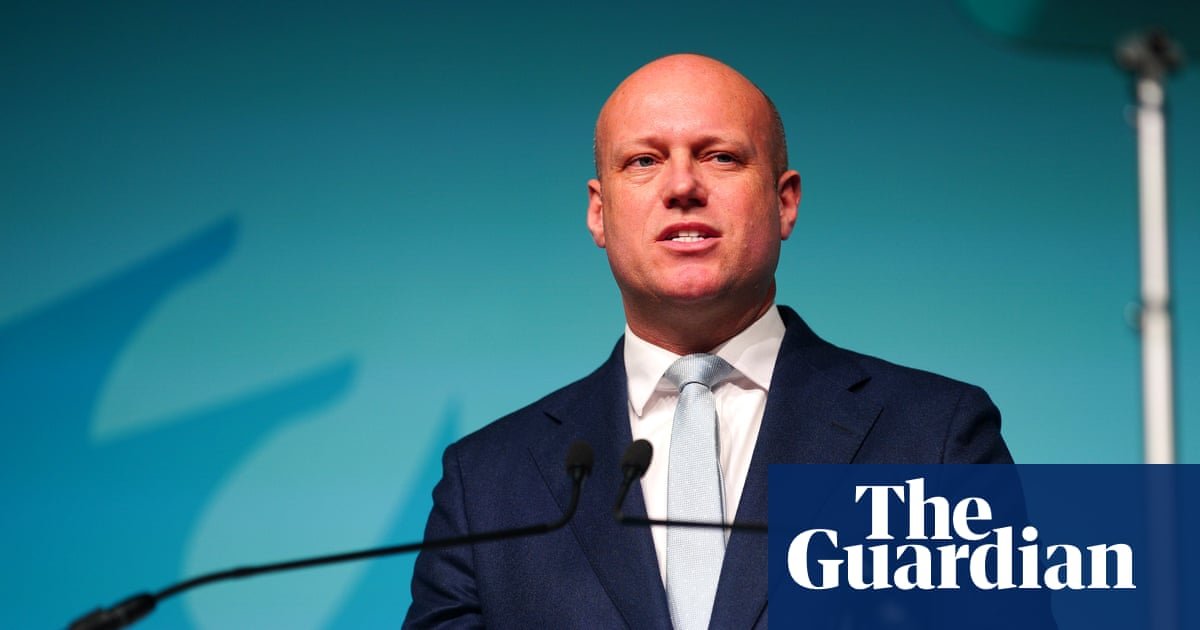
Tears, walkouts, own-goal votes: the Welsh parliament has only been sitting for a few weeks, but Reform UK has already made a dramatic first impression in its new role as the official Senedd opposition.
Plaid Cymru won May’s historic Welsh elections, ending 100 years of Labour dominance and blocking the momentum of Nigel Farage’s Reform UK, which came second. He had been aiming for it to become Wales’s biggest party but it still performed better than any Welsh Conservative result on record, and increased its vote share from 1% in 2021 to 29% in 2026.
With more than a third of the seats in the newly expanded chamber, the Senedd is now the biggest political platform Reform has ever had. Some of its new MSs have wasted no time making a mark.
“It is unsurprising that new voices challenging longstanding consensus are drawing criticism from the establishment,” said Dan Thomas, the Reform UK Wales leader.
Joe Martins, a Reform MS for Caerdydd Penarth, elicited gasps from many of his political rivals and the public viewing gallery during first minister’s questions last week by differentiating between Ukrainian and Sudanese refugees, alleging only the latter commit violent crimes, and asking what Rhun ap Iorwerth would do to avoid “the next inevitable attack”.
Labour MS Shav Taj, next on the list of speakers, struggled to hold back tears as she responded by talking about her own parents’ immigration experience.
“To conflate the issue of immigration with the Nation of Sanctuary [a Welsh government initiative] and … some of the vile stuff we’ve just been hearing is actually really shocking,” she said.
In a debate the next day, Martins continued in a similar vein, alleging that Welsh students are unable to read and that Indian nurses are taking Welsh jobs. The comments triggered a walkout from some upset Plaid Cymru, Labour and Green MSs.
Martins has since been rebuked by the Senedd llywydd (presiding officer), and has stayed quiet in plenary. After a formal Plaid Cymru complaint, however, Reform’s chief whip, Llŷr Powell, said the rest of the Siambr [debating chamber] should “get used to it”.
“I didn’t hear anything I thought went over the line … Get used to it. It’s the ‘new norm’ are the words I use,” he told the BBC.
Taj said: “The Senedd is a circus at the moment. It’s clear [Reform] is after clickbait moments, for followers and shares. Some of them are clearly not serious people … This is a public space and there is parliamentary privilege but it’s also a workplace. It’s about setting the tone, and you have to use parliamentary language.”
Thomas said: “Reform Wales operate within the rules of the Senedd and are focused on making reasoned, evidence-based arguments on behalf of the people we represent.
“[We] believe that is part of a healthy democracy. Our role is to raise concerns and put forward perspectives that, in many cases, have not been properly represented in the Senedd. We will continue to do so and within the standards expected of elected members, constructively.”
More charitable observers have noted that since all but two of the group – Conservative defectors – are new to the Senedd, the group is still finding its feet.
Some Reform MSs bewildered the rest of the chamber by going against their own party in a vote last week.
In a debate on Plaid Cymru’s ambitious childcare plans, one-third of Reform voted in favour of a motion including an amendment noting “Reform UK had no commitments on childcare in its Welsh manifesto”.
The political journalist and author Will Hayward said: “I strongly suspect that the 11 who voted against their own party either didn’t understand the motion or accidentally voted the wrong way.”
While the Senedd is set up to encourage cross-party cooperation – no party has ever won an outright majority – it is still unclear how collaborative or combative the new parliament is going to be. Plaid Cymru’s minority government is already facing an uphill battle in its first major test: getting a supplementary budget passed next month. It needs at least one other party to support it, and Reform has no reason so far to play ball.
Reform will be chairing five of 13 Senedd committees, including the climate change, environment, sustainability and rural affairs committee, which one parliament source said is expected to be “ugly”, given Reform’s opposition to net zero and outright climate change denial from some of its politicians.
Thomas may lead Reform in the Senedd, but Nigel Farage is the party’s ultimate decision maker, said Laura McAllister, a professor of public policy at Cardiff University.
“Chaos or bad behaviour in the Senedd doesn’t sell well, even to the Reform base, because whilst people are prepared to consider Reform as a populist insurgent party, having the keys to No 10 is completely different,” she said.
“They have to convince people they have the discipline and the gravitas to operate properly, and if they can’t do that in Wales, I think Farage understands that will impact on his chances.”
A Reform motion calling for a new statutory lobbying register was passed quickly with cross-party support. But the group has also tabled a debate for next week on Wales’ nation of sanctuary programme, which mainly helps Ukrainian refugees, and has long been a target of ire from the right.
Many in the chamber are bracing themselves for what one Plaid MS called “inflammatory and dangerous rhetoric”.
Peredur Owen Griffiths, a Plaid Cymru MS for Casnewydd Islwyn who has served as an MS since 2021, said: “The atmosphere in the Senedd has changed, but that was to be expected with 70% new members across all the parties.
“What is unclear is whether [Reform] are struggling with the new expectations, or disregarding them. It will be worrying if this trend continues.”
