


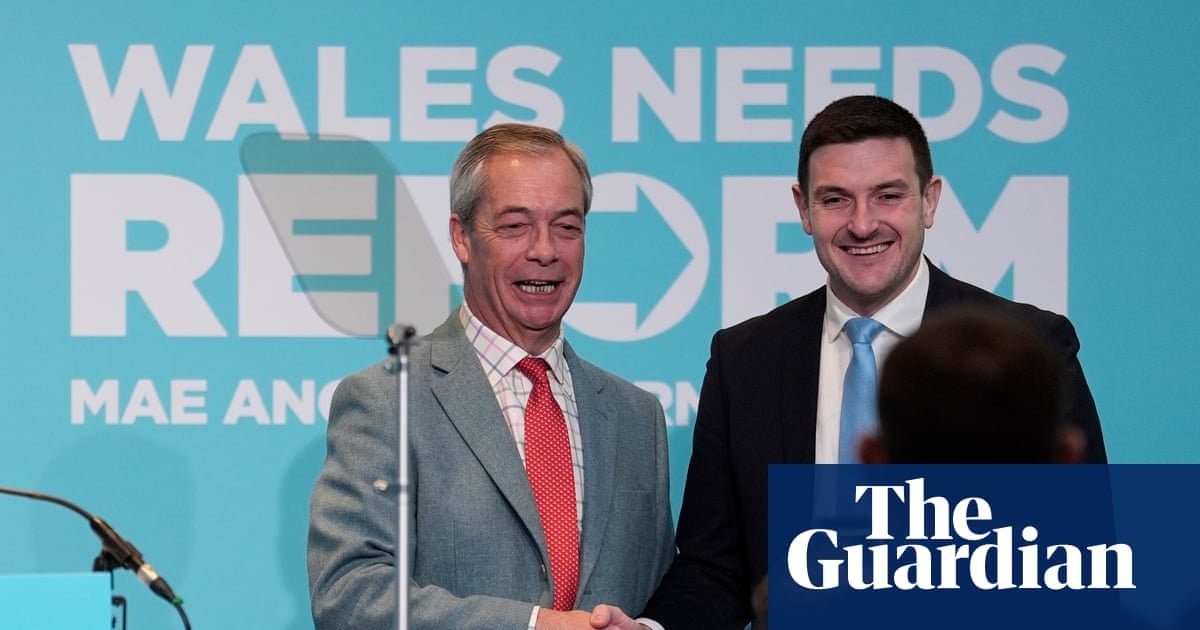
The appointment of a Reform UK MP as the chair of a key Welsh environmental committee could “undermine the hard graft of ministerial scrutiny”, a green thinktank has warned.
James Evans, a former Conservative party MP who defected to Reform UK in January last year, has been appointed chair of the Welsh climate change, environment, sustainability and rural affairs committee.
The role of the committee is to examine legislation and hold the Welsh government to account by scrutinising its spending, administration and policy in relation to climate breakdown and environmental concerns. It also holds inquiries into key issues, using these to make recommendations to government. The chair’s main role is to ensure there is a fair balance of opportunities for committee members to ask questions and for expert witnesses to respond.
It is the only environmental scrutiny committee in the Senedd, so who leads it “really matters because this is the principal way of holding the Welsh government to account”, said Ruth Chambers, senior fellow at the Green Alliance thinktank.
Reform UK has pledged to scrap net zero, with the party’s leader, Nigel Farage, calling net zero policies “lunacy” and committing to ripping up government contracts for renewable energy projects. Evans has previously said rural Wales is “under attack” from large-scale green energy infrastructure and said Reform would ban all new onshore windfarm developments in the country if elected.
The Intergovernmental Panel on Climate Change says emissions from fossil fuels are the dominant cause of the climate crisis and that global greenhouse gas emissions must be halved by 2030, compared with 2010 levels, to prevent catastrophic climate impacts.
“Wales has come too far on climate and nature to stumble now. It would be a tragedy if party politicking undermined the hard graft of ministerial scrutiny and we hope that the new environment committee will seek to find common cause and not conflict,” Chambers said.
Evans, who has a farming background, said his role as chair is to be “fair, impartial and evidence-led” and that “scrutiny is at its strongest when it includes different perspectives”.
“The role of a committee chair is not to drive any personal agendas, but to make sure the committee scrutinises policy properly,” he said.
Karen Whitfield, the director of Wales Environment Link, said that after the recent Welsh elections, which saw a large intake of Reform MPs to the Senedd, there has already been some “quite heated debates” concerning net zero policies. But in terms of how Evans runs the committee, she said only time will tell. “We will just have to see and obviously our members will be very keen to see that there isn’t any bias introduced in the way that committee inquiries are chosen,” she said.
The process of appointing select committee chairs is an opaque system whereby political parties make collective decisions on which party will lead which committee. Bethan Sayed, the head of politics and advocacy at Climate Cymru, questioned why a Reform MP would want to lead this committee.
after newsletter promotion
“[Maybe] they want to put forward some of the polarising agendas that they have to date, or maybe they do want to work constructively,” she said.
“The concern is that throughout the election campaign, we’ve seen Reform say things like ‘we want to reopen the mines, we want to reopen the blast furnaces at Tata Steel’, and putting forward those coordinated attacks on net zero, opposing certain renewable developments, and so that is then a worry, because that is the current track record. The work of the other committee members is to encourage Reform to engage in changing that narrative and seeing things in a different light.”
“Reform has been elected, whether people like it or not, and we have to then engage [with them] in a serious parliamentary process, hopefully that’s something they will be able to do,” she added.
Evans said that previous Welsh governments have “perhaps not listened as much to committees as they should have”. He added: “We’ll just hope that, as we put committee reports together, government listens to them and that they respect the views of what our committee has to say and they take it on board, because scrutiny is there to improve legislation.”
