



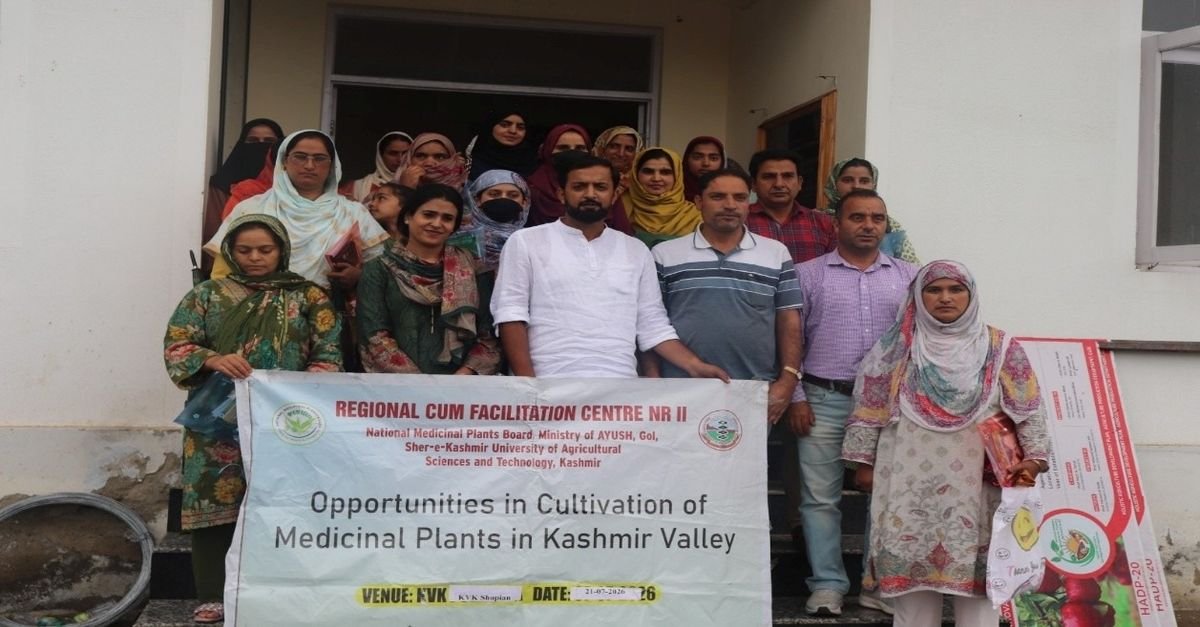
Shopian, Jul 21: Regional Cum Facilitation Centre, Northern Region-II (RCFC NR-II) National Medicinal Plants Board (NMPB), Ministry of AYUSH, Government of India, SKUAST-K, organized a Training-cum-Awareness Programme on “Opportunities in Cultivation of Medicinal Plants of Kashmir Valley” at Krishi Vigyan Kendra (KVK), Shopian.
The programme focused on promoting conservation, scientific cultivation and entrepreneurship development in medicinal plant sector, aiming to create sustainable livelihood opportunities for farmers, youth, and aspiring entrepreneurs of the region.
Addressing the participants, Dr. Zaffar Afroz Badri, Head, KVK Shopian, emphasized the growing economic importance of medicinal plants and highlighted the initiatives undertaken by RCFC NR-II for the conservation and promotion of medicinal plants in the valley.
He encouraged stakeholders to adopt medicinal plant cultivation as a means of livelihood diversification and income generation.
Dr. Sofi Imtiyaz Ali, Project Manager, RCFC NR-II, delivered a detailed lecture on conservation strategies, package of practices, post-harvest management, value addition of commercially important medicinal plants, thereby stressing the importance of quality and standardization to meet market demand.
A special emphasis was laid on Rheum emodi (locally known as Pambei Tchalan) a high-value Himalayan medicinal species, with a caution against its unsustainable extraction from the wild.
Stakeholders were encouraged to adopt its scientific cultivation to promote conservation while enhancing income opportunities.
The session also covered economics and emerging opportunities in herbal-based enterprises. The programme witnessed active participation from farmers, youth, entrepreneurs, and other stakeholders, along with scientists and technical staff of KVK Shopian and RCFC NR-II team.
The event concluded with a strong call to adopt scientific cultivation practices, reduce dependency on wild collection, explore entrepreneurship avenues in the medicinal plant sector, and effectively utilize the technical guidance and institutional support provided by RCFC NR-II for building sustainable livelihoods.


