



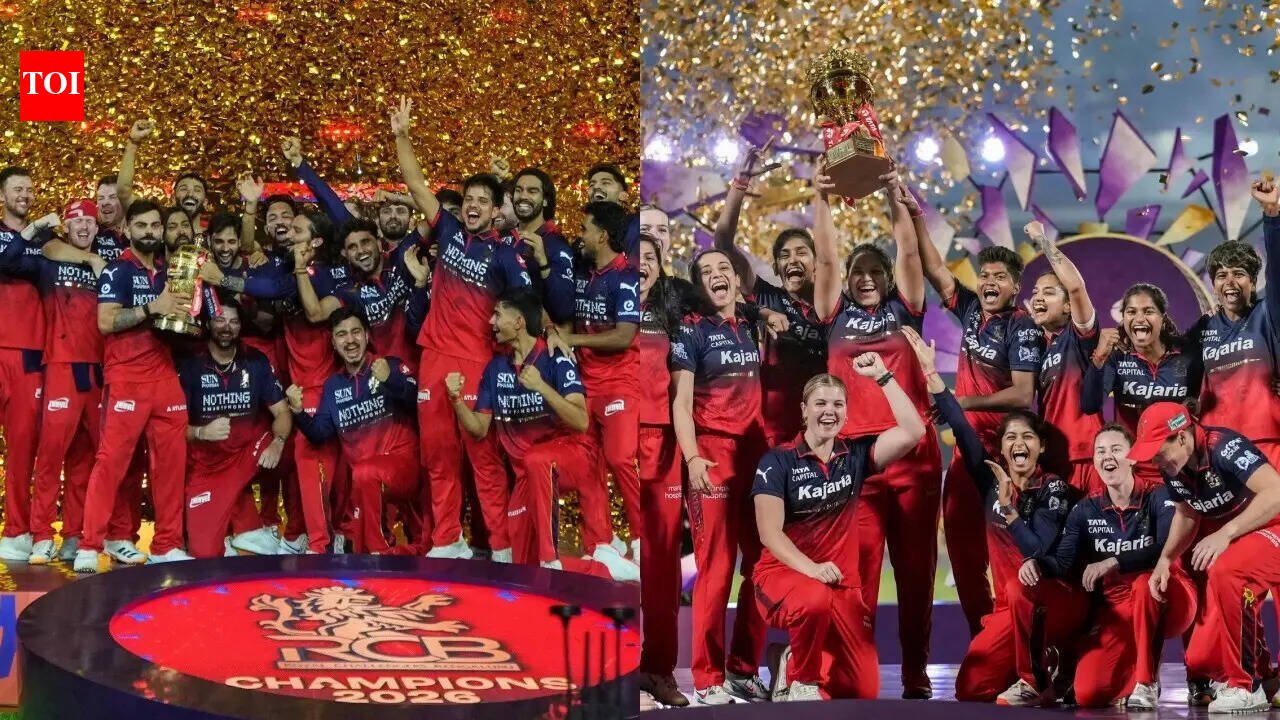

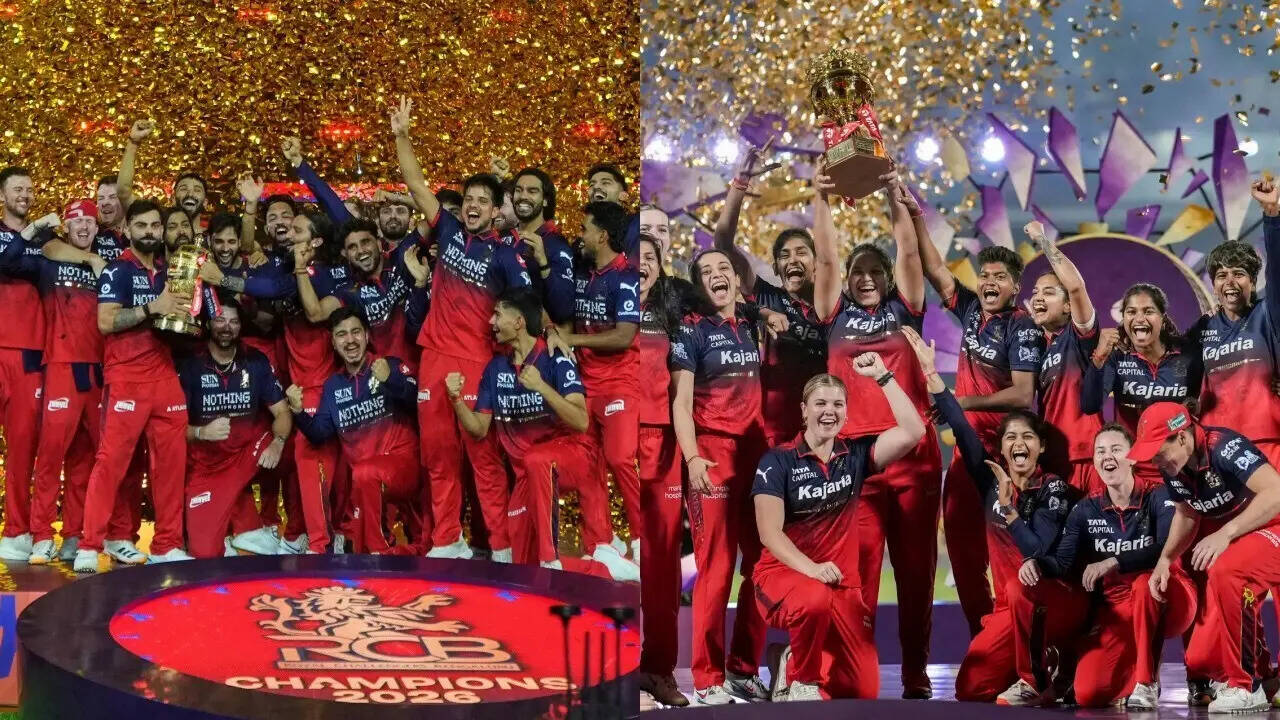
New Delhi: For years, Royal Challengers Bengaluru were Indian cricket’s great romantics.They had the stars. They had the fan base. They had the moments. What they didn’t have were the trophies. RCB reached IPL finals in 2009, 2011 and 2016 and fell short. For 18 years, supporters watched squads built around icons such as Chris Gayle and Virat Kohli come agonisingly close, only for the title to remain out of reach. RCB became synonymous with promise rather than achievement, with passion rather than silverware.That is why what has happened over the last three years feels so remarkable.With the IPL 2026 title secured in Ahmedabad on Sunday, RCB have now won back-to-back titles.Their women’s team, meanwhile, can take credit for leading the way by winning the 2024 Women’s Premier League (WPL) title. The Smriti Mandhana-led team made it two trophies in three years in February.Fast forward to May 31 and the franchise that once carried the burden of underachievement now sits atop both of India’s premier T20 leagues.
Royal Challengers Bengaluru beat Gujarat Titans to win back-to-back IPL titles.
The transformation has not been sudden. It has been structural.The old RCB often looked like a team assembled around star power. The new RCB looks like one built around systems. Recruitment has become smarter. Roles are clearer. The dependence on one or two superstars has reduced. Success is no longer expected to arrive because of individual brilliance; it is engineered through squad depth, planning and continuity.That shift is visible across both teams.The WPL side got there first. While the inaugural years of WPL saw teams scrambling to understand squad construction, or even the shelf life of the competition, RCB steadily built a core, backed leaders and created an environment where players could thrive. The titles that followed were a reward for patience rather than a consequence of short-term approaches.
Royal Challengers Bengaluru beat Delhi Capitals to win WPL 2026 – their second title in three years.
The men’s team has followed a similar path since Rajat Patidar took over the leadership mantle from Virat Kohli.The emotional weight of finally winning the IPL title in 2025 could easily have led to complacency. Instead, it became the foundation for sustained excellence. Defending a title is often harder than winning one. Yet RCB returned in 2026 looking less like champions protecting a crown and more like a team convinced it belonged at the top.That mindset is what separates champions from dynasties.Football offers examples. FC Barcelona’s golden era with the men’s team and the Femeni was not defined by one trophy but by a culture that repeatedly produced winning teams. More recently, Manchester City’s men’s and women’s teams have both become consistent title challengers because the club’s philosophy extends across the organisation rather than being limited to a single squad.
Manchester City Women won the 2026 Women’s FA Cup after beating Brighton. (Getty Images)
RCB’s rise feels closer to that model.For perhaps the first time in the franchise’s history, there is alignment between the men’s and women’s teams. Both sides reflect similar principles: trust in long-term planning, strong leadership groups and a willingness to prioritise balance over glamour.For most of their existence, RCB lived in the shadow of their own narrative. Every season was accompanied by reminders of heartbreaks, near-misses and unrealised potential. The franchise became a punchline for rivals and a test of loyalty for supporters.Now, those conversations have changed.
Royal Challengers Bengaluru joined Mumbai Indians and Chennai Super Kings in clinching consecutive IPL titles. (ANI)
Young fans are growing up knowing RCB not as perennial underachievers but as serial winners. The franchise’s identity is being rewritten in real time. The memories that once centred on what could have been, are increasingly being replaced by celebrations of achievement.
What do you think contributed more to RCB’s recent success?
From cricket’s nearly-men to the standard-bearers of Indian franchise cricket, RCB have completed one of the most significant transformations the IPL era has seen. And with titles now flowing from both their men’s and women’s teams, the franchise is no longer chasing history.It is making it.


