



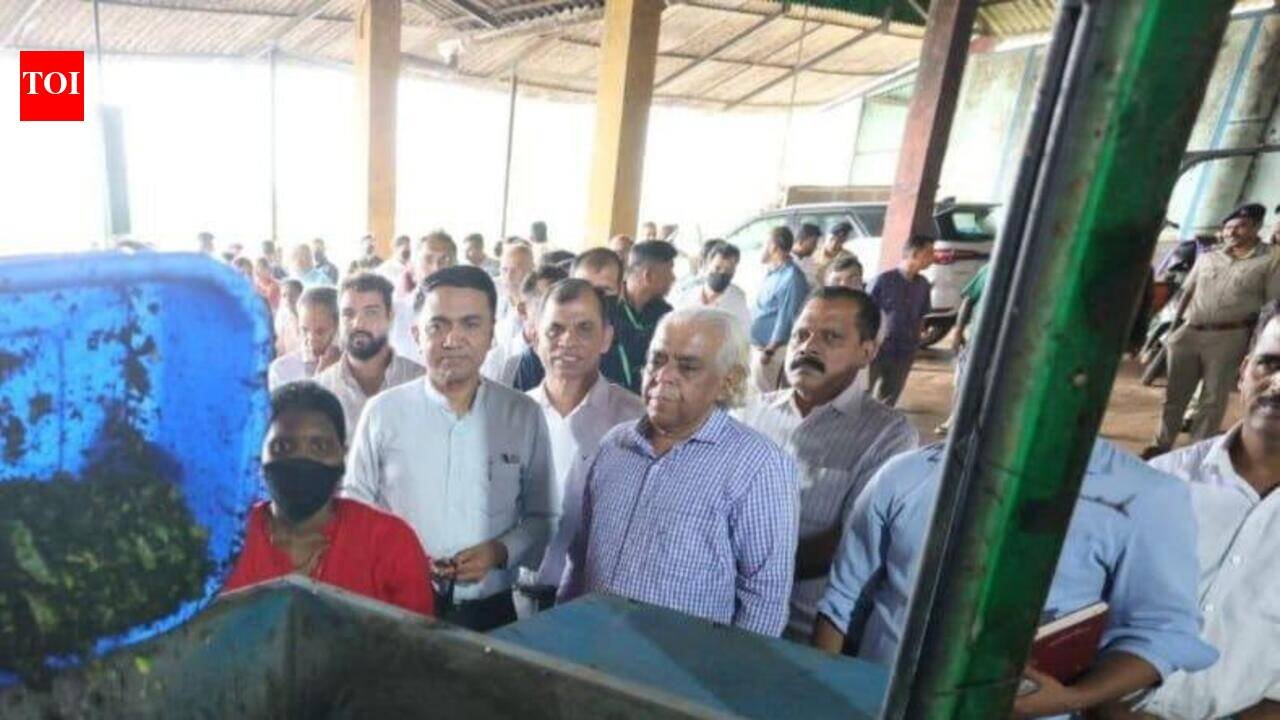
Bicholim: To make waste management in Goa more scientific, efficient, and environmentally sustainable, chief minister Pramod Sawant announced that govt will implement the ‘Nisargaruna Rapid Composting’ project in a phased manner across all municipalities and panchayats in the state.The rapid composting units will help the conversion of wet waste into organic compost in 24 to 48 hours, said Sawant. He added that to ensure the successful implementation of the project, representatives of local bodies will receive special training.Sawant on Friday visited the garbage treatment plant at Lakherem-Bordem in Bicholim to inspect the Nisargaruna Rapid Composting project set up through a collaborative initiative of state govt, Sampurnearth Foundation, and the CSR programme of Indigo Airlines.State advisor on environment Sharad Kale said that segregated wet waste is treated in the rapid composting units using a specially developed microbial culture. The processed material is then shredded and placed in aerated windrows for 24 hours. It is subsequently transferred to trays or crates for another 24 hours, after which it is converted into stable, odour-free organic compost suitable for agriculture and horticulture.He further explained that the process prevents recyclable dry waste such as paper, plastic, glass, and metal from becoming contaminated, thereby improving recycling efficiency and increasing the economic value of recyclable materials. Additionally, the reduction in methane emissions contributes to climate change mitigation and could create opportunities for earning carbon credits in the future.Rapid urbanisation has made waste management one of the state’s biggest challenges. Instead of merely disposing of waste, converting it into value-added organic compost has become the need of the hour,” Sawant said. He emphasised that every local body should ensure waste segregation at source and process biodegradable waste at the local level.The chief minister said the project eliminates the need to transport biodegradable waste over long distances to other places. Since waste is processed at the point of generation itself, transportation costs, fuel consumption, and greenhouse gas emissions are significantly reduced. The system also helps control foul odour and environmental pollution.Sawant stated that awareness campaigns, demonstrations, and training programmes will be organised to promote the adoption of the system across municipalities, village panchayats, educational institutions, residential complexes, and commercial establishments throughout the state.Bicholim MLA Chandrakant Shetye said that the project would ensure scientific disposal of biodegradable waste through the production of organic compost while significantly strengthening waste management systems in municipalities and panchayats across the state.


