


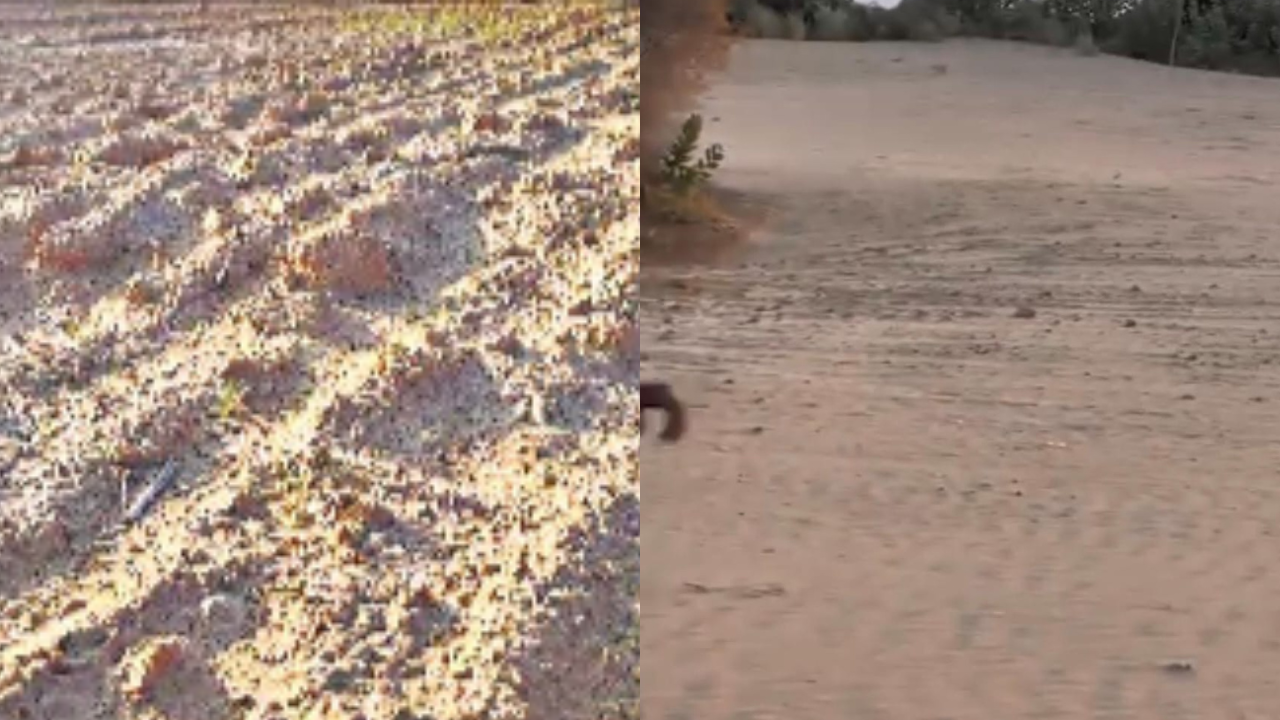
JAISALMER: An erratic monsoon and a prolonged dry spell have pushed farmers in Rajasthan’s border district of Jaisalmer into a severe agricultural crisis, with the crucial kharif sowing season nearing its end. As rain continues to elude most parts of the district, anxiety is mounting among farmers, who fear heavy crop losses and financial hardship if adequate rainfall does not arrive within the next few days.Jaisalmer normally targets sowing across nearly 700,000 hectares during the kharif season. However, due to the sluggish progress of the southwest monsoon, only about 100,000 hectares have been sown so far. Significantly, most of this cultivation has taken place in tube well-irrigated areas, where farmers have relied on groundwater rather than rainfall. Vast stretches of rain-fed farmland remain dry, with fields lying barren under intense heat and blowing dust.The situation has worsened due to strong dust storms over the past three to four days, which have damaged early-sown crops, including groundnut and other kharif crops. In several villages, high-speed winds flattened young plants and caused extensive damage to newly germinated fields.Only around 10 per cent of the district received rainfall during recent showers, while nearly 90 per cent of Jaisalmer is still waiting for meaningful rain. According to the India Meteorological Department (IMD), the district recorded only 19 mm of rainfall in June, far below the amount required for proper seed germination and adequate soil moisture. Farmers say the ideal sowing period, from 15 June to 15 July, has almost ended, and they are now pinning their hopes on rainfall before 20 July, which is considered the last practical deadline for timely sowing.Farmer Lale Khan said mung bean, moth bean, guar, groundnut and pearl millet are the district’s major kharif crops. He warned that if sufficient rainfall does not occur by 20 July, yields of mung, moth and groundnut will decline sharply. While guar and pearl millet can still be sown until the end of July, adequate soil moisture remains essential for successful cultivation.Another farmer, Shahban Khan, described the current season as a “triple blow” for cultivators. He said farmers first suffered from severe storms, then a delayed monsoon, while the little crop that had been sown was later damaged by powerful sandstorms. He added that an inadequate electricity supply has further worsened the situation, affecting irrigation and causing cotton and groundnut crops to dry up.Agricultural experts say the period between 15 June and 15 July is considered the most suitable for kharif sowing in Jaisalmer. With the peak sowing season almost over, the next few days will be critical.Deepak Chaturvedi, a scientist at the Krishi Vigyan Kendra, said that if substantial rainfall does not occur by 20 July, delayed sowing could increase pest attacks and reduce crop yields by 10 to 20 per cent. He advised farmers to opt for early-maturing crop varieties if rains arrive late and maintain wider spacing between seeds to ensure better plant growth.Farmers from the border region of Ramgarh said repeated natural calamities and irrigation-related problems have destroyed months of hard work, putting investments worth lakhs of rupees at risk. They warned that rising cultivation costs, uncertain weather and inadequate irrigation have pushed many farming families deeper into debt.The farmers have urged the Rajasthan government to conduct a special crop damage survey (girdawari) in the affected areas, assess the losses immediately, and announce an adequate compensation and relief package so that affected cultivators can recover their losses and prepare for the next agricultural season.
