



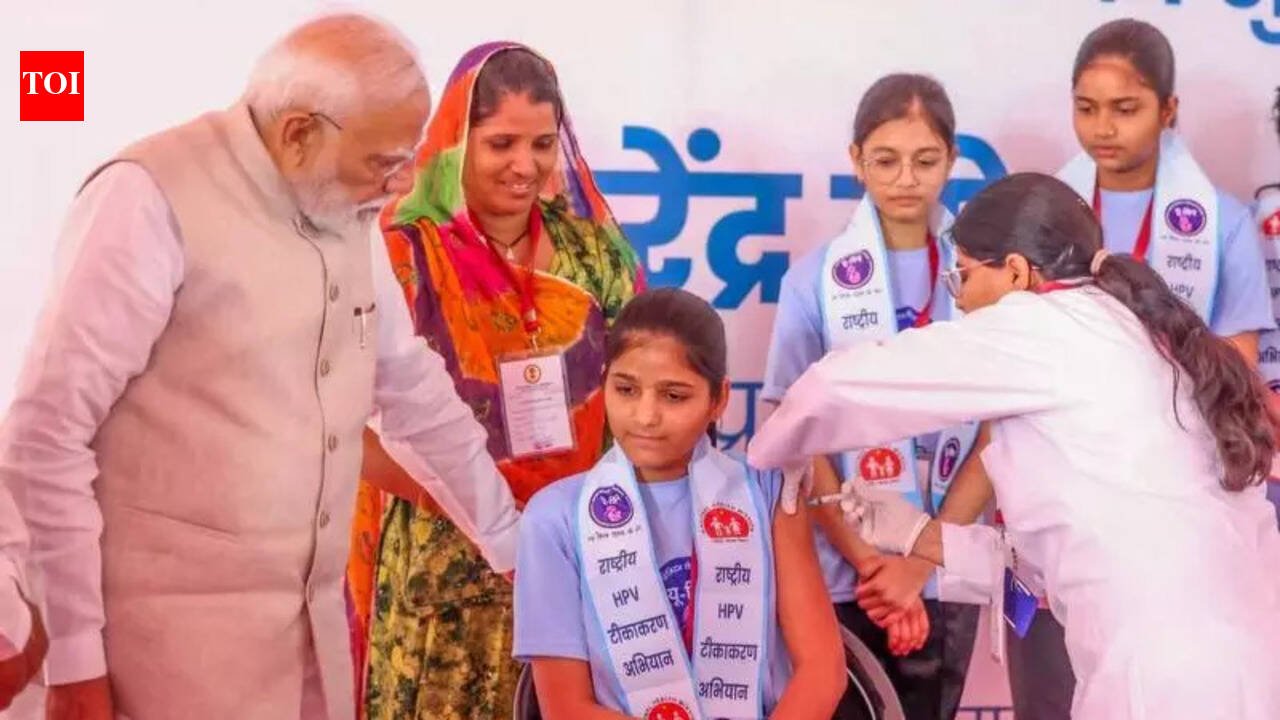
Jaipur: Rajasthan has received 3.65 lakh doses of the Human Papillomavirus (HPV) vaccine and begun distributing them across districts as part of a statewide campaign to protect adolescent girls from cervical cancer.After the launch, Friday, health department officials said, the HPV vaccine is generally safe, though some beneficiaries may experience mild adverse effects. “Most adverse effects resolve on their own within a few days and are part of the natural response of the immune system,” an official said. Common reactions include pain, redness or swelling at the injection site, fever, headache, fatigue, nausea, dizziness or fainting — often linked to fear of injection or an empty stomach rather than the vaccine itself. Such discomfort can be managed with simple measures like paracetamol, extra fluids, removing excess clothing or applying a cold compress at the injection site. Girls aged 14–15 years constitute roughly 1% of the state’s population, and the programme aims to vaccinate about 8.3 lakh girls annually, depending on the size of the eligible age group. To ensure no one is missed, a three-month grace period will be provided for girls who turn 15 to complete vaccination within the permitted window. State project director (vaccination) Dr Raghuraj Singh said, “As per directions of the Centre, the vaccine will be administered as a single dose to girls who have celebrated their 14th birthday but have not yet celebrated their 15th birthday. Cervical cancer is the second leading cancer among women in India, and around 99.7% of cervical cancer cases are linked to HPV infection, underscoring the public health importance of preventive vaccination.” The eligible cohort in Rajasthan is estimated at 8,32,836 girls. The vaccine being used is Gardasil-4, administered as a 0.5 ml intramuscular injection in the left upper arm. Around 1,000 health facilities with functional cold chain points and trained staff have been identified across Rajasthan. The state also completed training at the state, district, and health-facility levels for auxiliary nurse midwives, Accredited Social Health Activists (ASHA), verifiers, and mobilisers to ensure standardised delivery, safe practices, and smooth implementation.


