


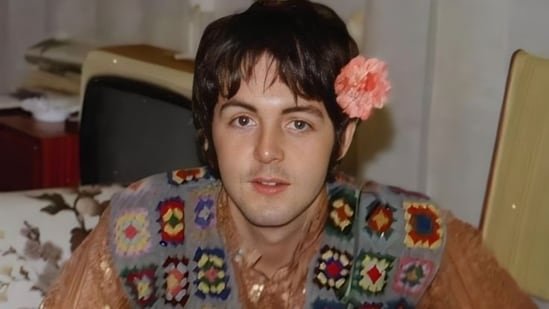
Paul McCartney celebrated his 84th birthday yesterday, on June 18. The legendary bassist, singer-songwriter and co-founder of The Beatles needs little introduction. Alongside bandmates John Lennon, George Harrison and Ringo Starr, McCartney helped redefine popular music, shaping the soundtrack of a generation ahead.
With timeless classics like “Something” and “Here Comes The Sun,” alongside more experimental numbers like “Happiness is a Warm Gun” and “I Want You (She’s So Heavy),” The Beatles revolutionised music as the 60s knew it – and served as the inspiration for countless acts thereafter. However, McCartney wasn’t done yet! After the tumultuous breakup of the band in 1970, the bassist embarked on his own projects – co-founding the band Wings with his wife, Linda McCartney, while building his decades spanning solo career.
With 19 Grammy Awards, two inductions into the Rock and Roll Hall of Fame – first as a Beatle and later as a solo artist – and a career spanning more than six decades, McCartney’s influence extends far beyond music itself. It is perhaps no surprise, then, that some of his most enduring words are not about fame, but about the healing power of art.
What Paul McCartney said
In an August 2016 interview with Rolling Stone, McCartney shared a moving reflection on the relationship between music and the human psyche. He said, “Music is like a psychiatrist. You can tell your guitar things that you can’t tell people. And it will answer you with things people can’t tell you.”
For McCartney, music has never been just a profession – it has been a lifelong companion. Speaking years later before the release of his book The Lyrics, he reflected on how songwriting often helped him process emotions he did not fully understand at the time. One such example was “I Lost My Little Girl”, the first song he wrote at the age of 14, shortly after the death of his mother, Mary. Though he did not consciously write it as a song about grief, the “Band On The Run” singer later acknowledged that music may have helped him work through that devastating loss. Looking back, he described his songwriting process as “better than being with a psychiatrist!”, a space where feelings could be expressed freely and transformed into something meaningful.
What Paul McCartney’s quote means
McCartney’s words speak to a truth that many people intuitively understand: art often gives voice to emotions that ordinary conversation cannot. Music does not judge, interrupt or demand explanations. Instead, it creates a space where grief, joy, loneliness and hope can exist side by side. Sometimes, the act of singing, playing an instrument or simply listening to a song becomes a way of understanding ourselves more clearly.
The quote also reminds us that healing is not always linear or verbal. We may not have the right words to explain what we feel, but creativity can help us make sense of our experiences. For McCartney, whose life has been shaped by unimaginable highs and profound losses, music became both a refuge and a form of self-discovery. And perhaps that is why his words continue to resonate: because they remind us that sometimes, the conversations that heal us are the ones we have with art itself.
