



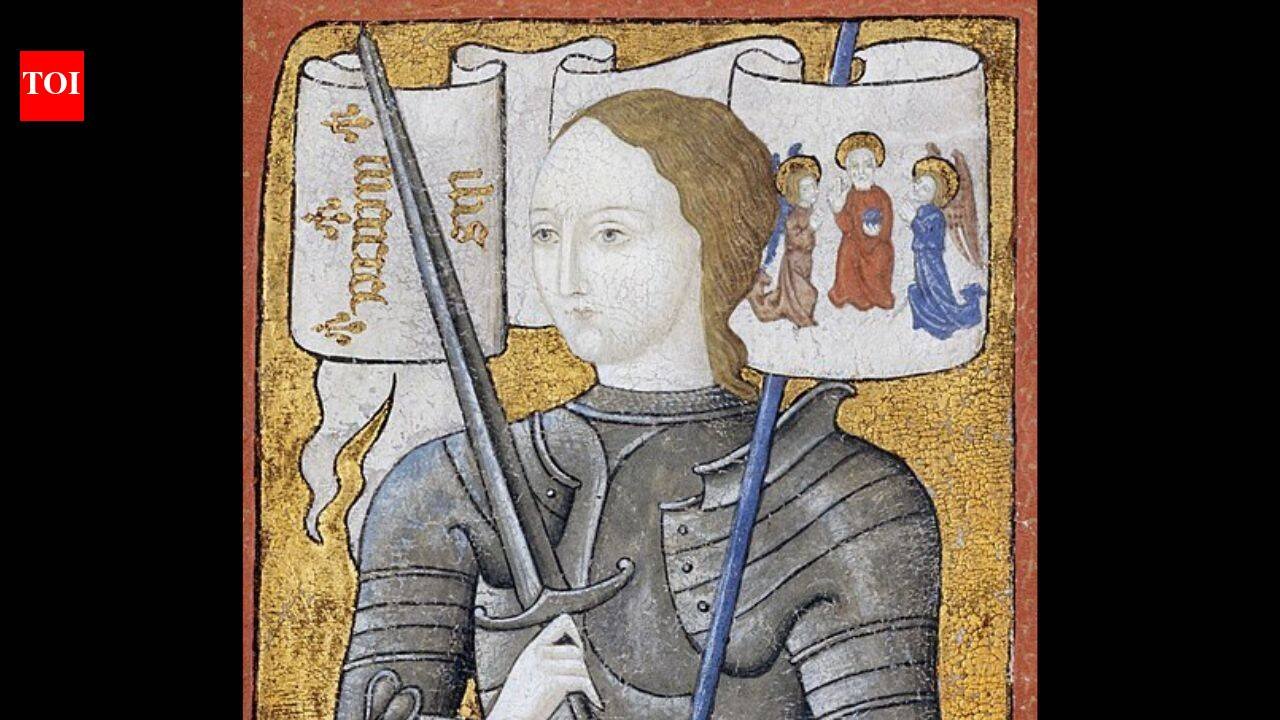
Some people find the courage to face impossible odds through a conviction that feels bigger than themselves. Joan of Arc, the French peasant girl who led troops during the Hundred Years’ War as a teenager with no military training, is one of history’s most striking examples. Facing her own trial for her life, she said plainly, “All I have done is by Our Lord’s command… I have done nothing in the world but by the order of God.” She was not claiming personal glory for anything she had done. She was placing all of it somewhere else entirely, a distinction that mattered enormously to her, even when doing so put her own life in genuine danger.
Quote of the day by Joan of Arc
“All I have done is by Our Lord’s command… I have done nothing in the world but by the order of God”
What is the meaning behind the quote by Joan of Arc
Joan believed that every major decision she made, leaving her village, leading soldiers into battle, came not from personal ambition but from a mission she believed had been entrusted to her directly by God. The quote carries real humility running through it. Rather than taking credit for what she had achieved, she attributed all of it to something beyond herself. For her, both the successes and the risks she took were acts of obedience, not attempts at personal glory.
Where this quote actually comes from
This line comes from Joan’s own trial, specifically her Fourth Public Examination, held during a series of six public hearings between 21 February and 3 March 1431. She was being questioned closely about her decision to wear men’s clothing, one of the specific charges her judges eventually used against her. Asked whether that command felt lawful to her, she answered, “All I have done is by Our Lord’s command. If I had been told to take some other, I should have done it; because it would have been His command.” Asked again, more directly, whether she believed she had done right by wearing it, she gave the second half of today’s quote separately, “I have done nothing in the world but by the order of God.” The two lines are genuinely hers, given in the same exchange, though technically as answers to two closely related questions rather than one single continuous statement.
Why conviction can produce extraordinary courage
People throughout history have drawn real strength from beliefs held deeply enough to outlast enormous pressure. Joan faced imprisonment, a public trial, and eventually execution, and despite intense pressure to recant what she believed, she held her position until the end. Her courage did not come from any certainty about how things would turn out. It came from certainty about her own purpose, which is a very different, and in some ways sturdier, kind of confidence.
Why purpose can matter more than recognition
Joan was never chasing fame in anything like the modern sense. Her focus was on fulfilling what she believed was her responsibility, not on being celebrated for it. People driven mainly by a sense of purpose tend to keep working at something regardless of whether recognition ever actually arrives, because the motivation was never really about the applause in the first place.
Why humility can strengthen leadership
What stands out in Joan’s quote is the complete absence of self-congratulation. She never presents herself as extraordinary in her own right. She presents herself instead as someone carrying out instructions from something larger than herself. Plenty of respected leaders throughout history have shown a similar instinct, treating leadership as a responsibility rather than a source of personal status.
Why deep conviction, of any kind, tends to build resilience
For a great many people, faith provides real meaning during uncertainty and real strength during hardship. Whatever a reader’s own beliefs happen to be, Joan’s unwavering confidence in her own mission is a genuinely striking example of how deeply held conviction can sustain someone through extraordinary pressure.
Why this quote needs its historical context
Joan lived in fifteenth-century France, a period when religious belief shaped almost every part of both public and private life. Her statements about divine guidance reflected both her personal experience and the wider worldview of her era. Readers today will interpret her words differently depending on their own beliefs, but understanding that historical backdrop helps explain why her faith sat so completely at the centre of her identity and every decision she made.
A note on Joan of Arc’s life
Joan of Arc, born around 1412, said she experienced visions instructing her to support Charles VII and help free France during the Hundred Years’ War. She played a major role in lifting the Siege of Orléans and lifting French morale at a critical moment in the war. Captured in 1430, she was tried for heresy and executed in 1431, at around nineteen years old. In 1920, nearly five centuries later, she was canonised as a saint by the Catholic Church, and remains one of the most revered figures in French history.
Other memorable quotes by Joan of Arc, from her own trial
- “Without the grace of God I should not know how to do anything.”
- “I rely upon God, my Creator, for everything. I love Him with all my heart.”
- “I would rather die than revoke what God has made me do.”
- “I have a good Master, that is God; it is to Him I look in everything and to none other.”
Why Joan of Arc’s message still resonates
Joan’s story has endured for centuries not simply as military history, but as the story of someone who stayed faithful to her own convictions under extraordinary pressure. Her words are a reminder that genuine purpose, whatever shape it takes for any person, tends to require courage, humility and real perseverance, sustained long after it would have been far easier to simply give in.


