



The Queensland government has “opened old wounds” by appointing a former police detective who was heavily criticised for his role in events surrounding the 2004 riots on Palm Island to the state’s Legal Aid board, say First Nations community leaders and members of the legal fraternity.
The Liberal National party government sacked and replaced all Labor-appointed members of the Legal Aid Queensland board last month.
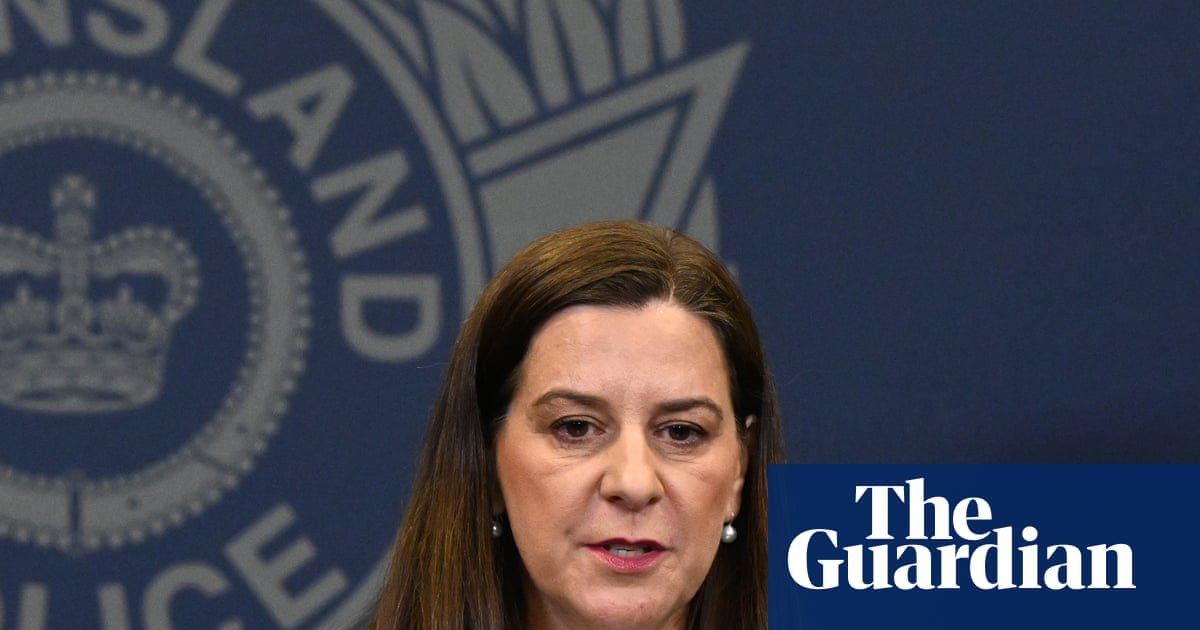
The attorney general, Deb Frecklington, appointed Darren Robinson, a Townsville lawyer and former police officer.
Robinson was described in federal court documents as a “principal antagonist” in events before and after the 2004 death in custody of Mulrunji Doomadgee and subsequent rioting in the Palm Island community.
“It’s opened up a lot of raw wounds and brought back a lot of trauma,” said Aunty Gracelyn Smallwood, a Birrigubba, Kalkadoon and South Sea Islander woman who was on Palm Island on the day of the riots. She said justice had still not been done.
“I’m very surprised that the premier would let those appointments go ahead, when the premier would be very aware of the case, and if not, his advisers need to bring it to his attention.
“If people read the transcripts, they too would be very surprised about the appointment.”
In 2004, then Sen Sgt Robinson was a friend of Christopher Hurley, the officer accused (and ultimately acquitted) of the manslaughter of Mulrunji in the Palm Island police cells.
Robinson had investigated a prior complaint by a Palm Island community member about Hurley, and ruled the complaint was “fictitious”. An inquest described Robinson’s investigation as “superficial, biased and misleading”; it found his conclusion was “dishonest and flew in the face of objective evidence”.
Robinson was part of a team of police sent to Palm Island to investigate the death in custody in 2004. After the riots, he accompanied armed and balaclava-clad tactical police as they entered homes and searched for suspects.
In 2015, during a federal court civil case that ultimately found the treatment of Palm Island residents by police was discriminatory, a community member, Jucinta Barry, alleged Robinson told her after the riots not to ask police for help if she was bashed or raped by her partner. Robinson has not responded directly to that claim but it is understood he denies it.
Justice Mortimer found Robinson conveyed “speculative, stereotyped and generalised suspicions” to other police officers about Palm Island residents. The finding said “the inference is plainly open” that Robinson “well knew there was no real danger” posed by residents whose houses were attended by the heavily armed tactical squad.
“In truth there was no real danger and this was a deliberate, but unnecessary, show of force by the QPS, and an inappropriate exercise in subjugation.”
Justice Mortimer described Robinson’s conduct, in interrogating the children of community member Lex Wotton, as amounting to “harassment”.
Questions about government’s judgment
The death of Mulrunji in police custody on Palm Island, and the subsequent riots and police response, remains a cultural fissure in Queensland. Still prominent police officers were among those who wore blue wristbands in support of Hurley.
The Crime and Misconduct Commission investigated the case and made recommendations that four officers, including Robinson, be disciplined. Police took no disciplinary action.
Robinson was awarded the Queensland Police Valour award for his actions on Palm Island.
In those circumstances, critics say Robinson’s appointment to the Legal Aid board will be seen as particularly divisive, and has raised questions about the government’s judgment. Across Australia, more than 9% of clients who rely on legal aid commissions are First Nations people. That number would probably be higher in Queensland, which has a larger proportion of Indigenous people and an overrepresentation of them in the criminal justice system.
Terry O’Gorman, the vice-president of the Queensland Council for Civil Liberties, said the inquest findings and recommendation that Robinson be disciplined “should automatically disqualify [him] from any government position, let alone the Legal Aid Board which sets funding policies for Indigenous people including funding for making complaints against police”.
Frecklington did not respond directly to questions about whether she had prior knowledge of Robinson’s connection to events on Palm Island. Robinson’s LinkedIn profile includes legal positions held since 2013 but makes no mention of his prior police career.
Frecklington said Legal Aid Queensland was “a critically important institution, working tirelessly to meet the diverse needs of disadvantaged Queenslanders and to deliver access to justice.
“It will be further strengthened by Mr Robinson’s extensive experience working with rural and remote communities, including many Indigenous and vulnerable persons, bringing both deep expertise and a genuine understanding of those most in need.”
Hannah McGlade, a Noongar woman, lawyer and academic, said: “We need to see Aboriginal people appointed to Legal Aid boards in Queensland and also across the country.”
Robinson was contacted and offered the opportunity to comment.


