



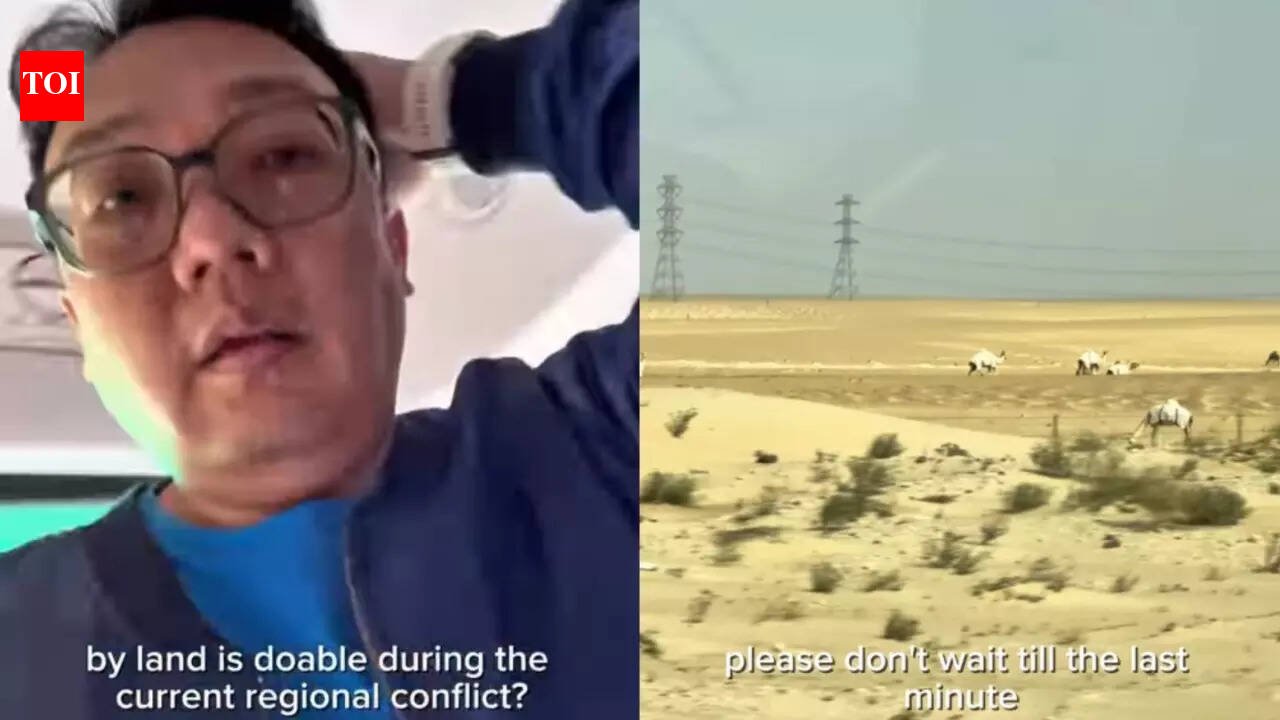
As the ongoing Iran vs US-Israel conflict continues to disrupt air travel across the Middle East, a travel influencer’s journey across the desert from Doha to Riyadh has gone viral on social media. Singapore-based digital creator SuperAdrianMe shared a video documenting his experience leaving Qatar by road after flights were disrupted, offering a first-hand glimpse into how travellers are improvising escape routes during the regional crisis.Taking to his social media handle, the creator posted the video and captioned it, “Leaving Doha to Riyadh by land Here’s my experience crossing by land. It was safe and smooth, but much longer than Google Maps suggests (sic).” He advised travellers to prepare for 10 to 12 hours of travel, obtain a Saudi eVisa before boarding and expect delays at border checkpoints before reaching Saudi Arabia.He added, “Reaching Riyadh and finally having a confirmed flight home felt like real relief. For visas to Saudi check https://visa.visitsaudi.com/ #MiddleEastWar #IsraelIranConflict #IranWar #doha #riyadh (sic).”
Travel chaos across the Gulf amid Iran vs US-Israel war
The video quickly gained attention because it reflects a broader trend of thousands of travellers stranded across the Gulf as the war triggered widespread airspace closures and flight suspensions. Airlines across the region have been forced to cancel or reroute flights as security risks increase and governments tighten aviation restrictions. Major hubs such as Doha, Dubai and Abu Dhabi have faced unprecedented disruptions, leaving travellers scrambling for alternatives including land routes through neighbouring countries. In many cases, travellers are opting to cross borders into Saudi Arabia to catch flights from cities such as Riyadh where some international routes remain operational.
The desert route from Doha to Riyadh
The route shown in the viral video typically begins in Doha and heads south toward the Abu Samra border crossing, Qatar’s primary land gateway to Saudi Arabia. From there, travellers cross into Saudi territory near Salwa before continuing the long drive through desert highways toward Riyadh.Under normal circumstances, the journey takes about six to seven hours but travellers say that border formalities and security checks can stretch the trip to 10 hours or more, particularly during the current crisis. SuperAdrianMe described the crossing as safe but slow, advising travellers to prepare for long waits and ensure all visa documentation is ready before attempting the trip.
A growing trend among stranded travellers amid Iran vs US-Israel war
The Singapore creator is not the only traveller taking this route. Similar stories have emerged in recent days as stranded passengers try to escape disrupted flight networks. In one widely reported case, an Indian traveller whose flight was grounded in Doha drove across the desert to Riyadh to continue his journey to Europe.The story quickly gained global attention as an example of the travel chaos caused by the conflict. Governments and airlines have also been arranging limited repatriation flights but the scale of the disruption means many travellers are still searching for alternative routes out of the region. In the absence of reliable flight schedules, social media posts like SuperAdrianMe’s video are becoming an unexpected source of information for stranded travellers. Travel influencers and ordinary passengers alike are sharing border crossing tips, visa requirements, road travel experiences and real-time updates on checkpoints.Such content has helped many travellers understand the realities of navigating the Gulf during a crisis. The influencer’s video, for instance, highlights practical advice such as applying for a Saudi eVisa before departure, allowing extra time for border processing, preparing for long drives across desert highways. These details can make the difference between a smooth crossing and being stuck at the border.
Iran vs US-Israel war reshaping travel in the Middle East
The viral journey also reflects how the Middle East conflict is reshaping travel patterns across the region. With several air corridors closed and security alerts issued in multiple Gulf states, travellers are being forced to rethink traditional routes. Some are flying through alternative hubs, while others are using land routes to reach airports still operating international flights. Experts say such travel improvisation is likely to continue as long as the conflict disrupts aviation networks. For SuperAdrianMe, the long desert journey finally ended in relief. After crossing the border and completing the extended drive, the influencer said arriving in Riyadh and securing a confirmed flight home brought “real relief” after hours of uncertainty on the road. His story captures the emotional reality faced by many travellers during the crisis: uncertainty, long detours and the hope of finally getting home.The viral video may look like a simple travel vlog but it represents a much larger story unfolding across the Middle East. As geopolitical tensions escalate, ordinary travellers are being forced to navigate an increasingly unpredictable travel landscape, relying on creativity, resilience and sometimes a long road through the desert to reach safety. For now, journeys like the Doha-to-Riyadh escape route are becoming one of the most talked-about travel experiences of the current Middle East crisis.


