



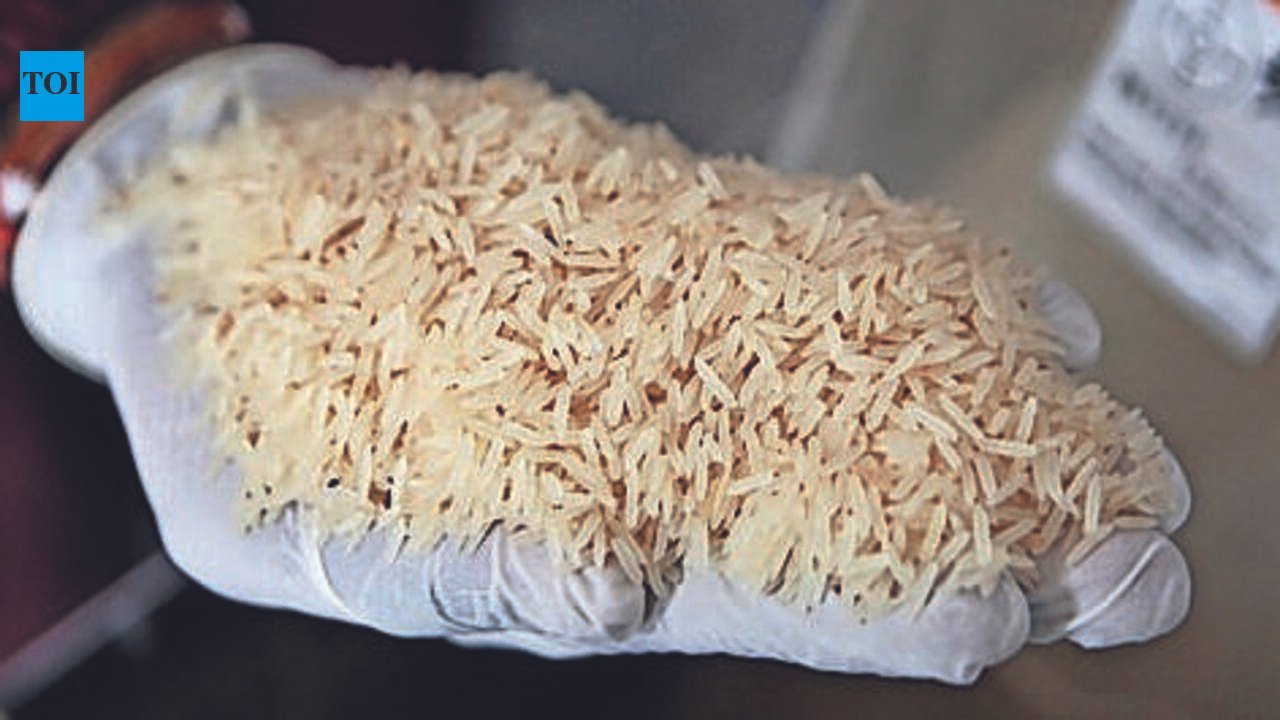
Chandigarh: Driven by higher per-acre yields and expanding acreage, Punjab’s ongoing kharif season is projected to register a 10.69% surge in basmati production, reaching an estimated 29.61 lakh metric tonnes (LMT). The area under basmati cultivation has increased by 2.53% to 16.68 lakh acres. However, rice exporters believe actual output could be significantly higher due to improved yields this season.According to satellite-based remote-sensing intelligence from SatSure, compared with Agricultural and Processed Food Products Export Development Authority (APEDA) baseline registry figures, Punjab’s total basmati area has expanded beyond APEDA’s 2025 records, generating an estimated 29.61 LMT of basmati.As per the basmati crop intelligence report of the All India Rice Exporters Association, this growth trajectory places Punjab at the forefront nationally, with its projected 10.69% rise in production outpacing major basmati-growing regions such as Jammu & Kashmir (7.09%), western Uttar Pradesh (6.50%), Haryana (6.32%) and Uttarakhand (1.80%). In contrast, Rajasthan (-0.31%), Himachal Pradesh (-2.32%) and Madhya Pradesh (-4.71%) are projected to record declines.Ranjit Singh Jossan, vice-president of the Punjab Rice Millers Association, said that while the SatSure data was based on sowing trends, basmati productivity had improved significantly this season and farmers were expecting a bumper harvest.“The biggest change this year is not merely the increase in acreage but the sharp rise in productivity. In previous years, average basmati yields in Punjab generally remained below 20 quintals per acre. During 2025-26, adverse weather and other factors brought productivity down further to around 16 quintals per acre. This year, however, yields of 23-24 quintals per acre are being reported from several areas. The survey estimates Punjab’s basmati production at around 29.61 lakh tonnes, compared with 22.90 lakh tonnes last year. However, the final average will become clear only after the harvest is completed,” he said.The report’s district-wise analysis showed varied trends. Amritsar recorded the largest basmati area at 3.31 lakh acres, producing an estimated 5.81 LMT, followed by Ferozepur with 1.89 lakh acres and 3.51 LMT, and Sri Muktsar Sahib with 1.62 lakh acres and 2.89 LMT.Other major basmati-growing districts included Tarn Taran with 1.14 lakh acres (1.97 LMT) and Sangrur with 1.10 lakh acres (1.96 LMT). In contrast, smaller basmati footprints were recorded in Hoshiarpur (4,094 acres), Mohali (6,664 acres) and Rupnagar (9,609 acres). Yields across Punjab averaged around 1.78 tonnes per acre, reflecting a positive deviation of 7.96% from baseline estimates.Nationally, total paddy acreage stands at 2.10 crore acres, of which 86.81 lakh acres are under basmati cultivation. PB-1509 remains the leading variety, accounting for 21.5% of the national basmati area.Punjab is targeting paddy procurement of 180 LMT this season, up from 156 LMT last year, driven by expectations of a bumper crop. Agriculture department data show that non-basmati paddy yields average about 27.8 quintals per acre, while some high-yielding regions, such as Sangrur, report yields of up to 38 quintals per acre.While expanding basmati cultivation boosts export earnings and farmer incomes, studies indicate that basmati remains nearly as groundwater-intensive as conventional paddy, offering little relief to Punjab’s depleting water table. Central Ground Water Board assessments show that the state’s annual groundwater extraction exceeds replenishable resources by more than 70%, with over 80% of assessed blocks categorised as over-exploited and water tables continuing to decline across several central districts.
