


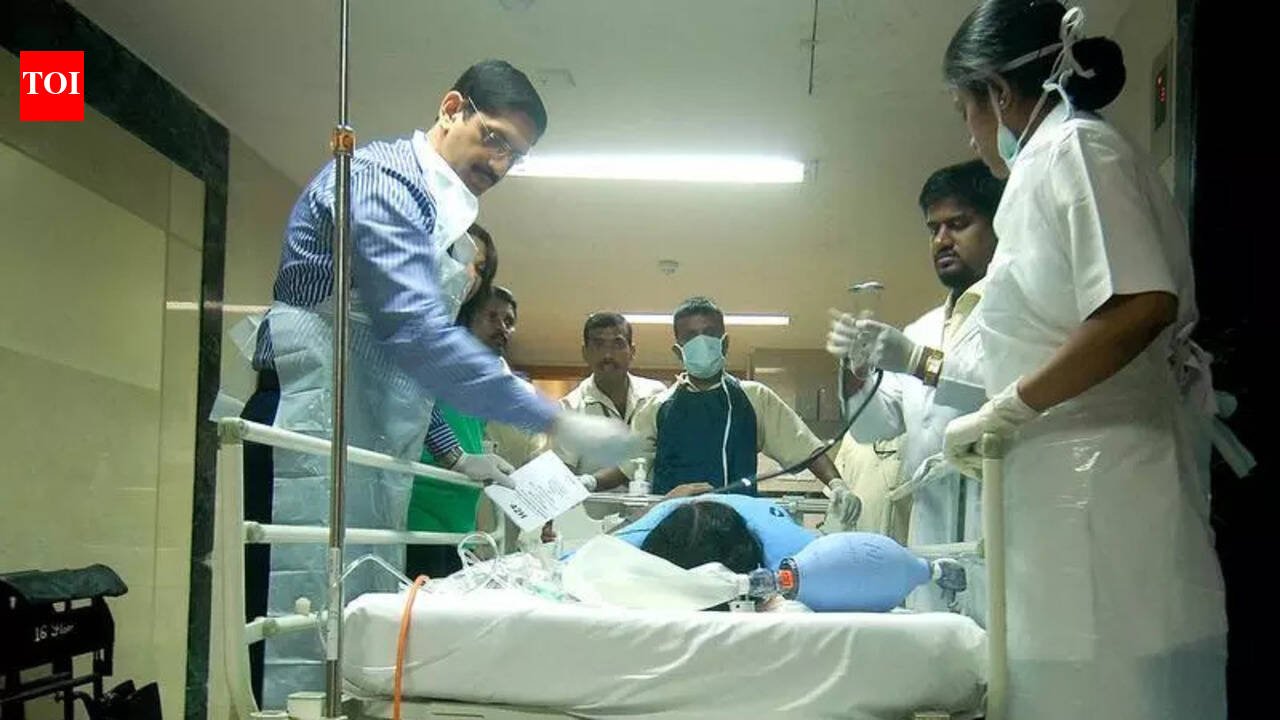
Pune: The health department has approved the establishment of four state-of-the-art cardiac catheterisation laboratories at district hospitals in Pune, Jalna, Gadchiroli and Kolhapur amid rising cases of heart and vascular diseases across Maharashtra. The project has received a financial sanction of almost Rs 100 crore.Officials said after the launch of this facilities in govt hospitals, healthcare in district health hubs would become more efficient and modern, providing best of care to general and economically weak patients at “a very low cost”.Health and family welfare minister Prakash Abitkar said the decision was taken through an administrative approval issued by the department. “The incidence of heart and blood vessel-related diseases is increasing rapidly in the state. Timely diagnosis and treatment are crucial. Till now, patients had to travel to major cities like Pune and Mumbai for catheterisation lab facilities, which caused financial, physical and time-related stress,” Abitkar said.Keeping this in mind, govt decided to set up cardiac cath labs in Kolhapur, Pune, Jalna and Gadchiroli, the minister said.The Kolhapur facility would come up at Gadhinglaj, improving access to advanced cardiac care for patients from Kolhapur, Sangli, Satara, Sindhudurg and Ratnagiri.Dr Kailash Bawiskar, deputy director (IEC), said: “The state currently has 12 operational cath labs, with the latest inaugurated in Dhule. These four new facilities will be developed using the EPC (engineering, procurement and construction) model, which covers all aspects, from structural, mechanical, electrical and plumbing design to procurement, installation, testing and supply chain management of modern medical equipment. All processes will be carried out by state govt,” he said.Pre- and post-dispatch random inspections would be conducted as per govt technical norms to ensure the quality of equipment.The project would be implemented in coordination with district surgeons, directorate of health services, health services commissionerate and health department. “Once operational, the cath labs will enable rapid diagnosis and treatment of cardiac blockages during the critical ‘golden hour’, significantly improving patient survival rates,” an official said.


