





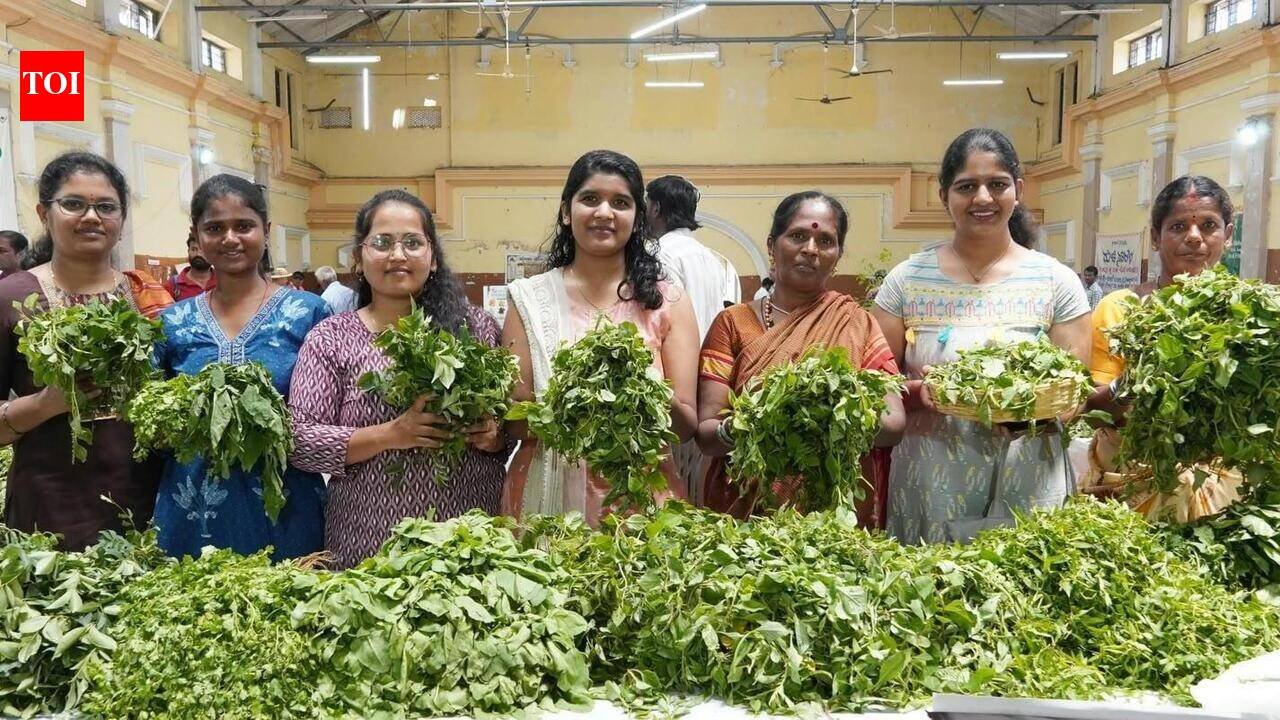
Mysuru: Progressive farmer Neelamma Kemannanavar from Thimmapur, Haveri, observed that when we were children, our elders introduced us to edible greens found along the bunds of fields, agricultural lands, ponds and waterbodies. “Because of this traditional knowledge, I can identify more than 100 varieties of greens. We must pass this knowledge on to our children as well,” Neelamma said.Speaking after inaugurating the two-day Desi Soppu Mela here on Saturday, Neelamma said: “Increasing use of herbicides is resulting in the diversity of edible greens to disappear. We must increase our consumption of these health-promoting greens and conserve our indigenous varieties.”The festival was organised jointly by Sahaja Samrudha, Keystone Foundation-Using Diversity, Hulikadu Farmers Producer Company and ICAR–JSS Krishi Vigyan Kendra, Suttur.Ramachandran G, senior programme coordinator at Kerala-based Keystone Foundation, released the book Sakkath Soppu, and said: “More than 3,000 plant species are used as food across the world. However, ordinary people today consume only around 30 species regularly. The remaining 2,970 species are mainly used by local and indigenous communities. This traditional knowledge is gradually disappearing among younger generations, and the Greens Festival is an excellent platform to introduce this knowledge to them.”GL Muralidhar, Gungurumale, from the Centre for Environment Studies, Shivamogga, Srivatsa Govindaraju, founder of Chiguru EcoSpaces, Bengaluru were present. ICAR–JSS Krishi Vigyan Kendra, Suttur head, Gnanesh BN presided over the event.Farmers from the Nagarahole region have brought Berake soppu and Anne soppu, while farmers from the forests of Kanakapura have brought seegae soppu. Farmers from Kundgol have brought dryland greens such as Kirkasali and Gurji. A group from Wayanad, Kerala, is showcasing medicinal and wild greens.The Kolagondanahalli Women’s Group from Kanakapura is introducing ragi shavige, urakki unde and a meal featuring Kalale soppu saaru.Neelamma Kemannanavar of Thimmapur, Haveri, who can identify more than 100 varieties of naturally growing greens and is popularly known as the ‘Walking Encyclopedia of Greens,’ will share her knowledge about rare and lesser-known greens.To introduce children to the importance of greens, a drawing competition for children aged 5–12 years will be held on Sunday, Sept 6, at 10.30am at Nanjaraja Bahadur Choultry.


