


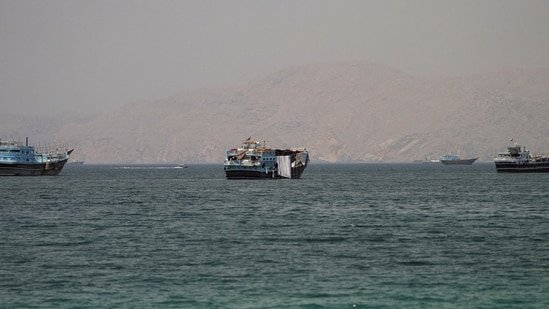
The American Israeli attack on Iran resulted in the disruption of about one fifth of global oil and gas supplies as Iran was able to close the Strait of Hormuz and sustain the closure. The price of crude oil which was $ 65 a barrel before the attack rose and stayed well over $ 90 a barrel, with the prognosis for the global economy becoming bleaker by the day. Finally, good sense and realism have prevailed. The US and Iran have signed a detailed Memorandum of Understanding for a peace deal which would result in the opening of the Strait of Hormuz. The whole world has heaved a sigh of relief. Supplies may, however, take some time to return to normal levels. Gas from Qatar may take longer due to the extensive damage to their gas processing facilities.
In countries having free deregulated energy markets the rise in crude oil prices is passed on to consumers. This price rise gets exacerbated when there is a sudden supply shock leading firms to take advantage of shortages to pursue higher profits. India, however, has the advantage of its oil public sector Undertakings providing retail supply and, therefore, the government is able to guide retail price movements. Though prices have been raised a few times, the full impact of higher import costs have not yet been passed on to consumers with the oil companies taking a greater hit.
With the opening of the Strait of Hormuz, resumption of normal supplies and price levels returning to pre-conflict levels is expected. The government could, therefore, choose to avoid further increases in the retail prices of petrol, diesel, and LPG. This would prevent the cascading inflationary impact of further increase in prices of this primary input for all economic activity. Inflationary expectations which were gaining would get moderated. It would be even better if government became bold and lowered prices, bringing optimism back to the market. The government could reduce the tax rates which are very high at around 50%. It may even be a good time to begin discussion in the GST Council on bringing petrol and diesel into GST, a long overdue reform for reducing the costs of logistics and increasing competitiveness.
This external shock has been a wake-up call. With the peace deal we should not slip back into complacency and business as usual. We need to act pragmatically to reduce our oil and gas imports by vigorously promoting the use of electricity for cooking and transport. The cost of clean energy for cooking effects every household. The cost of transport impacts the entire economy as well as every household. With the use of electricity replacing oil and gas, these costs would get insulated from future supply disruptions and price volatility in the global market. Our electricity generation is primarily based on our cheap domestic coal. This is being supplemented by a rising share of renewable energy with the input for actual generation being the free rays of the sun for solar power, wind for wind power and falling water for hydropower. Our electricity prices are regulated and stable
India should decide to stop extending the supply of piped gas for cooking and use the piped gas network to supply gas for rising industrial demand only. The LPG shortage has been getting households to use electricity for cooking. The government could promote this transition by communicating that using electricity to cook is cheaper. Using bulk procurement to get lower prices, it could supply electric stoves in instalments to households through the electricity distribution companies (Discoms) as it did so successfully with LED bulbs a decade earlier.
The government should decide that all commercial vehicle registrations would have to be for electric vehicles (EVs) only from prospective dates giving the market a reasonable time to prepare for the transition. and for the creation of a fast-charging network by the government for meeting the demand that this regulatory measure would suddenly create. Delhi has already made a good beginning. Creating sufficient fast charging capacity would be a mammoth task needing coordinated planning with the municipal authorities to provide public spaces at a nominal licence fee, and the power discom to provide reliable power supply to the charging stations. Supply capacity for fast charging at reasonable rates has to be ahead of demand to avoid the long queues that are seen at automobile CNG filling stations even now.
The users of commercial EVs would save money. The switch over of all commercial vehicles would have a dramatic impact on reducing air pollution. Ordinary people would be grateful that the government is at last taking decisive measures to tackle air pollution. India may in a few years cease to have the dubious distinction of having the largest share in the list of 50 cities of the world with the highest levels of air pollution. We would increase self reliance, reduce import dependence and vulnerability, and increase our energy security.
(The views expressed are personal)
This article is authored by Ajay Shankar, Distinguished Fellow, TERI, former secretary, DIPP, Government of India.
