



MILAN—Prada flew more than 100 of its best customers here for this city’s storied Fashion Week, giving them private access to Leonardo da Vinci’s “Last Supper” and dinners at restaurants booked out just for them.
Some watched models carry crocodile handbags—revived from a 1920s design and finished with clasps featuring onyx—down the runway at Prada’s womenswear show last week. The bags were offered exclusively to top clients the next day for a little over $20,000.
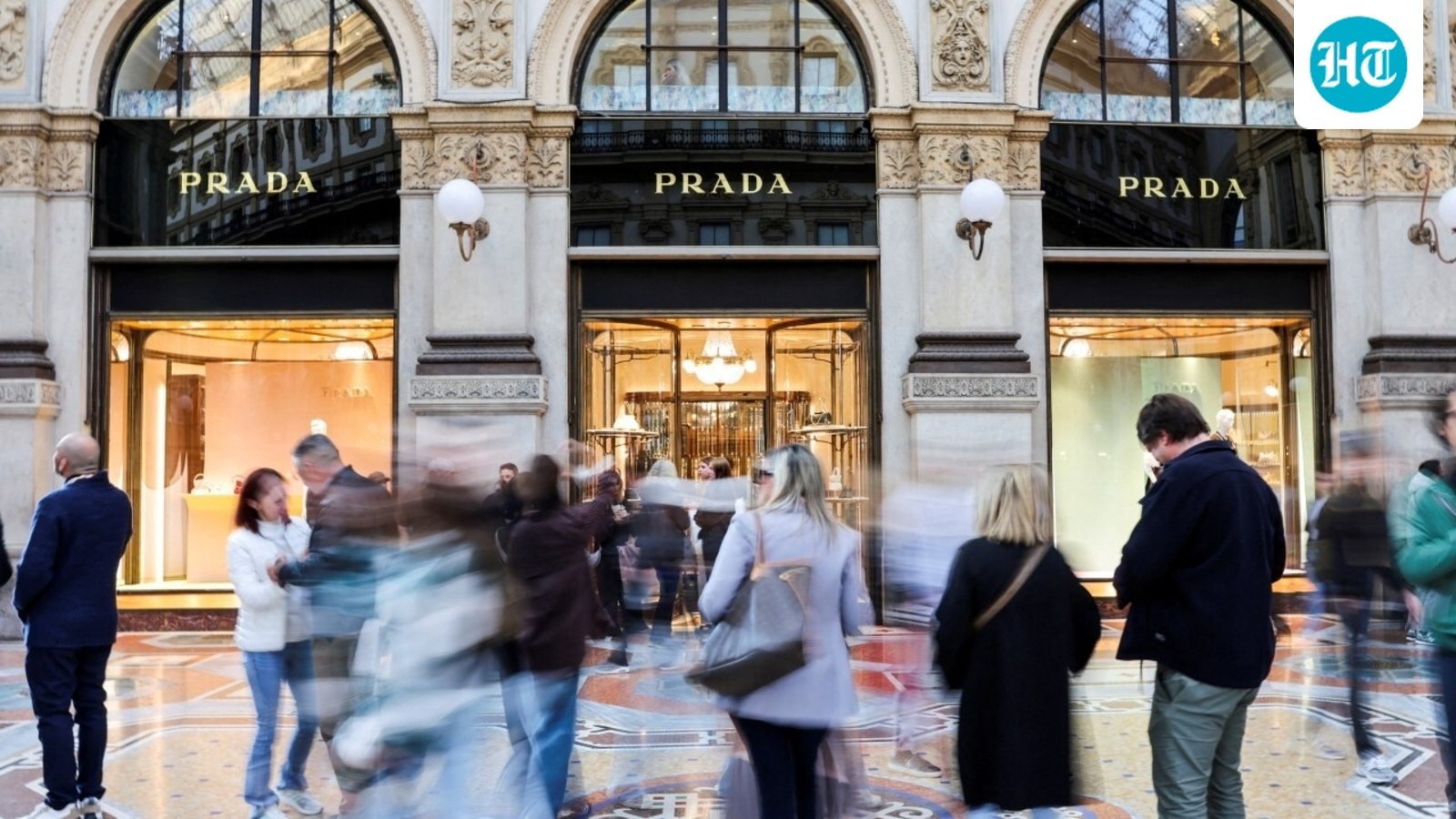
Their visit also included a tour of Prada’s newly renovated complex in Milan’s Galleria Vittorio Emanuele II, where tucked above the public store and exhibition spaces is a private shopping area offering re-editions of 1988 runway looks, on-site tailoring and fine jewelry found nowhere else.
This is the life of Prada VIPs, or as the brand calls them, VICs (“very important clients”)—a group becoming more vital to its business. Like rivals before it, the fashion house is deepening its ties with the superrich as it seeks growth at the very top of the market. Prada shuttled more big spenders to Milan last week than it did for its previous womenswear show in February.
“More and more, people don’t just want to wear a tag, but want to understand who is behind that tag,” Andrea Guerra, chief executive of Prada Group, said in an interview. “What we are trying to do is to make an emotional connection. This is why we are building some hospitality, we are building some private spaces.”
The strategy is backed up by arithmetic. Prada’s top customers spend about €7, or about $8, with the brand for every euro it spends entertaining them, Guerra said. But Prada is playing catch-up in courting top spenders, an area where competitors such as Louis Vuitton, Dior and Chanel have invested for years. Executives at rival luxury groups say the return can reach 10 to one.
Prada is working to close the gap with rivals at the very top of the market as it navigates a difficult climate for luxury retail. Just over 2% of luxury shoppers accounted for 45% of global luxury purchases in 2024, according to consulting firm Bain & Co., up from 35% in 2021. Their spending nearly doubled to €165 billion, or about $188 billion, in 2024 from €88 billion in 2019.
Meanwhile, the industry is losing customers at the other end of the market. Globally, about 350 million people shopped at luxury brands in 2024, down about 50 million from a peak in 2022, according to Bain, as aspirational shoppers retreated after years of price increases.
The dynamic reflects what economists call the K-shaped economy, a picture of consumers on different tracks.
Prada’s strategy is on display beneath the soaring glass dome of the Galleria Vittorio Emanuele II, Milan’s grand 19th-century shopping gallery. The company has spent more than three years renovating the spaces surrounding the original Prada store, opened there by Miuccia Prada’s grandfather Mario in 1913.
The expanded complex, which stretches across eight floors, is part shop, part exhibition space and part private club for Prada’s biggest spenders. In one room, top clients can be groomed with Prada beauty products before trying on clothes next door. Guerra calls the Galleria Prada’s “epicenter of epicenters,” and the brand is replicating the concept in 25 of the world’s biggest luxury capitals.
Prada has more ground to cover at the top of the market than some rivals, analysts say. The house began by selling leather goods and travel trunks to wealthy customers. Its modern breakthrough, however, came from the nylon bags Miuccia Prada began producing in the 1980s. The utilitarian material helped turn the century-old Milanese brand into a global fashion name.
That history now poses a challenge as Prada tries to persuade wealthy customers to spend more with the brand.
“I think Prada is keen to be a ‘me too’ premier league brand,” said Luca Solca, an analyst at Bernstein, a research and brokerage firm. But Prada has further to go, he said, because “Chanel and Dior started in couture.”
Since joining Prada in 2023, Guerra, the chief executive, has added more expensive, elaborate products, unique pieces and services for its wealthiest customers while preserving cheaper ways into the brand.
Guerra pushed the popular Galleria handbag further upmarket, adding versions in more precious materials and investing in new campaigns, including a 2023 collaboration with artist Alex Da Corte starring Scarlett Johansson. Today, some versions cost more than $7,500. The idea is to use one of Prada’s best-known products to establish the brand at a higher price point, giving it more room to sell to wealthy customers without abandoning those who enter the brand lower down.
“Clients have always been ready to buy Prada at whatever level of price, but…we were a little bit shy about it,” Guerra said.
Other luxury houses have made a similar journey. Louis Vuitton, whose canvas bags powered decades of growth, launched the Capucines in 2013, a structured leather handbag named after Paris street where Louis Vuitton opened his first store. The bag helped Vuitton push its assortment upmarket.
Prada has also begun digging through thousands of pieces in its archives, creating re-editions of looks from past collections for clients with a particular attachment to a show or period in the brand’s history. Top clients can now commission custom-made versions of skirts from the archives, tailored to their measurements and specifications. The most elaborate can cost as much as $100,000.
In February, Prada flew a small group of top clients to French Polynesia for almost a week. Clients snorkeled, learned about reef restoration and helped tend corals.
Inside Prada, some executives joke that the company is becoming a tour operator for the wealthy.
The upmarket push carries a risk. Guerra is pushing Prada higher at a moment when years of steep price increases have given way to weaker demand, particularly among middle-class shoppers. Shares in LVMH, the industry bellwether, have fallen about 38% this year, while Prada shares are down about 15% over the same period.
“The risk of ending up too expensive is material,” Bernstein’s Solca said. “Even if Prada has nylon to offset it.”
For all their focus on the superrich, luxury’s biggest brands still depend on less wealthy customers for a significant share of sales. Those shoppers helped power the industry’s growth for years, but inflation in the U.S., slower growth in China and economic uncertainty in Europe have sapped their confidence, while sharp price increases since the pandemic have made luxury increasingly difficult for them to afford.
Prada is still trying to keep those shoppers engaged. In March, it launched a five-piece capsule—including a jacket, hat and several bags—made from recycled materials and designed to be recycled again at the end of their lives. The pieces were priced below comparable products in Prada’s main collection.
At Prada’s complex in central Milan, much of the space, including a cafe, is open to anyone.
“Our job is also to create new top spenders,” Guerra said.
Write to Nick Kostov at nick.kostov@dowjones.com
