



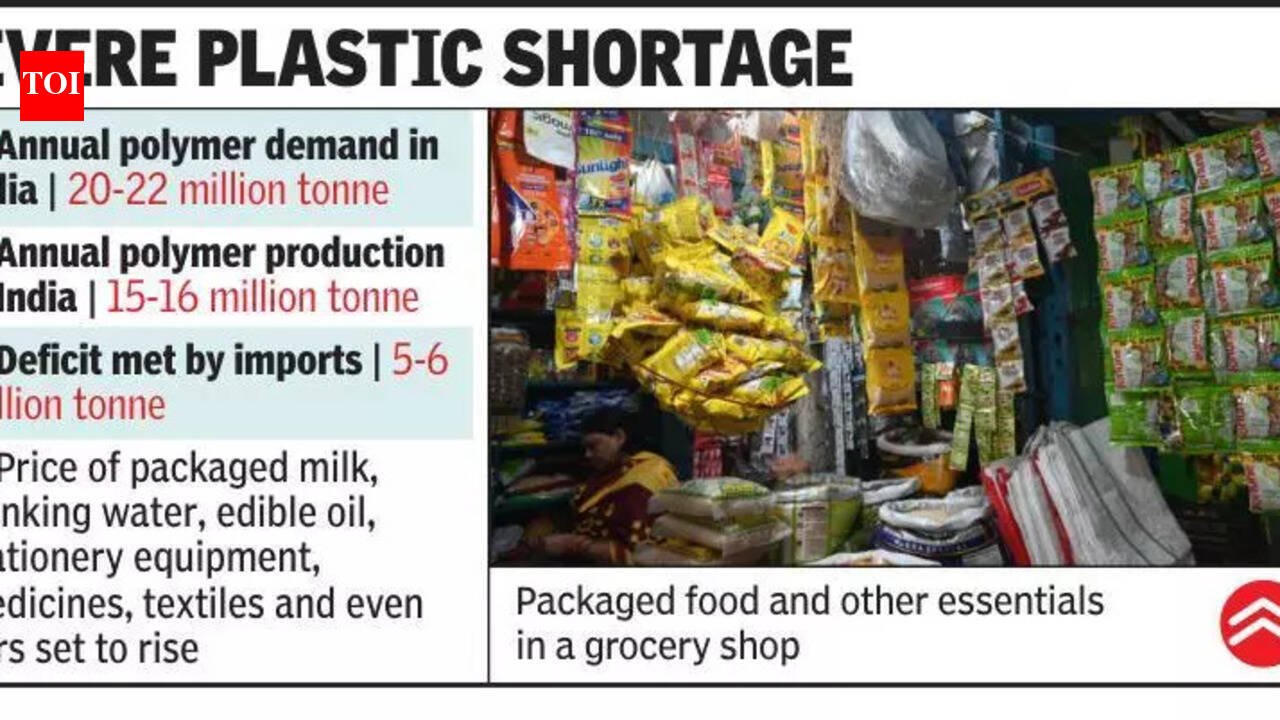
Kolkata: The shortage in polymers like polypropylene and polyethylene used for packaging due to shortage of raw materials and diversion of LPG used in production units to prioritise household LPG supply is set to raise prices of packaged milk, drinking water, edible oil, stationery equipment, medicines, textiles and even cars.Polymers are derived from petrochemicals, specifically propylene and ethylene, which are by-products of LPG/naphtha processing. As India relies heavily on LPG imports, disruptions in the Strait of Hormuz have tightened the feedstock supply, causing a 50-60% surge in polymer prices and scarcity of raw material. The shortage has resulted in a 50-70% increase in key polymer prices (HDPE, LLDPE, PP) and forced many plastic-processing units to shut down, causing a severe shortage of plastic materials.“While companies and industries that use polymer packaging or plastic had a buffer stock of around one month when the war began, it is fast depleting. Unless the war ends in the next 7-10 days, the rising polymer prices will lead to an increase in the cost of many day-to-day goods,” said Amit Agarwal, president of Indian Plastic Federation, and a key player in the plastic packaging industry.Industry officials said while imports reduced by 30%, domestic production went down by 15%. This led to extreme volatility in prices that is changing almost daily. The one-month buffer is already down by 65%. “We will have a grave situation in our hands. There will be no inventory left in April,” said Agarwal., pointing to the widespread use of plastic in packaging of foodgrains to manufacture of pipes that supply water.Already, packaged drinking water prices that reduced to Rs 18 per litre are up to Rs 20. The detergent industry is also facing a raw material scarcity.The medical devices industry is also facing the brunt of the war, with a looming shortage of polypropylene (PP), a thermoplastic polymer used as raw material for syringes, IV bags, catheter components, blood bags and surgical drapes.While the shortage in polymer (imports are down 30%; domestic production down 15%) led to extreme volatility in prices that is changing almost daily, there is a lack of replenishment.Alok Tibrewala, president of PlastIndia Foundation and an industry veteran, said micro, small and medium-scale industries (MSMEs) that make up nearly 80% of manufacturers are in dire straits.“The govt will have to urgently work out a credit line for the healthy MSMEs in the plastic industry like it did during the pandemic. Otherwise, the sector can turn sick,” said Tibrewala.


