



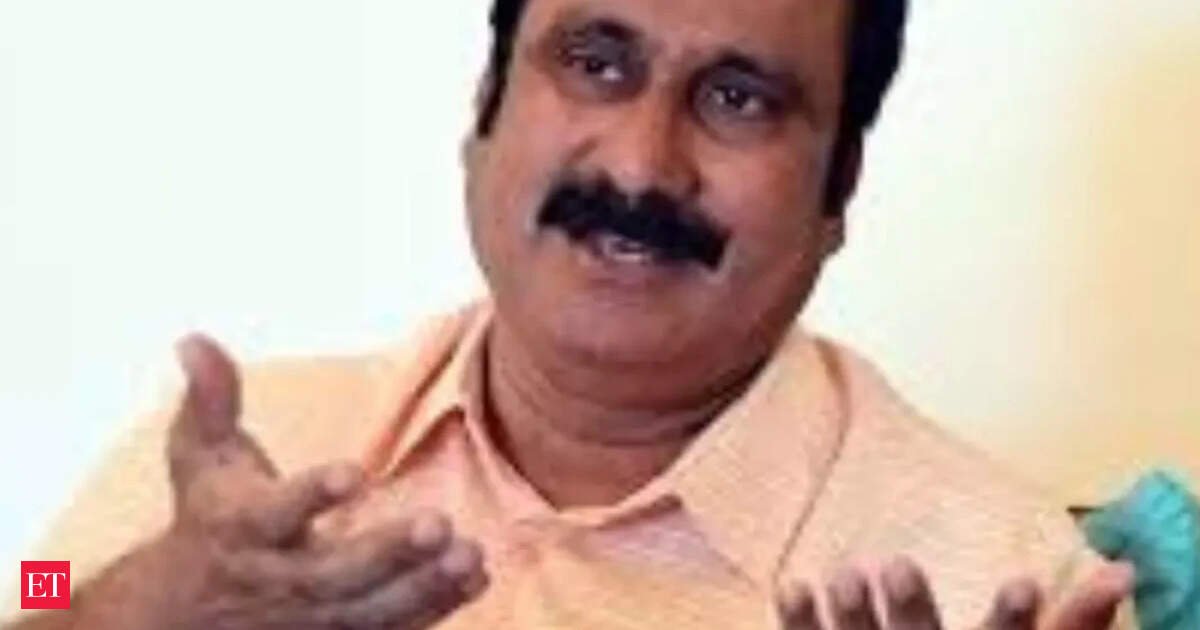
Speaking to reporters, Ramadoss said, “Our first priority is to provide jobs to the youth. In the first year itself, 40,000 government vacancies will be filled through TNPSE exams. Every household will get at least one job, whether in the government or the private sector, aiming to reach one crore jobs across Tamil Nadu.”
Also Read: Tamil Nadu Polls: DMK unveils manifesto, doubles welfare push
He further pledged to combat drug and liquor abuse across the state, stating, “Every street, not only in the cities but also in villages, drugs are being sold. We will close government-run Tasmac shops in a phased manner, establish a separate department to eradicate drugs, and introduce a 987 toll-free number for citizens to report illegal activity. Whistleblowers will be rewarded ₹10,000.”
Highlighting agricultural reforms, Ramadoss promised loan waivers, minimum price guarantees for farm products, and a dedicated minister for agricultural marketing.
Turning to criticism of opponents, he said DMK had only fulfilled 66 of its 506 past promises, calling its manifesto “a co-artist, not a hero.”
“Whatever DMK promises in this election, people will not believe it. Their manifesto is not a hero or heroine–it is not even a joker, it’s just a co-artist,” he said. He attacked Chief Minister MK Stalin’s administration for failing to curb drug and liquor issues, and criticised corruption in Tasmac liquor sales, warning that women and youth in the state have been left unprotected under the current governance.
Also Read: Tamil Nadu polls: TVK chief Vijay files nomination from Perambur in Chennai
Ramadoss concluded, “Our manifesto is a roadmap for a safe, prosperous, and corruption-free Tamil Nadu. We will prioritise jobs, health, and social welfare while ensuring strict enforcement against drugs and illegal liquor sales.”
The PMK manifesto comes amid a fiercely contested election in Tamil Nadu, where issues of youth unemployment, drug abuse, and corruption remain key voter concerns. The DMK and AIADMK have also released their manifestos, emphasising social welfare and infrastructure development, but the PMK has positioned itself as an anti-corruption, pro-youth, and anti-drug alternative.


