



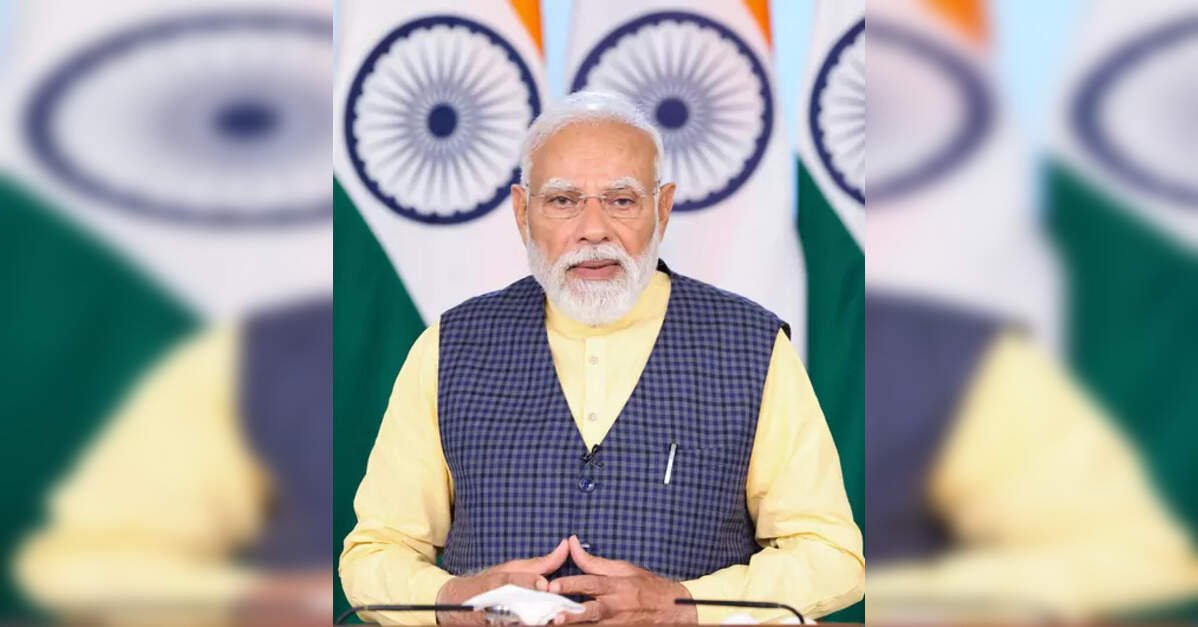
New Delhi: Prime Minister Narendra Modi on Saturday emphasised the role of education, innovation and entrepreneurship in shaping India’s growth, saying the country’s institutions must prepare students for real-world challenges and support emerging sectors of the digital economy.Addressing a post-budget webinar titled “Sabka Saath Sabka Vikas – Fulfilling Aspirations of People,” Modi said India’s progress depends on strengthening the link between education, administration and industry, while encouraging entrepreneurship and research among young people.
He highlighted the need for educational institutions to move beyond theoretical learning and ensure students gain practical exposure and skills relevant to the evolving economy. According to the prime minister, greater emphasis on STEM — science, technology, engineering and mathematics — will be critical to building a strong innovation ecosystem.
Modi also spoke about the importance of promoting creativity and new-age sectors such as animation, visual effects, gaming and comics (AVGC), noting that the government is extending support to these industries as part of its efforts to expand India’s digital economy.
Calling for greater participation of women in education and research, the prime minister said the country must continue to focus on empowering women and ensuring they have wider opportunities in academic and scientific fields.
He urged institutions to encourage experimentation and research among young scholars and said talent must be recognised and nurtured even in the smallest towns and villages.
The prime minister also pointed to emerging opportunities in sectors such as tourism and leisure, stressing the need to strengthen the tourism ecosystem to generate employment and new avenues of income.
Highlighting the role of digital connectivity and community participation, Modi said collaborative efforts across sectors will be essential to achieving the goal of a “Viksit Bharat” (developed India).
The post-budget webinar was part of the government’s outreach to discuss key themes of the Union Budget and explore ways to translate policy proposals into actionable outcomes across sectors.


