



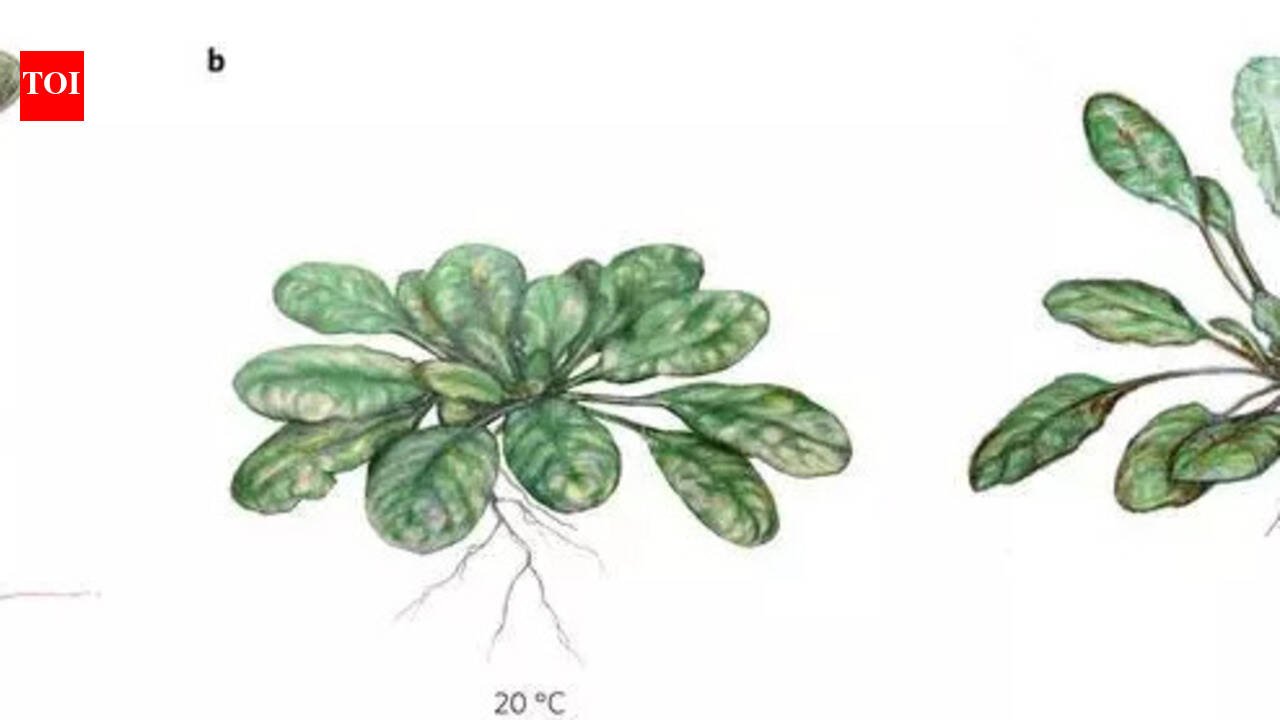
Kolkata: Scientists at the Indian Institute of Science Education and Research (IISER) Kolkata, in collaboration with Jawaharlal Nehru University, New Delhi, uncovered a key molecular ‘switch’ that helps plants sense and respond to warmer temperatures by rapidly adjusting their growth. This discovery could help agricultural scientists develop climate-resilient crops as the earth becomes warmer.Sreeramaiah N Gangappa (Associate Professor) of IISER’s department of biological sciences, in collaboration with Mukesh Jain of JNU’s School of Computational and Integrative Sciences, identified two enzymes, LRB1 and LRB2, that differentially regulate two proteins, Phytochrome Interacting Factor 4 (PIF4) and Elongated Hypocotyl 5 (HY5), which cause plants to respond positively or negatively to heat.“Rising global temperatures pose a threat to agriculture, impairing plant health and reducing crop productivity. When exposed to warmer conditions, for example, a shift from 22°C to 27°C, plants undergo thermomorphogenesis, an adaptive stem elongation driven by increased production of growth hormones such as auxin and brassinosteroids. Understanding the molecular switches governing this response is critical to engineering crops that can thrive under climate change,” explained Gangappa.The study revealed LRBs acted as master regulators in the process through a dual mechanism that targeted two key transcription factors. By differentially controlling PIF4 and HY5 stability, LRBs enabled plants to prioritise elongation growth under warmer conditions, overriding photomorphogenic restraint.


