


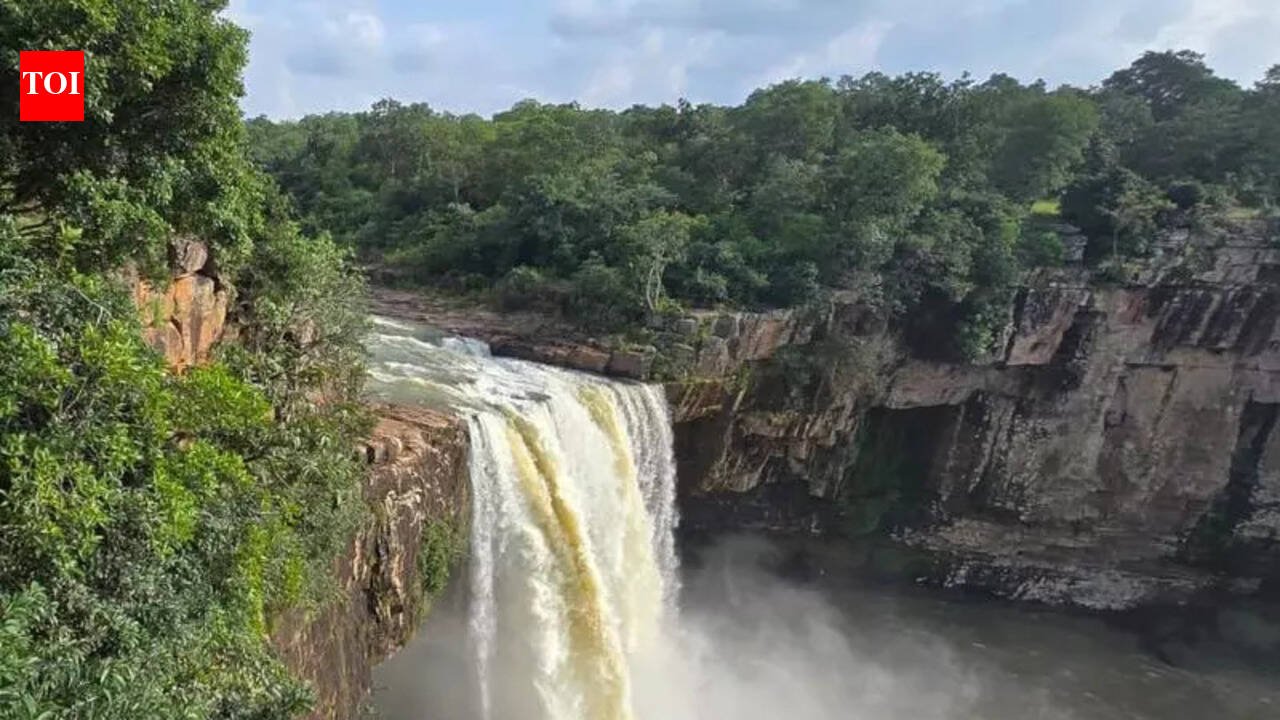
Bhubaneswar: With Maoist influence reducing drastically in Nuapada district’s Sunabeda Wildlife Sanctuary, the wildlife wing has planned to restore day tourism by creating visitor amenities at three large waterfalls — Godhus, Beniadhus and Kharaldhas.Though Nuapada was declared Maoist-free, neighbouring Chhattisgarh bordering the sanctuary still reports Maoist presence, due to which night facilities have not been allowed for now. Earlier, for more than 15 years, tourism activity was restricted at the waterfalls, except for sporadic picnics by locals.The waterfalls have perennial natural water sources, and are each more than 100-ft high. There are tourist routes, though rocky and potholed, as the forest field staff use them besides security personnel. The development plans also include making the roads more hospitable, officials said.“The space around the waterfalls is sprawling, surrounded by forests. Visitor viewpoints, rest sheds, common dining, parking and kiosks for tea-coffee shops will be created there. The eco-development committee (EDC), which is formed by involving selected villagers, will look after the hospitality aspect. Visitors can have lunch at the facility by paying a certain amount to be fixed by EDC members. Having the facility will gradually check unregulated picnics that led to litter and accumulation of plastic and other waste,” said DFO (Sunabeda), Samir Sahu.He further said that visitor footfall will significantly increase after the facilities come up, and also for two more additional reasons — an increase in prey animals and absence of Maoists. “Prey density increased manifold in the sanctuary, with carnivores, especially leopards, thriving. We are emphasising reducing fire incidence so that prey animals come down from the hilly forest and are sighted easily. If there is fire, they stay atop the hill, avoiding descent; as a result, visitors are not able to see them,” Sahu added.The drop in Left-wing extremism (LWE) helped wildlife personnel install camera traps in every sector of the forest, giving them a clear idea about leopard and other carnivore and herbivore populations. Earlier, Maoists used to remove some cameras to avoid being captured. Wildlife wing personnel were not able to install camera traps at many vantage locations inside the forests, fearing Maoist attack. Almost 50% of the sanctuary area, which is spread over 600 sq km, was earlier under Maoist influence, officials said.


