





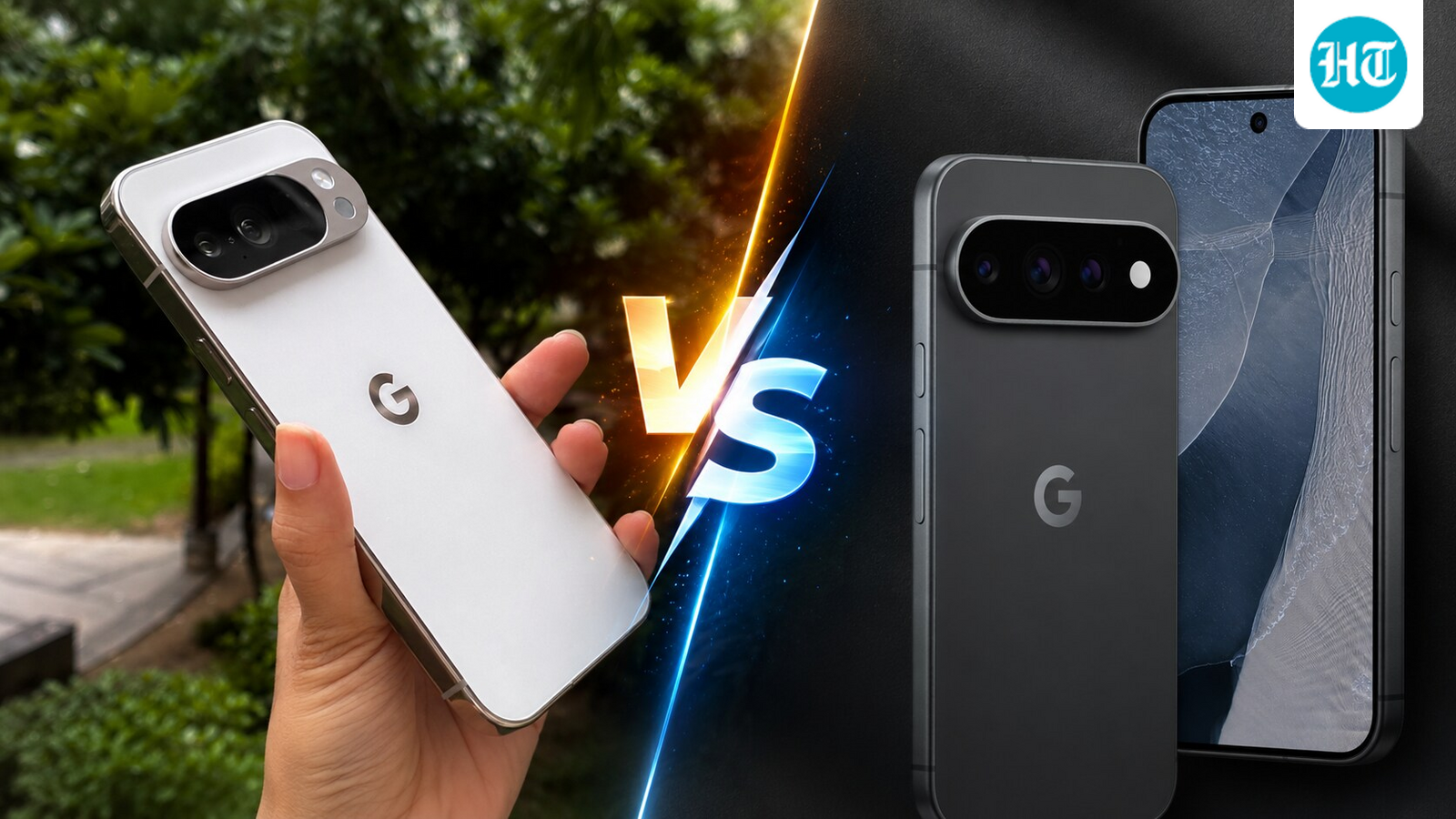
A substantial share of the smartphone market has long been captured by large-screen models that are edging closer to tablet territory. That said, there is a vocal minority of customers who prefer compact smartphones, as they are much more comfortable to handle in everyday use.
Fortunately, some prominent brands still produce compact models that offer the same feature set as their larger counterparts. Among them is Google, which has now refreshed its beloved small flagship with the latest generation: the Pixel 11 Pro. Like the Pro XL, it features a full-fledged 50MP triple camera system, a powerful Tensor G6 chipset, and Pixel Snap wireless charging.
Having said that, the Pixel 11 Pro closely resembles the Pixel 10 Pro at first glance, with a similar camera visor on the back. Naturally, most critics will point to this as evidence that the Pixel 11 Pro is essentially the same as its predecessor, with a slightly improved feature set. I was close to joining this bandwagon, but after analysing the “Made By Google” keynote and reading between the lines of the spec sheet, I realised that this isn’t exactly the case.
So, what exactly has Google changed this time around? Let us take a closer look.
Same Pixel DNA, a few fresh touches
The Pixel 11 Pro looks visually similar to the Pixel 10 Pro. However, Google has shaken things up in the camera visor to distinguish the two generations. In the refreshed iteration, the black strip runs through the entire camera module.
The brand has also replaced the temperature sensor on the Pixel 10 Pro with a new HiLight LED feature. Essentially, it serves as a notification LED on our older smartphones, but with a modern twist.
When the Pixel 11 Pro is face down, its array of ambient lights is said to glow when the phone receives a call from favourite contacts. This feature will be integrated with Google’s Phone app and WhatsApp. Users will also have the option to assign colours to a particular contact number in the HiLight LED.
The HiLight LED is also programmed to light up with visual cues that indicate when Gemini is listening, thinking, or responding, so users don’t need to glance at the screen.
Beyond this, Google has made the Pixel 11 Pro slightly slimmer and lighter than its predecessor.
On the front, the latest generation features a brighter display than the Pixel 10 Pro’s, both for HDR and for automatic brightness. I want to clarify that I am forming an opinion based on the figure quoted in the specification. In reality, things might turn out quite different from what is written on paper. So, wait for our full review. The remaining display aspects, including the refresh rate, are unchanged between the two versions.
Small camera hardware changes, bigger software ambitions
Google has carried over the same primary, ultra-wide, and front cameras from the Pixel 10 Pro to the Pixel 11 Pro. However, the Pixel 11 Pro now features a larger telephoto sensor with a slightly wider field of view. This can allow it to deliver better zoomed photos in low-light conditions, improve HDR processing, and create a more appealing shallow depth of field.
Google’s Pixel phones have always been more than optical sensors. They have long served as a platform for the brand to showcase its expertise in computational photography, and the Pixel 11 Pro is no different. This time, the latest iteration supports up to 120x digital zoom. It also comes with a new Magic Capture feature that is claimed to help users capture great photos and videos without needing to double-check the viewfinder, using automatic cropping and unblurring.
That’s not it; Google has also introduced the Camera Looks feature to the Pixel 11 Pro, which works similarly to the iPhone’s Photographic Styles. This feature allows users to create their preferred professional-grade, film-inspired effects on their images without affecting natural skin tones.
Using the improved Tensor G6 and some software optimisation, Google has also made Night mode faster on the Pixel 11 Pro. The latest generation’s new “Instant Night Sight” mode is claimed to help users capture low-light images 4.5x faster than the original “Night Sight” feature on the Pixel 10 Pro.
Performance gets a boost, while battery capacity dips
The Pixel 11 Pro is powered by a new Tensor G6 chipset. Google claims its latest SoC can deliver up to 20% better power efficiency, 25% faster browsing, and 15% faster app loading. The new chipset also features a TPU that is 50% more powerful, which should help it handle computational photography and on-device AI workloads more efficiently. Google has also added an advanced vapour chamber to keep the Pro models cool during demanding workloads.
While the Pixel 11 Pro packs a slightly smaller 4,850mAh battery than the Pixel 10 Pro, Google claims it can deliver more than 30 hours of battery life with Adaptive Battery. The latest Pixel phone features the same wired charging speed as the Pixel 10 Pro, but wireless charging has received a bigger upgrade. The Pixel 11 Pro now supports 25W charging via Pixelsnap-compatible accessories, up from 15W on its predecessor.
Google adds more AI to the Pixel experience
The Pixel 11 Pro builds on Google’s AI-focused software experience with new features powered by the Tensor G6. Gemini Intelligence can proactively surface information across apps, while its writing tools can remove filler words from voice-to-text and adapt drafted replies to the user’s writing style. Google has introduced Live Translate for videos, podcasts, and voice messages, extending the feature beyond calls. Circle to Search is now integrated with the Pixel Camera, allowing users to identify objects, translate text, and search for subjects without leaving the camera app. Pixel 11 Pro buyers receive six months of Google AI Pro at no extra cost.
Rising memory costs push Pixel 11 Pro price ₹10,000 above its predecessor
The Google Pixel 11 Pro starts at ₹1,19,999 in India for the 12GB RAM and 256GB storage variant. This is ₹10,000 more than the Pixel 10 Pro’s launch price of ₹1,09,999 for the same 256GB storage. The price hike comes as smartphone makers face sharply rising memory costs, with mobile DRAM prices surging amid the ongoing global memory shortage.


