



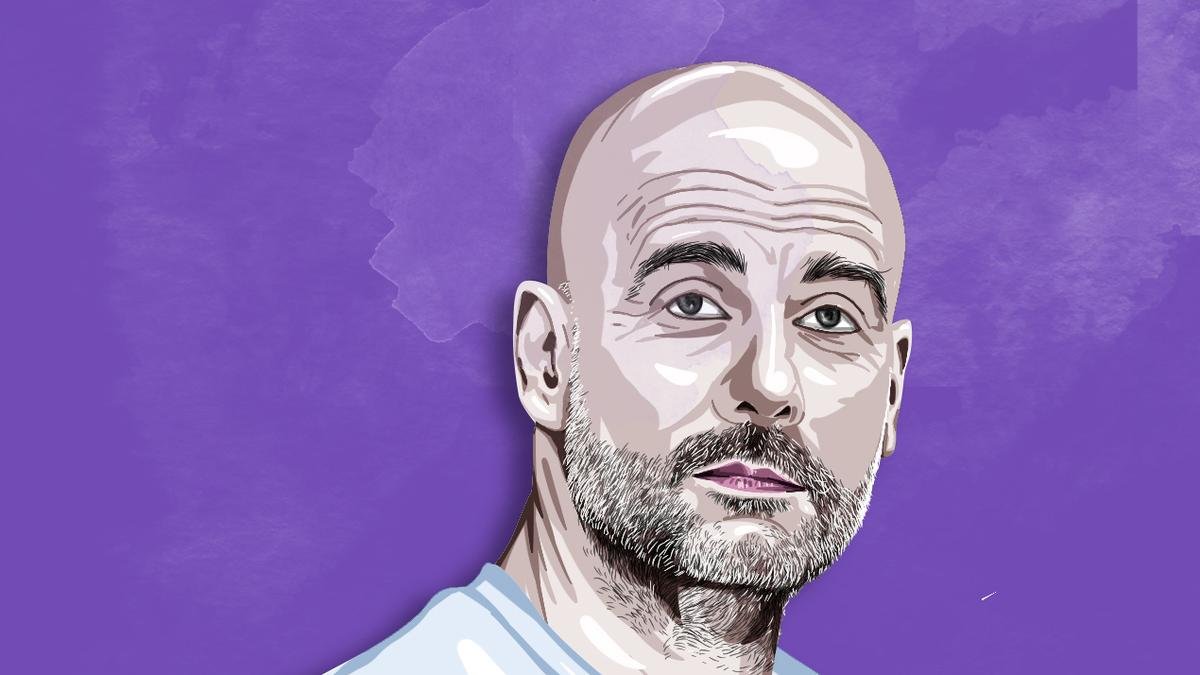
Having scaled the summits of Spanish and European football with FC Barcelona and imposed his will upon Germany with Bayern Munich, Pep Guardiola arrived at Manchester City in the summer of 2016 carrying an almost mythological reputation. His credentials were beyond dispute. Yet in England, one question followed him everywhere: Could Guardiola do it on a cold, windy Tuesday night in Stoke?
It was the same challenge English football had thrown at every perceived outsider, every revolutionary coach or manager, who dared suggest there was another way to play the game.
Whatever Guardiola achieved elsewhere seemingly counted for little until he proved himself in football’s self-proclaimed toughest hunting ground.
By December, the doubters smelt blood. Defending champion Leicester City, drifting uncomfortably close to the relegation zone, tore through Manchester City and triumphed 4-2. To Guardiola’s critics, it felt like vindication. Possession football, intricate passing, inverted full-backs and positional play — perhaps these ideas were too delicate for the relentless chaos of English football.
If the defeat poured fuel on the fire of criticism, it also ignited something within Guardiola himself, who commendably doubled down. To say that a decade later, the debate is settled would be an understatement. A silverware haul that resembles a monument bears testimony. Six Premier League titles. Five League Cups. Three FA Cups. A Champions League crown. Add to that a UEFA Super Cup and a FIFA Club World Cup. As he prepares to move on, Guardiola’s reign will be defined by his ability to bend opponents to his will through control. As Frank Sinatra once sang, he faced it all, stood tall, and did it his way.
When he walked into La Masia, Barcelona’s famed academy, as a 13-year-old, Guardiola stood apart almost immediately. Where others saw congestion, he saw space. He could anticipate patterns before they emerged, his clarity often bordering on obsession.
Under Johan Cruyff, that rare footballing intelligence found its perfect home. As the cerebral heartbeat of Barcelona’s Dream Team, Guardiola dictated tempo and direction with the composure of a conductor leading a symphony. He finished with a decorated resume, including four consecutive La Liga titles and Barcelona’s first European Cup.
Bigger debt
But it is to Guardiola, the manager, that history owes a bigger debt. When he first stepped into the bullring, the scepticism was immediate. Too young. Too idealistic to lead Barcelona back to dominance. A maiden treble — La Liga, Copa del Rey, Champions League — was quite the answer. The foundations of what we now know to be a new order were being laid.
Barcelona’s football was not only effective but expressive, a demonstration of what collective intelligence could look like when fully realised. The fruit? Fourteen trophies in four years and the evolution of a certain Lionel Messi from prodigy to phenomenon.
And then, Guardiola left, looking for a new challenge. After a year’s break, he took over Bayern Munich, which was fresh from a treble under Jupp Heynckes.
After winning seven trophies in three years, another departure followed, and this time, the Premier League waited. Impatiently, and perhaps uneasily. The rest, as they say, is history. Twenty major trophies followed, including the elusive Champions League — three more than the club had won in its 136 years before his arrival.
Beyond the pitch, Guardiola was unapologetically political, speaking about Catalonia’s right to self-determination, Russia’s invasion of Ukraine, the suffering in Gaza caused by Israeli attacks, and humanitarian crises in Sudan, often framing them in moral rather than political terms.
At the same time, his guarded responses on issues involving the UAE, whose ruling family owns Manchester City, fuelled accusations of inconsistency. It is within that space, between expression and restraint, that Guardiola’s wider reputation has taken shape. Taken together, it leaves a figure who resists simple classification. A coach who reshaped how the game is played, while also navigating, imperfectly at times, the responsibilities that come with visibility.
Published – May 31, 2026 01:00 am IST


